
New Organizational Designs: Information Aspects: Contemporary Studies in Information Management, Policies, and Services
Autor Bob Travicaen Limba Engleză Paperback – 18 mai 1999
Din seria Contemporary Studies in Information Management, Policies, and Services
- 26%
 Preț: 244.24 lei
 - 23%
 Preț: 182.17 lei
 - 34%
 Preț: 574.68 lei
 - 34%
 Preț: 678.58 lei
 - 22%
 Preț: 271.35 lei
 - 26%
 Preț: 233.07 lei
 - 39%
 Preț: 258.75 lei
 - 26%
 Preț: 261.27 lei
 - 34%
 Preț: 586.71 lei
 - 32%
 Preț: 305.34 lei
 - 23%
 Preț: 305.03 lei
 - 26%
 Preț: 273.73 lei
 - 33%
 Preț: 257.73 lei
 - 33%
 Preț: 260.10 lei
 - 31%
 Preț: 307.19 lei
 - 22%
 Preț: 306.57 lei
 - 22%
 Preț: 307.19 lei
 - 33%
 Preț: 258.33 lei
 - 26%
 Preț: 238.00 lei
 - 34%
 Preț: 256.54 lei
 - 26%
 Preț: 268.05 lei
 - 32%
 Preț: 306.57 lei
 - 25%
 Preț: 255.37 lei
 - 34%
 Preț: 583.05 lei
 - 27%
 Preț: 255.37 lei
 - 26%
 Preț: 236.21 lei
 - 26%
 Preț: 243.59 lei
 - 35%
 Preț: 238.00 lei
 - 31%
 Preț: 307.79 lei
 - 22%
 Preț: 309.02 lei
Preț: 256.54 lei
Preț vechi: 348.24 lei
-26%
Puncte Express: 385
Carte tipărită la comandă
Livrare economică 09-23 iunie
Specificații
ISBN-13: 9781567504040
ISBN-10: 1567504043
Pagini: 1
Dimensiuni: 156 x 235 x 11 mm
Greutate: 0.28 kg
Editura: Bloomsbury Publishing
Colecția Praeger
Seria Contemporary Studies in Information Management, Policies, and Services
Locul publicării:New York, United States
ISBN-10: 1567504043
Pagini: 1
Dimensiuni: 156 x 235 x 11 mm
Greutate: 0.28 kg
Editura: Bloomsbury Publishing
Colecția Praeger
Seria Contemporary Studies in Information Management, Policies, and Services
Locul publicării:New York, United States
V-ar putea interesa
-
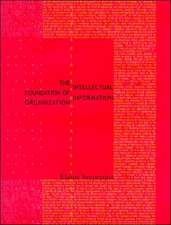 The Intellectual Foundation of Information OrganizationElaine Svenonius-20%Preț: 197.99 lei247.49 lei
 -
 Preț: 351.33 lei
 -
 Preț: 450.18 lei
 -
 Less Is More: A Practical Guide to Weeding School Library CollectionsDonna J. BaumbachPreț: 308.51 lei
 -
 RDA and Cartographic ResourcesPaige G. AndrewPreț: 442.19 lei
 -
 Diversity in Youth Literature: Opening Doors Through ReadingJamie Campbell NaidooPreț: 373.86 lei
 -
 Library Management 101: A Practical GuideDiane L. VelasquezPreț: 487.99 lei
 -
 Extensible Processing for Archives and Special CollectionsDaniel a. Santamaria-23%Preț: 424.21 lei550.93 lei
 -
 Cut Flower GardenErin Benzakein-24%Preț: 144.31 lei190.23 lei
 -
 -22%Preț: 271.53 lei346.91 lei
 -
 -26%Preț: 265.87 lei358.27 lei
Cuprins
Introduction
New Organizational Designs
Non-Traditional Organization
Structural Aspects. Cultural Aspects
Political Aspects. Information Aspects
Information Technology
Public Accounting Industry
Role of Information Technology
Teamwork Beyond Lip Service
De-Differentiation and Detraditionalization
Uncertainty Ahead
References
Appendix
About the Author
Index
New Organizational Designs
Non-Traditional Organization
Structural Aspects. Cultural Aspects
Political Aspects. Information Aspects
Information Technology
Public Accounting Industry
Role of Information Technology
Teamwork Beyond Lip Service
De-Differentiation and Detraditionalization
Uncertainty Ahead
References
Appendix
About the Author
Index