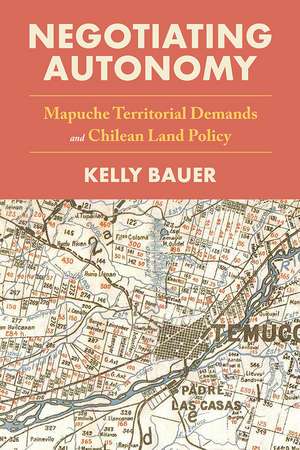
Negotiating Autonomy: Mapuche Territorial Demands and Chilean Land Policy: Pitt Latin American Series
Autor Kelly Baueren Limba Engleză Hardback – 30 mar 2021
În lucrarea Negotiating Autonomy, Kelly Bauer aduce o perspectivă critică și riguros fundamentată asupra modului în care politicile teritoriale din Chile post-dictatură eșuează adesea în recunoașterea drepturilor indigene. Ceea ce distinge această apariție în cadrul seriei Pitt Latin American Series este demontarea mitului conform căruia guvernanța chiliană este pur tehnocratică și depolitizată. Remarcăm utilizarea unui set de date inedit, care corelează mobilizarea socială a comunităților Mapuche cu cifrele oficiale ale transferurilor de terenuri, oferind o imagine clară a discrepanțelor dintre discursul politic și realitatea administrativă.
Analiza se concentrează pe mecanismele prin care oficialii statului acționează pentru a prezerva interesele elitelor economice locale, limitând spațiul de negociere pentru autonomia indigenă. Spre deosebire de alte lucrări ale autoarei, precum cele axate pe metodologii de proiect sau suport educațional tehnic, acest volum reprezintă o contribuție majoră la sociologia politică și istoria Americii Latine. Structura narativă este una academică, dar accesibilă, susținută de 14 fotografii de teren și tabele statistice care ancorează argumentele teoretice în realități concrete.
Suntem de părere că lucrarea constituie o alternativă necesară la Sentient Lands de Piergiorgio Di Giminiani pentru cursurile de antropologie politică și studii de dezvoltare. În timp ce Sentient Lands pune accent pe etnografie și legătura ontologică cu peisajul, Negotiating Autonomy oferă avantajul unei analize instituționale și statistice a modului în care implementarea politicilor publice poate deveni un instrument de deposedare. De asemenea, cartea completează temele abordate în Race and the Chilean Miracle de Patricia Richards, investigând cum aceleași programe neoliberale, prezentate ca progrese democratice, perpetuează de fapt inechitățile structurale.
Din seria Pitt Latin American Series
-
 Preț: 445.75 lei
 -
 Preț: 480.81 lei
 -
 Preț: 438.81 lei
 -
 Preț: 446.38 lei
 -
 Preț: 406.97 lei
 -
 Preț: 403.35 lei
 -
 Preț: 444.17 lei
 -
 Preț: 362.53 lei
 - 19%
 Preț: 439.22 lei
 -
 Preț: 394.78 lei
 -
 Preț: 443.78 lei
 -
 Preț: 411.94 lei
 -
 Preț: 443.78 lei
 -
 Preț: 403.13 lei
 -
 Preț: 411.72 lei
 -
 Preț: 475.21 lei
 -
 Preț: 498.18 lei
 -
 Preț: 368.90 lei
 -
 Preț: 441.18 lei
 -
 Preț: 474.43 lei
 -
 Preț: 488.19 lei
 - 15%
 Preț: 473.33 lei
 -
 Preț: 443.78 lei
 -
 Preț: 405.55 lei
 - 19%
 Preț: 439.73 lei
 -
 Preț: 446.38 lei
 -
 Preț: 407.36 lei
 -
 Preț: 439.99 lei
 -
 Preț: 396.98 lei
 -
 Preț: 448.75 lei
 -
 Preț: 451.74 lei
 -
 Preț: 408.32 lei
 -
 Preț: 404.37 lei
 -
 Preț: 404.37 lei
 -
 Preț: 446.38 lei
 -
 Preț: 376.08 lei
 -
 Preț: 432.82 lei
 -
 Preț: 410.52 lei
 -
 Preț: 376.08 lei
 -
 Preț: 404.37 lei
 -
 Preț: 431.24 lei
 -
 Preț: 372.52 lei
 -
 Preț: 447.55 lei
 -
 Preț: 396.98 lei
 -
 Preț: 401.95 lei
 -
 Preț: 401.95 lei
 -
 Preț: 399.36 lei
 -
 Preț: 440.78 lei
 -
 Preț: 398.16 lei
Preț: 404.37 lei
Carte disponibilă
Livrare economică 17 noiembrie-01 decembrie
Specificații
ISBN-10: 0822946661
Pagini: 190
Ilustrații: b&w: 14 photos, 6 tables, 3 figures
Dimensiuni: 152 x 229 x 23 mm
Greutate: 0.45 kg
Ediția:1
Editura: University of Pittsburgh Press
Colecția University of Pittsburgh Press
Seria Pitt Latin American Series
De ce să citești această carte
O resursă esențială pentru cercetătorii interesați de drepturile popoarelor indigene și de politicile funciare din America Latină. Cititorul câștigă o înțelegere profundă a modului în care birocrația și interesele economice pot submina reformele legislative. Este o recomandare solidă pentru cei care doresc să treacă dincolo de suprafața „miracolului chilian” și să înțeleagă mecanismele reale de putere din spatele revendicărilor teritoriale Mapuche.
Despre autor
Kelly Bauer este o cercetătoare preocupată de intersecția dintre guvernanță, drepturile omului și politicile de identitate în America Latină. Prin volumul Negotiating Autonomy, ea își consolidează poziția de expert în studiul relațiilor dintre statul chilian și populația Mapuche. Deși portofoliul său include și lucrări cu caracter tehnic și pedagogic, precum cele dedicate tehnologiei industriale sau managementului de proiect, expertiza sa principală se manifestă în analiza politicilor publice și a mișcărilor sociale indigene, fiind o voce activă în mediul academic dedicat studiilor latino-americane.
Descriere scurtă
Recenzii
“Kelly Bauer’s nuanced analysis in Negotiating Autonomy illustrates the gap between discourse and practice in Chile’s Indigenous land policy. Attentive to the contradictions in how seemingly technocratic processes play out, she sheds light on behind-the-scenes practices and negotiations, showing how these sometimes work to the benefit of Mapuche communities, but more often serve to extend the reach of neoliberal logic and governance. The book is a compelling contribution to the intersecting literatures on Indigenous politics, comparative politics, and social policy.” —Patricia Richards, University of Georgia