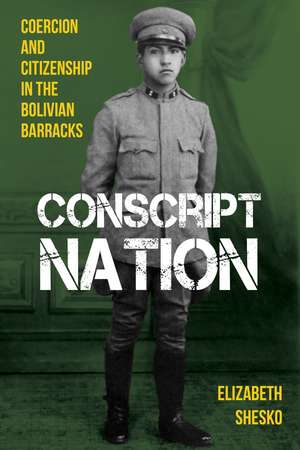
Conscript Nation: Coercion and Citizenship in the Bolivian Barracks: Pitt Latin American Series
Autor Elizabeth Sheskoen Limba Engleză Hardback – 12 mai 2020
Evoluția istoriografiei moderne a demonstrat că armata nu este doar o instituție de apărare, ci un laborator social complex unde se forjează conceptele de cetățenie și apartenență. În lucrarea Conscript Nation, Elizabeth Shesko explorează această realitate în contextul Boliviei secolului XX, investigând modul în care serviciul militar obligatoriu a modelat relația dintre stat și individ. Reținem perspectiva inedită a autoarei, care refuză să vadă recrutarea ca pe o simplă coerciție oligarhică; în schimb, ne prezintă un „pact” social în care cetățenii de rând au utilizat stagiul militar pentru a-și negocia locul într-o națiune profund fragmentată.
Suntem de părere că valoarea academică a volumului rezidă în utilizarea unor înregistrări militare interne, consultate aici pentru prima dată. Această sursă permite o analiză detaliată a vieții din cazarme, transformându-le dintr-un instrument de asimilare forțată a comunităților indigene într-un spațiu de mediere între elite și mase. Stilul este riguros, specific literaturii de specialitate, însă structura narativă reușește să surprindă tensiunile dintre idealul educațional al statului și realitatea discriminărilor etnice. Conscript Nation completează perspectiva oferită de Military Struggle and Identity Formation in Latin America, adăugând o analiză de profunzime asupra mecanismelor interne de negociere a puterii, dincolo de perioadele de conflict deschis. Dacă lucrarea editată de Nicola Foote oferă o privire de ansamblu regională, Elizabeth Shesko se concentrează pe micro-istoria relațiilor civil-militare care au definit statul bolivian modern.
Din seria Pitt Latin American Series
-
 Preț: 445.75 lei
 -
 Preț: 480.81 lei
 -
 Preț: 438.81 lei
 -
 Preț: 446.38 lei
 -
 Preț: 406.97 lei
 -
 Preț: 403.35 lei
 -
 Preț: 444.17 lei
 -
 Preț: 362.53 lei
 - 19%
 Preț: 439.22 lei
 -
 Preț: 394.78 lei
 -
 Preț: 443.78 lei
 -
 Preț: 411.94 lei
 -
 Preț: 404.37 lei
 -
 Preț: 443.78 lei
 -
 Preț: 403.13 lei
 -
 Preț: 411.72 lei
 -
 Preț: 475.21 lei
 -
 Preț: 498.18 lei
 -
 Preț: 368.90 lei
 -
 Preț: 441.18 lei
 -
 Preț: 474.43 lei
 -
 Preț: 488.19 lei
 - 15%
 Preț: 473.33 lei
 -
 Preț: 443.78 lei
 -
 Preț: 405.55 lei
 - 19%
 Preț: 439.73 lei
 -
 Preț: 446.38 lei
 -
 Preț: 407.36 lei
 -
 Preț: 439.99 lei
 -
 Preț: 396.98 lei
 -
 Preț: 448.75 lei
 -
 Preț: 451.74 lei
 -
 Preț: 408.32 lei
 -
 Preț: 404.37 lei
 -
 Preț: 404.37 lei
 -
 Preț: 446.38 lei
 -
 Preț: 376.08 lei
 -
 Preț: 432.82 lei
 -
 Preț: 410.52 lei
 -
 Preț: 376.08 lei
 -
 Preț: 404.37 lei
 -
 Preț: 431.24 lei
 -
 Preț: 447.55 lei
 -
 Preț: 396.98 lei
 -
 Preț: 401.95 lei
 -
 Preț: 401.95 lei
 -
 Preț: 399.36 lei
 -
 Preț: 440.78 lei
 -
 Preț: 398.16 lei
Preț: 372.52 lei
Carte disponibilă
Livrare economică 17 noiembrie-01 decembrie
Specificații
ISBN-10: 0822946025
Pagini: 264
Dimensiuni: 152 x 229 x 28 mm
Greutate: 0.51 kg
Ediția:1
Editura: University of Pittsburgh Press
Colecția University of Pittsburgh Press
Seria Pitt Latin American Series
De ce să citești această carte
Această lucrare este esențială pentru cercetătorii istoriei Americii Latine și ai sociologiei militare. Cititorul va înțelege cum o instituție coercitivă poate deveni, paradoxal, un motor al incluziunii sociale și un spațiu de definire a masculinității și cetățeniei. Este o lectură fundamentală pentru a descifra complexitatea politică a Boliviei contemporane prin prisma arhivelor militare inedite.
Despre autor
Elizabeth Shesko este o specialistă recunoscută în istoria Americii Latine, cu un accent deosebit pe formarea statului, relațiile etnice și istoria militară a regiunii andine. Cercetările sale se disting prin utilizarea metodică a arhivelor primare și prin abordarea interdisciplinară a conceptului de cetățenie. Prin activitatea sa academică, Shesko contribuie la reevaluarea rolului instituțiilor de stat în viața comunităților indigene din Bolivia, fiind o voce importantă în cadrul studiilor latino-americane contemporane.
Descriere scurtă
Recenzii
“Conscript Nation makes an important contribution to the literature on Bolivia and to our understanding of the armed forces’ place in Latin American society. . . . Elizabeth Shesko’s study provides several correctives to prevailing misconceptions about the military during the twentieth century and explores how conscription created a form of national belonging for the nation’s Indigenous majority.” —Hispanic American Historical Review