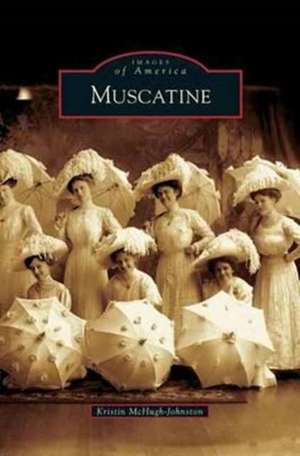
Muscatine
Autor Kristin McHugh-Johnstonen Limba Engleză Hardback – 8 noi 2010
Preț: 183.93 lei
Puncte Express: 276
Carte tipărită la comandă
Livrare economică 21 noiembrie-05 decembrie
Livrare prin curier în România Termenul estimat este afișat lângă disponibilitate.
Transport gratuit de la 400.00 lei Plată online sau ramburs, în funcție de opțiunile comenzii.
Retur gratuit în 14 zile Comandă securizată și suport în română.
Specificații
ISBN-13: 9781531656225
ISBN-10: 1531656226
Pagini: 130
Dimensiuni: 175 x 250 x 12 mm
Greutate: 0.41 kg
Editura: Arcadia Publishing Library Editions
ISBN-10: 1531656226
Pagini: 130
Dimensiuni: 175 x 250 x 12 mm
Greutate: 0.41 kg
Editura: Arcadia Publishing Library Editions
Notă biografică
Kristin McHugh-Johnston combines material that has never been published from the archives of the Muscatine Art Center and Musser Public Library with well-known local images to create a snapshot of Muscatine's first 100 years. An international award-wi
Descriere
Descriere de la o altă ediție sau format:
Muscatine, situated on one of the largest east-west bends of the Mississippi River, grew from a small territorial trading post into an Iowa community rich in agricultural bounty and manufacturing ingenuity. Mussels harvested from the mighty Mississippi propelled the city to the status of the "Pearl Button Capital of the World" by the turn of the 20th century. Booming lumber yards, sash and door manufacturers, and the first H. J. Heinz canning facility built outside of Pittsburg added to the town's growth and prosperity. An aspiring writer named Samuel Clemens, civil rights pioneer Alexander Clark Sr., the self-proclaimed cancer cure of Norman Baker, and other notables add even more texture to the town's rich heritage. The story of Muscatine is traced through these businesses and the men and women who left a legacy of work ethic that defines the Midwest.
Muscatine, situated on one of the largest east-west bends of the Mississippi River, grew from a small territorial trading post into an Iowa community rich in agricultural bounty and manufacturing ingenuity. Mussels harvested from the mighty Mississippi propelled the city to the status of the "Pearl Button Capital of the World" by the turn of the 20th century. Booming lumber yards, sash and door manufacturers, and the first H. J. Heinz canning facility built outside of Pittsburg added to the town's growth and prosperity. An aspiring writer named Samuel Clemens, civil rights pioneer Alexander Clark Sr., the self-proclaimed cancer cure of Norman Baker, and other notables add even more texture to the town's rich heritage. The story of Muscatine is traced through these businesses and the men and women who left a legacy of work ethic that defines the Midwest.