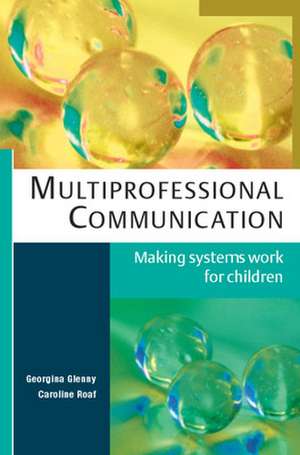
Multiprofessional Communication: Making Systems Work for Children
Autor Georgina Glenny, Caroline Roafen Limba Engleză Paperback – 16 aug 2008
În peisajul academic și profesional al serviciilor sociale, Multiprofessional Communication: Making Systems Work for Children se poziționează ca un instrument esențial pentru înțelegerea mecanismelor de colaborare între educație, sănătate și asistență socială. Observăm că autorii, Georgina Glenny și Caroline Roaf, nu se limitează la o expunere teoretică a politicilor publice, ci plasează volumul în centrul practicii de teren, fiind o resursă valoroasă pentru studenții și managerii care navighează reorganizările administrative complexe. Contextul disciplinar este definit de necesitatea integrării serviciilor conform agendei 'Every Child Matters', oferind soluții pentru depășirea barierelor de comunicare instituțională.
Remarcăm o structură riguroasă, organizată în șapte capitole care ghidează cititorul de la provocările teoretice ale muncii multiprofesionale către aplicarea practică a sistemelor de comunicare. Un element distinctiv al cărții este utilizarea teoriei complexității pentru a analiza studiile de caz, demonstrând cum circuitele de feedback pot transforma modul în care informația circulă la toate nivelurile unei organizații. Acoperă aceeași arie ca Effective Communication and Engagement with Children and Young People, their Families and Carers de Alison Dunhill, dar cu o abordare mai orientată spre analiza sistemelor și a structurilor organizaționale, spre deosebire de accentul pus de Dunhill pe implicarea directă a beneficiarilor.
Prin parcurgerea capitolelor dedicate personalizării serviciilor și dezvoltării unei culturi pozitive de rezolvare a problemelor, apreciem modul în care lucrarea subliniază că eficiența sistemului depinde fundamental de calitatea relațiilor umane. Este o lectură care echilibrează rigoarea cercetării cu pragmatismul necesar în serviciile publice contemporane.
Preț: 138.78 lei
Preț vechi: 196.63 lei
-29%
Carte disponibilă
Livrare economică 05-10 noiembrie
Livrare express 17-23 octombrie pentru 77.71 lei
Specificații
ISBN-10: 0335228569
Pagini: 152
Dimensiuni: 150 x 228 x 9 mm
Greutate: 0.23 kg
Editura: McGraw Hill Education
Colecția Open University Press
Locul publicării:United Kingdom
V-ar putea interesa
-
 -29%Preț: 182.67 lei257.80 lei
 -
 Creating Learning without LimitsMandy Swann-27%Preț: 197.17 lei268.82 lei
 -
 New Literacies: Everyday Practices and Social LearningColin Lankshear-26%Preț: 201.65 lei271.23 lei
 -
 Expansive EducationBill Lucas-27%Preț: 194.56 lei266.20 lei
 -
 Introduction to Childhood StudiesMary Jane Kehily-28%Preț: 172.70 lei241.03 lei
 -
 Critical Essays on Major Curriculum TheoristsDavid ScottPreț: 445.71 lei
 -
 Preț: 401.04 lei
 -
 Teaching To TransgressBell HooksPreț: 319.45 lei
 -
 -16%Preț: 238.54 lei285.66 lei
 -
 The Power of PedagogyJenny Leach-15%Preț: 663.97 lei781.14 lei
 -
 Enriching Curriculum for All StudentsJoseph S. RenzulliPreț: 306.30 lei
 -
 Cognition and Curriculum ReconsideredElliot W. EisnerPreț: 195.78 lei
De ce să citești această carte
Recomandăm această carte managerilor din sectorul public și studenților la asistență socială sau educație care doresc să înțeleagă de ce eșuează adesea colaborarea inter-agenții. Cititorul câștigă un set de instrumente analitice bazate pe teoria complexității, învățând cum să construiască sisteme de comunicare solide care să pună cu adevărat nevoile copilului în centrul deciziilor administrative. Este un ghid practic despre cum să faci sistemele să funcționeze, nu doar să existe pe hârtie.
Despre autor
Georgina Glenny și Caroline Roaf sunt experți recunoscuți în domeniul educației și al lucrului multiprofesional, cu o vastă experiență în cercetarea modului în care instituțiile colaborează pentru sprijinirea copiilor. Caroline Roaf a fost implicată activ în editarea publicațiilor de specialitate privind nevoile educaționale speciale, iar expertiza sa academică completează perspectiva practică a Georginei Glenny. Împreună, au dezvoltat modele de comunicare care integrează teoria sistemelor cu realitățile cotidiene ale lucrătorilor sociali și cadrelor didactice, contribuind semnificativ la literatura de specialitate publicată de Open University Press.
Descriere scurtă
"... a positive addition to the practice literature for managers and professionals. Senior managers should definitely read this before they start a further round of re-organization!"
Journal of Interprofessional Care
- What are the features of successful multiprofessional work?
- How can schools, local authorities and individual fieldworkers work effectively to achieve the best possible outcomes for the children and families with whom they are working?
- How can the Every Child Matters policy agenda be implemented successfully?
Multiprofessional Communication is important reading for students on courses with a focus on multiprofessional working, as well as practitioners and policy makers in Education, Health and Social Care.
Cuprins
Chapter 2: The research base - exploring multiprofessional communication systems in action
Chapter 3: Evolving a communication system
Chapter 4: Customizing provision to meet local needs
Chapter 5: Achieving a positive problem solving culture
Chapter 6: The importance of relationships in the field
Chapter 7: Conclusions - the dynamics of complexity