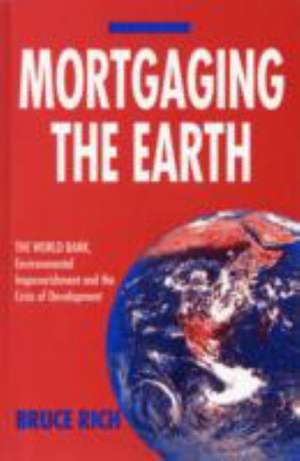
Mortgaging the Earth: World Bank, Environmental Impoverishment and the Crisis of Development
Autor Bruce Richen Limba Engleză Paperback – mai 1994
Preț: 396.60 lei
Puncte Express: 595
Carte tipărită la comandă
Livrare economică 06-20 iunie
Specificații
ISBN-13: 9781853832215
ISBN-10: 1853832219
Pagini: 388
Dimensiuni: 152 x 229 x 25 mm
Greutate: 0.52 kg
Ediția:1
Editura: Taylor & Francis
Colecția Routledge
Locul publicării:Oxford, United Kingdom
ISBN-10: 1853832219
Pagini: 388
Dimensiuni: 152 x 229 x 25 mm
Greutate: 0.52 kg
Ediția:1
Editura: Taylor & Francis
Colecția Routledge
Locul publicării:Oxford, United Kingdom
Cuprins
Chapter 1 The Dwelling Place of the Angels; Chapter 2 Decade of Debacles; Chapter 3 Brave New World at Bretton Woods; Chapter 4 The Faustian Paradox of Robert McNamara; Chapter 5 Greens Lay Siege to the Crystal Palace; Chapter 6 The Emperor’s New Clothes; Chapter 7 The Castle of Contradictions; Chapter 8 From Descartes to Chico Mendes: A Brief History of Modernity as Development; Chapter 9 Who Shall Rule the World—and How?; Chapter 10 What on Earth Is to Be Done?;
Descriere
Descriere de la o altă ediție sau format:
This critique of World Bank operations examines the effects of this organization on the societies in which it operates. Highly critical of the Bank's practices in its 50 years of operation, the author demonstrates how the Bank has become virtually unaccountable and a law unto itself. He describes how the Bank has supported oppressive regimes and loaned money to support large projects which have displaced local populations. He argues further that the Bank's current policies of structural adjustment are arresting the development of Third World countries.
This critique of World Bank operations examines the effects of this organization on the societies in which it operates. Highly critical of the Bank's practices in its 50 years of operation, the author demonstrates how the Bank has become virtually unaccountable and a law unto itself. He describes how the Bank has supported oppressive regimes and loaned money to support large projects which have displaced local populations. He argues further that the Bank's current policies of structural adjustment are arresting the development of Third World countries.