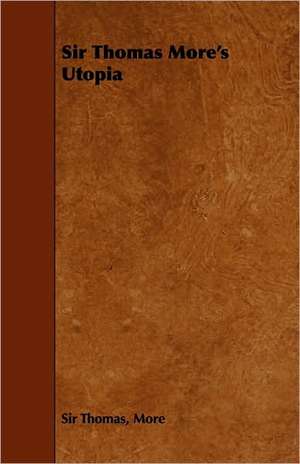
More, T: Utopia
en Limba Engleză Paperback – 21 dec 2006
Recomandăm această ediție revizuită a lucrării Utopia ca referință fundamentală pentru studiile de licență în filozofie politică și istoria ideilor. Scrisă în limba latină în 1516, opera lui Thomas More rămâne textul care a dat numele unui întreg gen literar și filozofic, propunând o viziune radicală despre o societate fără proprietate privată și fără bani. Ediția de față se distinge prin modernizarea traducerii clasice realizate de G.C. Richards, oferind un text accesibil ce păstrează rigoarea și spiritul satiric al originalului. Subliniem structura complexă a volumului, care depășește simpla narațiune a călătorului Raphael Hythloday. Textul este încadrat de un aparat critic valoros ce include corespondența lui More cu Erasmus și referințe la Republica lui Plato, facilitând înțelegerea contextului umanist în care a fost zămislită opera. Cititorii familiarizați cu Thomas More's Utopia de Lawrence Wilde vor aprecia în acest volum materialele auxiliare, precum secțiunile despre limba utopică și scrisorile către contemporani, care oferă o perspectivă directă asupra procesului de creație. În contextul celorlalte scrieri ale autorului, precum Three Early Modern Utopias, acest volum evidențiază tranziția de la critica socială acerbă la construcția unui model teoretic de „commonwealth”. Progresia de la dialogul filosofic la descrierea detaliată a instituțiilor utopice — de la sistemul de rotație a locuințelor la organizarea muncii de șase ore pe zi — oferă o analiză profundă a tensiunii dintre interesul individual și cel colectiv.
Preț: 204.31 lei
Cartea nu mai face parte din oferta noastră
Specificații
ISBN-10: 1406795216
Pagini: 156
Dimensiuni: 140 x 216 x 9 mm
Greutate: 0.21 kg
Editura: Read Books
Locul publicării:United Kingdom
V-ar putea interesa
-
 The PrinceNiccolo MachiavelliPreț: 28.01 lei
 -
 RepublicPlatoPreț: 30.76 lei
 -
 The Imitation of ChristThomas À Kempis-37%Preț: 58.99 lei93.04 lei
 -
 -18%Preț: 59.02 lei72.22 lei
 -
 Thomas MoreJohn GuyPreț: 77.01 lei
 -
 MeditationsMarcus AureliusPreț: 34.00 lei
 -
 The RepublicPlatoPreț: 47.83 lei
 -
 UtopiaGregory Claeys-19%Preț: 75.27 lei93.04 lei
 -
 AristotleAristotlePreț: 193.55 lei
 -
 CandideVoltairePreț: 32.48 lei
 -
 Thomas MoreJoanne PaulPreț: 139.14 lei
 -
 Locke: Political WritingsJohn Locke-17%Preț: 141.78 lei171.31 lei
 -
 Henry's ShadowAshley WoodPreț: 191.35 lei
 -
 The Pocket Book of PlatoMichael MoorePreț: 72.54 lei
 -
 PoliticsAristotlePreț: 51.49 lei
 -
 UtopiaThomas MoorePreț: 65.65 lei
 -
 RetrotopiaZygmunt BaumanPreț: 140.83 lei
 -
 A Modern UtopiaH. G. WellsPreț: 51.18 lei
 -
 The Praise of FollyDesiderius ErasmusPreț: 41.07 lei
 -
 Writings of a Well-Learned GentlewomanMargaret More RoperPreț: 312.28 lei
 -
 Homo Deus: A Brief History of TomorrowYuval Noah Harari-16%Preț: 80.40 lei96.07 lei
 -
 The Book of RevelationsJuliet NicolsonPreț: 159.06 lei
 -
 UtopiaThomas MorePreț: 114.50 lei
 -
 The PrinceNiccolò MachiavelliPreț: 33.48 lei
 -
 UtopiaThomas MorePreț: 33.19 lei
 -
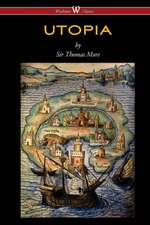 UTOPIA (Wisehouse Classics Edition)Thomas MorePreț: 43.71 lei
 -
 Preț: 105.81 lei
 -
 'A Truly Golden Handbook'Veerle AchtenPreț: 377.32 lei
De ce să citești această carte
Această ediție este esențială pentru studenții și cercetătorii care doresc să exploreze rădăcinile gândirii politice moderne. Cititorul câștigă nu doar acces la un text clasic tradus modern, ci și un context istoric bogat prin scrisorile și notele incluse. Este o oportunitate de a înțelege cum o critică din secolul al XVI-lea asupra inegalității rămâne relevantă în dezbaterile contemporane despre dreptate socială.
Despre autor
Thomas More (1478-1535) a fost un om de stat englez, avocat și umanist de prim rang al Renașterii. Educat la Oxford și format în casa Cardinalului Morton, More a legat prietenii strânse cu mari gânditori precum Erasmus. A servit ca Lord Cancelar sub regele Henric al VIII-lea, însă integritatea sa morală și refuzul de a recunoaște supremația regelui asupra Bisericii au dus la execuția sa. Canonizat ulterior, More rămâne o figură centrală a istoriei intelectuale, Utopia fiind moștenirea sa cea mai influentă, o lucrare care îmbină erudiția clasică cu o viziune socială revoluționară.
Descriere scurtă
Notă biografică
More opposed the Protestant Reformation, directing polemics against the theology of Martin Luther, Huldrych Zwingli, John Calvin and William Tyndale. More also opposed King Henry VIII's separation from the Catholic Church, refusing to acknowledge Henry as Supreme Head of the Church of England and the annulment of his marriage to Catherine of Aragon. After refusing to take the Oath of Supremacy, he was convicted of treason and executed. On his execution, he was reported to have said: "I die the King's good servant, and God's first".
Pope Pius XI canonised More in 1935 as a martyr. Pope John Paul II in 2000 declared him the patron saint "of Statesmen and Politicians".[11][12] The Soviet Union in the early twentieth century honoured him for the purportedly communist attitude toward property rights in Utopia
Born on Milk Street in London, on 7 February 1478, Thomas More was the son of Sir John More,[16] a successful lawyer and later a judge[17], and his wife Agnes (née Graunger). He was the second of six children. More was educated at St Anthony's School, then considered one of London's best schools.[18][19] From 1490 to 1492, More served John Morton, the Archbishop of Canterbury and Lord Chancellor of England, as a household page.[20]:xvi Morton enthusiastically supported the "New Learning" (scholarship which was later known as "humanism" or "London humanism"), and thought highly of the young More. Believing that More had great potential, Morton nominated him for a place at the University of Oxford (either in St. Mary Hall or Canterbury College, both now gone).[21]:38
More began his studies at Oxford in 1492, and received a classical education. Studying under Thomas Linacre and William Grocyn, he became proficient in both Latin and Greek. More left Oxford after only two years-at his father's insistence-to begin legal training in London at New Inn, one of the Inns of Chancery.[20]:xvii[22] In 1496, More became a student at Lincoln's Inn, one of the Inns of Court, where he remained until 1502, when he was called to the Bar
Descriere
16th-century classic by brilliant humanist, churchman and scholar envisioned a patriarchal island kingdom that practiced religious tolerance, in which everybody worked, all goods were community-owned, and violence, bloodshed and vice were nonexistent. Forerunner of many later attempts at establishing "Utopias" both in theory and in practice.
Textul de pe ultima copertă
In this work, which gave its name to the whole genre of books and movements hypothesizing an ideal society, More envisioned a patriarchal island kingdom that practiced religious tolerance, in which everybody worked, no one has more than his fellows, all goods were community-owned, and violence, bloodshed, and vice nonexistent. Based to some extent on the writings of Plato and other earlier authors, Utopia nevertheless contained much that was original with More.
In this inexpensive edition, readers can study for themselves the essentials of More's utopian vision and how, although the ideal society he envisioned is still unrealized, at least some of his proposals have come to pass in today's world.
"