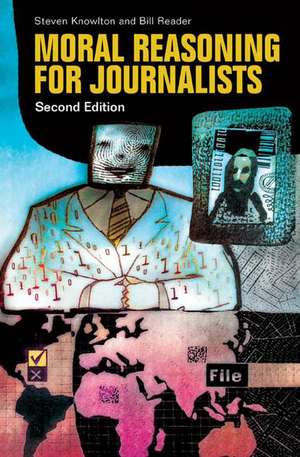
Moral Reasoning for Journalists
Autor Steven Knowlton, Bill Readeren Limba Engleză Hardback – 23 dec 2008
Preț: 473.25 lei
Preț vechi: 674.82 lei
-30%
Puncte Express: 710
Carte tipărită la comandă
Livrare economică 12-26 noiembrie
Livrare prin curier în România Termenul estimat este afișat lângă disponibilitate.
Transport gratuit pentru acest produs Plată online sau ramburs, în funcție de opțiunile comenzii.
Retur gratuit în 14 zile Comandă securizată și suport în română.
Specificații
ISBN-13: 9780313345487
ISBN-10: 0313345481
Pagini: 264
Dimensiuni: 156 x 235 x 28 mm
Greutate: 0.54 kg
Ediția:2
Editura: Bloomsbury Publishing
Colecția Praeger
Locul publicării:New York, United States
ISBN-10: 0313345481
Pagini: 264
Dimensiuni: 156 x 235 x 28 mm
Greutate: 0.54 kg
Ediția:2
Editura: Bloomsbury Publishing
Colecția Praeger
Locul publicării:New York, United States
V-ar putea interesa
-
 European Identity: What the Media SayPaul Bayley-31%Preț: 949.06 lei1379.20 lei
 -
 Journalism Studies: The BasicsMartin ConboyPreț: 203.26 lei
 -
 Magazine Editing: In Print and OnlineJohn MorrishPreț: 437.26 lei
 -
 Key Readings in JournalismElliot King-15%Preț: 605.13 lei711.91 lei
 -
 -15%Preț: 448.00 lei527.05 lei
 -
 Objectivity in JournalismSteven MarasPreț: 217.03 lei
 -
 BloggingJill Walker RettbergPreț: 186.90 lei
 -
 Editing Made EasyBruce KaplanPreț: 54.58 lei
 -
 Participatory JournalismSingerPreț: 277.73 lei
 -
 Preț: 280.05 lei
 -
 The President Is a Sick ManMatthew AlgeoPreț: 107.93 lei
 -
 Preț: 172.84 lei
Cuprins
Foreword
Preface
A Note to Our Fellow Journalists
Part I. Locating Ethical Journalism in the Western Tradition
1. Introduction to Ethical Thinking
2. The Political Case for Moral Reasoning in Journalism
3. The Philosophical Case for Moral Reasoning in Journalism
4. The Economic Case for Moral Reasoning in Journalism
5. The Principles of Ethical Journalism
6. Solving Moral Dilemmas on Deadline: Balancing Competing Elements
Part II. Case Studies: The Principles in Play on the Front Lines
7. Objectivity vs. Bias: How Close Is Too Close When The Subject Is A Little Girl?
8. Objectivity vs. Bias: Keeping Cool When You Get a Hot Quote
9. Objectivity vs. Bias: A Reporter With AIDS Depth of Understanding or Obvious Bias
10. Fairness and Balance: The hostile interview: What Sets 'Real' Journalism Apart from 'Fake' News
11. Fairness and Balance: A Candidate's Past
12. Fairness and Balance: When A Journalist Balks at .
13. Conflict of Interest: The Graffiti Artists: Turn 'Em In, Get the Story, Or Both?
14. Conflicts of Interest: When your own newspaper is in the news
15. Conflicts of Interest: Primary Authorship: Can You Lie about Your Day Job?
16. Privacy vs. The Public's Right to Know: Private Citizens in the Courts: When to Name Names
17. Privacy vs. The Public's Right to Know: Sex in an Elevator: Legitimate News or Sophomoric Titillation?
18. Privacy vs. The Public's Right to Know: Suicide: Important News or a Grotesque Invasion of Privacy?
19. Sensitivity vs. Responsibility to Inform: Offensive Cartoons: Inciting Anger or Inspiring Serious Debate?
20. Sensitivity vs. Responsibility to Inform: When journalists put themselves in harms way
21. Sensitivity vs. Responsibility to Inform: The Grisly War Photo: Powerful Information, but What about Taste?
22. Verification and Attribution: 'Memogate': The Reporting Scandal that Trumped the Real Story
23. Verification and Attribution: Anonymous sources from Deep Throat to the Clinton-Lewinski affair
24. Verification and Attribution: Anonymity in Feedback from the Public How 'Open' Should Forums Be?
25. Avoid Deception: The Casting Couch: Is entrapping a libidinous actor serious news or simply a ratings stunt?
26. Avoid Deception: Is It OK to Use Deception to Reveal Shady World Politics?
27. Correction and Clarification: The Brilliant Student with A Dark Past: How Much is Relevant In Follow-up Reports?
28. Correction and Clarification: Fact-checking Candidates' Claims on the Campaign Trail
Conclusion: What is a Journalist?
Bibliography
Preface
A Note to Our Fellow Journalists
Part I. Locating Ethical Journalism in the Western Tradition
1. Introduction to Ethical Thinking
2. The Political Case for Moral Reasoning in Journalism
3. The Philosophical Case for Moral Reasoning in Journalism
4. The Economic Case for Moral Reasoning in Journalism
5. The Principles of Ethical Journalism
6. Solving Moral Dilemmas on Deadline: Balancing Competing Elements
Part II. Case Studies: The Principles in Play on the Front Lines
7. Objectivity vs. Bias: How Close Is Too Close When The Subject Is A Little Girl?
8. Objectivity vs. Bias: Keeping Cool When You Get a Hot Quote
9. Objectivity vs. Bias: A Reporter With AIDS Depth of Understanding or Obvious Bias
10. Fairness and Balance: The hostile interview: What Sets 'Real' Journalism Apart from 'Fake' News
11. Fairness and Balance: A Candidate's Past
12. Fairness and Balance: When A Journalist Balks at .
13. Conflict of Interest: The Graffiti Artists: Turn 'Em In, Get the Story, Or Both?
14. Conflicts of Interest: When your own newspaper is in the news
15. Conflicts of Interest: Primary Authorship: Can You Lie about Your Day Job?
16. Privacy vs. The Public's Right to Know: Private Citizens in the Courts: When to Name Names
17. Privacy vs. The Public's Right to Know: Sex in an Elevator: Legitimate News or Sophomoric Titillation?
18. Privacy vs. The Public's Right to Know: Suicide: Important News or a Grotesque Invasion of Privacy?
19. Sensitivity vs. Responsibility to Inform: Offensive Cartoons: Inciting Anger or Inspiring Serious Debate?
20. Sensitivity vs. Responsibility to Inform: When journalists put themselves in harms way
21. Sensitivity vs. Responsibility to Inform: The Grisly War Photo: Powerful Information, but What about Taste?
22. Verification and Attribution: 'Memogate': The Reporting Scandal that Trumped the Real Story
23. Verification and Attribution: Anonymous sources from Deep Throat to the Clinton-Lewinski affair
24. Verification and Attribution: Anonymity in Feedback from the Public How 'Open' Should Forums Be?
25. Avoid Deception: The Casting Couch: Is entrapping a libidinous actor serious news or simply a ratings stunt?
26. Avoid Deception: Is It OK to Use Deception to Reveal Shady World Politics?
27. Correction and Clarification: The Brilliant Student with A Dark Past: How Much is Relevant In Follow-up Reports?
28. Correction and Clarification: Fact-checking Candidates' Claims on the Campaign Trail
Conclusion: What is a Journalist?
Bibliography