
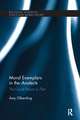
Moral Exemplars in the Analects: The Good Person is That: Routledge Studies in Ethics and Moral Theory
Autor Amy Olberdingen Limba Engleză Hardback – 25 aug 2011
Din seria Routledge Studies in Ethics and Moral Theory
-
 Preț: 484.90 lei
 - 18%
 Preț: 1156.54 lei
 - 15%
 Preț: 414.73 lei
 - 18%
 Preț: 1290.64 lei
 - 15%
 Preț: 422.92 lei
 - 18%
 Preț: 1253.42 lei
 -
 Preț: 460.69 lei
 - 18%
 Preț: 1250.10 lei
 - 15%
 Preț: 471.22 lei
 - 18%
 Preț: 1290.09 lei
 - 15%
 Preț: 418.85 lei
 - 18%
 Preț: 1252.37 lei
 - 18%
 Preț: 1300.41 lei
 - 18%
 Preț: 1295.20 lei
 - 18%
 Preț: 1297.75 lei
 - 18%
 Preț: 1259.69 lei
 - 18%
 Preț: 1290.09 lei
 - 15%
 Preț: 450.35 lei
 -
 Preț: 469.94 lei
 -
 Preț: 473.20 lei
 - 15%
 Preț: 418.85 lei
 -
 Preț: 467.04 lei
 - 15%
 Preț: 428.76 lei
 - 18%
 Preț: 1245.81 lei
 -
 Preț: 484.25 lei
 - 18%
 Preț: 1109.25 lei
 - 15%
 Preț: 437.26 lei
 - 15%
 Preț: 484.50 lei
 -
 Preț: 470.92 lei
 - 18%
 Preț: 1303.58 lei
 - 18%
 Preț: 1283.04 lei
 - 18%
 Preț: 1291.72 lei
 - 18%
 Preț: 1110.91 lei
 - 18%
 Preț: 1112.48 lei
 -
 Preț: 473.38 lei
 -
 Preț: 464.14 lei
 - 18%
 Preț: 1291.72 lei
Preț: 1254.47 lei
Preț vechi: 1529.84 lei
-18%
Puncte Express: 1882
Carte tipărită la comandă
Livrare economică 04-18 decembrie
Livrare prin curier în România Termenul estimat este afișat lângă disponibilitate.
Transport gratuit pentru acest produs Plată online sau ramburs, în funcție de opțiunile comenzii.
Retur gratuit în 14 zile Comandă securizată și suport în română.
Specificații
ISBN-13: 9780415897051
ISBN-10: 041589705X
Pagini: 252
Dimensiuni: 152 x 229 x 18 mm
Greutate: 0.61 kg
Ediția:1
Editura: Taylor & Francis
Colecția Routledge
Seria Routledge Studies in Ethics and Moral Theory
Locul publicării:Oxford, United Kingdom
ISBN-10: 041589705X
Pagini: 252
Dimensiuni: 152 x 229 x 18 mm
Greutate: 0.61 kg
Ediția:1
Editura: Taylor & Francis
Colecția Routledge
Seria Routledge Studies in Ethics and Moral Theory
Locul publicării:Oxford, United Kingdom
V-ar putea interesa
-
 I Ching or Book of ChangesRichard Wilhelm-25%Preț: 103.64 lei138.67 lei
 -
 The First Ten BooksConfucius-21%Preț: 44.49 lei56.19 lei
 -
 The Dysfunction of Ritual in Early ConfucianismMichael David Kaulana Ing-10%Preț: 371.63 lei412.94 lei
 -
 Preț: 62.19 lei
 -
 Preț: 172.24 lei
 -
 The I Ching or Book of ChangesCary F BaynesPreț: 269.31 lei
 -
 Contemporary Confucian Political PhilosophyStephen C AnglePreț: 190.19 lei
 -
 ConfuciusMeher McArthur-28%Preț: 65.88 lei91.15 lei
 -
 Greatest Kan and Li: Gathering the Cosmic LightMantak Chia-29%Preț: 145.67 lei205.66 lei
 -
 ConfucianismPaul GoldinPreț: 401.24 lei
 -
 XinYi WuDao: Heart-Mind - The Dao of Martial ArtsZhao ShouRong-19%Preț: 169.66 lei210.62 lei
 -
 Preț: 324.02 lei
Public țintă
Postgraduate and UndergraduateCuprins
1. Introduction Part 1: Theory 2. An Origins Myth for the Analects 3. The Analects’ Silences 4. Exemplarist Elements in the Analects Part 2: People 5. A Total Exemplar: Confucius 6. A Partial Exemplar: Zilu 7. A Partial Exemplar: Zigong 8. Conclusion. Bibliography. Index. Index Locorum
Recenzii
'In this elegantly written book on Confucius and his Analects, Amy Olberding does a splendid job of explaining how the narrative depictions of Confucius in diverse circumstances collected in the Analects make a necessary complement to the more theoretically or conceptually oriented components of the book.' – Notre Dame Philosophical Reviews
Descriere
In this study, Olberding proposes a new theoretical model for reading the Analects. Her thesis is that the moral sensibility of the text derives from an effort to conceptually capture and articulate the features seen in exemplars, exemplars that are identified and admired pre-theoretically and thus prior to any conceptual criteria for virtue. Put simply, Olberding proposes an "origins myth" in which Confucius, already and prior to his philosophizing knows whom he judges to be virtuous. The work we see him and the Analects' authors pursuing is their effort to explain in an organized, generalized, and abstract way why pre-theoretically identified exemplars are virtuous. Moral reasoning here begins with people and with inchoate experiences of admiration for them. The conceptual work of the text reflects the attempt to analyze such people and parse such experiences in order to distill abstract qualities that account for virtue and can guide emulation.