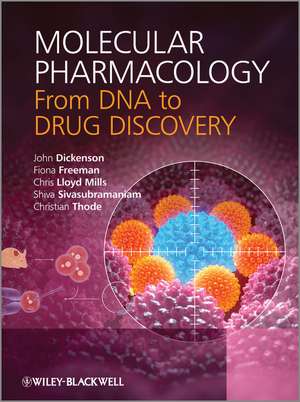
Molecular Pharmacology
Autor John Dickenson, Fiona Freeman, Chris Lloyd Mills, Christian Thode, Shiva Sivasubramaniamen Limba Engleză Hardback – 22 ian 2013
Suntem de părere că tranziția de la farmacologia clasică la cea moleculară este cel mai bine ilustrată prin modul în care abordăm astăzi patologii complexe, precum fibroza chistică. Molecular Pharmacology debutează cu scenarii clinice ce analizează meritele relative ale terapiei medicamentoase pentru mutații specifice versus corectarea defectului genetic prin terapie genică. Această lucrare, semnată de John Dickenson și echipa sa, propune o schimbare de paradigmă: nu se mai pornește de la testarea substanțelor pe culturi celulare pentru a observa efectele, ci se proiectează molecule care să se muleze pe profilul biologic al pacientului. Apreciem structura riguroasă a volumului, care abandonează organizarea tradițională pe sisteme de organe în favoarea unei analize clinice a țintelor moleculare. Sunt explorate în detaliu cele patru familii esențiale — receptorii cuplați cu proteina G, canalele ionice, receptorii nucleari și transportorii — oferind cititorului instrumentele necesare pentru a interpreta datele farmacologice moderne. Merită menționat că textul integrează progrese recente din farmacogenomică, explicând cum variațiile genetice individuale dictează răspunsul la tratament și riscul de reacții adverse. În contextul literaturii de specialitate, acest volum completează Principles of Pharmacology de David Golan prin accentul pus pe mecanismele moleculare pure și tehnicile de clonare a țintelor, oferind o perspectivă mai tehnică asupra designului de medicamente. De asemenea, lucrarea aduce un plus de aplicabilitate practică față de Encyclopedia of Molecular Pharmacology de Stefan Offermanns, transformând informația enciclopedică într-un ghid metodologic pentru cercetători și studenți la nivel de master sau doctorat.
Preț: 746.25 lei
Preț vechi: 1114.61 lei
-33%
Carte indisponibilă temporar
Specificații
ISBN-10: 0470684445
Pagini: 424
Dimensiuni: 188 x 251 x 23 mm
Greutate: 1.04 kg
Editura: Wiley
Locul publicării:Chichester, United Kingdom
V-ar putea interesa
-
 -15%Preț: 572.96 lei673.74 lei
 -
 Oxford Handbook of Practical Drug TherapyDuncan Richards-18%Preț: 276.05 lei335.31 lei
 -
 Brody's Human PharmacologyLynn Wecker-5%Preț: 563.21 lei592.85 lei
 -
 Rang & Dale's PharmacologyJames M. Ritter-26%Preț: 427.65 lei578.72 lei
 -
 -32%Preț: 821.06 lei1201.31 lei
 -
 -30%Preț: 710.22 lei1017.64 lei
 -
 Cellular and Molecular ImmunologyAbul K. Abbas-28%Preț: 508.25 lei710.50 leiRecomandat
 -
 Dale's Pharmacology CondensedClive P. Page-29%Preț: 216.89 lei306.92 lei
 -
 Medical Pharmacology and TherapeuticsDerek G. Waller-27%Preț: 400.83 lei552.71 lei
 -
 Human Molecular GeneticsTom Strachan-5%Preț: 706.37 lei743.54 lei
 -
 Essentials of Pharmaceutical ChemistryDonald Cairns-6%Preț: 352.10 lei373.93 lei
 -
 -9%Preț: 1453.19 lei1596.91 lei
 -
 Textbook of PharmacoepidemiologyBrian L Strom-5%Preț: 651.99 lei686.31 lei
 -
 Pharmacology and Therapeutics: Principles to PracticeScott A. Waldman-27%Preț: 755.28 lei1027.77 lei
 -
 Principles of Pharmacology: The Pathophysiologic Basis of Drug TherapyDavid E. Golan MD, PhD-5%Preț: 676.19 lei711.78 lei
 -
 Introduction to the Pharmaceutical Sciences: An Integrated ApproachNita K. Pandit PhD-23%Preț: 568.94 lei737.68 lei
 -
 -5%Preț: 359.06 lei377.96 lei
 -
 New Clinical Genetics, fourth editionAndrew Read-5%Preț: 407.65 lei429.10 lei
 -
 CancerVincent T. Devita-21%Preț: 581.93 lei739.55 lei
 -
 Lippincott Illustrated Reviews: PharmacologyKaren Whalen PharmD, BCPS-23%Preț: 338.98 lei441.70 lei
Public țintă
The primary market is second/third year pharmacology, biomedical and medical under–graduate and MSc students who wish to obtain a greater understanding of the molecular and cellular aspects of pharmacology.It will also appeal to PhD students in Pharmaceutical Sciences. These students tend to have background in pharmacy or chemistry, but they are weak in biology or pharmacology.
Course titles include:
Pharmacology
Pharmacology and Physiology
Practitioners
The secondary market will be practitioners for continuing professional development and research scientists in academia and the pharmaceutical industry.
The British Pharmacological Society include the following summary of the pharmaceutical market in the UK on their website (April 2009) . ((http://www.bps.ac.uk/site/cms/contentCategoryView.asp?category=231) The pharmaceutical and healthcare industries depend heavily on pharmacology for their notable success.
The industry invested £3.2 billion in UK research and development in 2003 – nearly £9 million every day
Pharmaceutical companies carry out nearly a quarter of all industrial research and development in the UK, and spend a third of all their sales on R&D
Nearly a quarter of the world′s top medicines were discovered and developed in Britain
Twelve out the top 25 medicines prescribed by GPs on the NHS are British
UK Pharmaceutical industry exports in 2003 were £11.9 billion – a trade surplus of £3.6 billion for the sector
The industry employs around 73,000 people and generates another 250,000 jobs in related industries
Exports per employee in 2003 were more than £140,000.
De ce să citești această carte
Recomandăm această resursă studenților la farmacie și medicină care doresc să depășească etapa memorării claselor de medicamente. Veți câștiga o înțelegere profundă a modului în care designul molecular dictează succesul terapeutic. Este un instrument esențial pentru pregătirea în cercetare sau dezvoltare farmaceutică, oferind claritate în domenii complexe precum terapia genică și farmacogenomica.