Cantitate/Preț
Produs

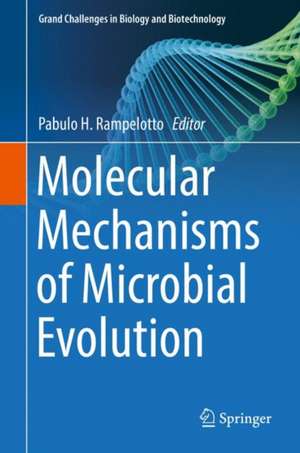
Molecular Mechanisms of Microbial Evolution: Grand Challenges in Biology and Biotechnology

Editat de Pabulo H. Rampelotto
en Limba Engleză Hardback – 23 oct 2018

Observăm că Molecular Mechanisms of Microbial Evolution se distinge prin aplicabilitatea practică imediată a fundamentelor teoretice în domenii critice precum sănătatea publică și ingineria metabolică. Într-o eră a tehnologiilor de secvențiere de mare randament, acest volum, editat de Pabulo H. Rampelotto, servește drept resursă esențială pentru înțelegerea modului în care microbiosfera a modelat viața pe Pământ timp de patru miliarde de ani. Structura cărții facilitează o progresie logică de la analiza genomicii comparative la observația directă a proceselor evolutive în laborator, oferind o rezoluție asupra mecanismelor biologice pe care pionierii geneticii abia o puteau anticipa.

Remarcăm modul în care lucrarea extinde cadrul propus de Microbial Evolution under Extreme Conditions de Corien Bakermans, aducând date noi din era post-genomică și mutând accentul de la supraviețuirea în condiții limită către complexitatea interacțiunilor gazdă-microbi. De asemenea, volumul completează perspectiva istorică din The New Foundations of Evolution de Jan Sapp, oferind mecanisme moleculare concrete pentru tranzițiile evolutive descrise acolo. Autorii reexaminează critic rolul mutațiilor în regiunile non-codante, demonstrând că variația semnalelor de reglare este adesea motorul principal al diversității microbiene, depășind modelele clasice axate strict pe regiunile codante.

În contextul operei editorului, acest titlu consolidează direcția începută cu Grand Challenges in Marine Biotechnology și Grand Challenges in Algae Biotechnology. Dacă lucrările anterioare se concentrau pe potențialul industrial și economic al microorganismelor, volumul de față sondează profunzimile teoretice ale evoluției acestora, oferind baza științifică necesară pentru orice aplicație biotehnologică avansată. Ritmul expunerii este unul academic, dens în date, dar extrem de riguros, fiind o piesă centrală pentru curriculumul de microbiologie și biologie evoluționistă.
Citește tot Restrânge

Din seria Grand Challenges in Biology and Biotechnology

Preț: 134814 lei

Preț vechi: 164408 lei
-18%

Puncte Express: 2022

Carte disponibilă

Livrare economică 15-29 mai


Specificații

ISBN-13: 9783319690773
ISBN-10: 3319690779
Pagini: 464
Ilustrații: XIII, 448 p. 71 illus., 54 illus. in color.
Dimensiuni: 160 x 241 x 29 mm
Greutate: 0.94 kg
Ediția:1st ed. 2018
Editura: Springer
Colecția Grand Challenges in Biology and Biotechnology
Seria Grand Challenges in Biology and Biotechnology

Locul publicării:Cham, Switzerland

De ce să citești această carte

Recomandăm această carte cercetătorilor și studenților avansați care doresc să înțeleagă evoluția dincolo de modelele teoretice simpliste. Cititorul câștigă o perspectivă actualizată asupra modului în care genetica moleculară și biotehnologia rescriu istoria vieții. Este un instrument indispensabil pentru cei care lucrează în patogeneză și simbioză, oferind mecanisme clare pentru adaptarea microbiană, esențiale în contextul rezistenței la antibiotice și al ingineriei genetice.


Despre autor

Pabulo H. Rampelotto este un cercetător și editor recunoscut în domeniul biotehnologiei, coordonând seria de prestigiu Grand Challenges in Biology and Biotechnology publicată de Springer. Expertiza sa acoperă o gamă largă de subiecte, de la biotehnologia marină și studiul algelor până la mecanismele moleculare ale evoluției microbiene. Prin activitatea sa editorială, Rampelotto reunește lideri globali din mediul academic și industrial pentru a aborda cele mai presante întrebări din științele vieții, punând un accent deosebit pe integrarea noilor tehnologii genomice în înțelegerea proceselor biologice fundamentale.


Descriere scurtă

One of the most profound paradigms that have transformed our understanding about life over the last decades was the acknowledgement that microorganisms play a central role in shaping the past and present environments on Earth and the nature of all life forms. Each organism is the product of its history and all extant life traces back to common ancestors, which were microorganisms. Nowadays, microorganisms represent the vast majority of biodiversity on Earth and have survived nearly 4 billion years of evolutionary change. Microbial evolution occurred and continues to take place in a great variety of environmental conditions. However, we still know little about the processes of evolution as applied to microorganisms and microbial populations. In addition, the molecular mechanisms by which microorganisms communicate/interact with each other and with multicellular organisms remains poorly understood. Such patterns of microbe-host interaction are essential to understand the evolution of microbial symbiosis and pathogenesis.
Recent advances in DNA sequencing, high-throughput technologies, and genetic manipulation systems have enabled studies that directly characterize the molecular and genomic bases of evolution, producing data that are making us change our view of the microbial world. The notion that mutations in the coding regions of genomes are, in combination with selective forces, the main contributors to biodiversity needs to be re-examined as evidence accumulates, indicating that many non-coding regions that contain regulatory signals show a high rate of variation even among closely related organisms. Comparative analyses of an increasing number of closely related microbial genomes have yielded exciting insight into the sources of microbial genome variability with respect to gene content, gene order and evolution of genes with unknown functions. Furthermore, laboratory studies (i.e. experimental microbial evolution) are providing fundamental biological insight through direct observation of the evolution process. They not only enable testing evolutionary theory and principles, but also have applications to metabolic engineering and human health. 
Overall, these studies ranging from viruses to Bacteria to microbial Eukaryotes are illuminating the mechanisms of evolution at a resolution that Darwin, Delbruck and Dobzhansky could barely have imagined. Consequently, it is timely to review and highlight the progress so far as well as discuss what remains unknown and requires future research. This book explores the current state of knowledge on the molecular mechanisms of microbial evolution with a collection of papers written by authors who are leading experts in the field.


Notă biografică

Pabulo Henrique Rampelotto is the founder and Editor-in-Chief of the Springer Book Series “Grand Challenges in Biology and Biotechnology”. He is also Editor-in-Chief, Associate Editor, Senior Editor, Guest Editor and member of the editorial board of several scientific journals on the field of Life Sciences and Biotechnology. Furthermore, Pabulo is member of four Scientific Advisory Boards of Lifeboat Foundation, alongside several Nobel Laureates and other distinguished scientists, philosophers, educators, engineers and economists. Most of his recent work has been dedicated to the editorial process of several scientific journals in life science and biotechnology, as well as on the organization of special issues and books in his fields of expertise. In his special issues and books, some of the most distinguished team leaders in the field have published their work, ideas and findings, including Nobel Laureates and several of the highly cited scientists according to the ISI Institute. 

Caracteristici

Provides new insights on the molecular mechanisms of microbial evolution Highlights the relevance and challenges of studying microbial evolution Foreword written by Werner Arber (1978 Nobel Prize in Physiology or Medicine) Includes supplementary material: sn.pub/extras