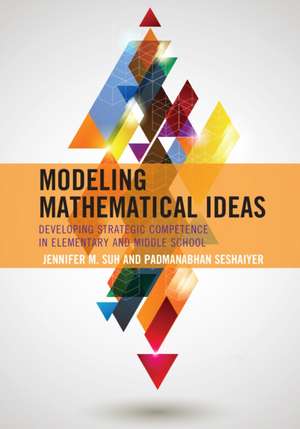
Modeling Mathematical Ideas: Developing Strategic Competence in Elementary and Middle School
Autor Jennifer M. Suh, Padmanabhan Seshaiyeren Limba Engleză Paperback – 23 dec 2016
Preț: 346.24 lei
Preț vechi: 462.56 lei
-25%
Puncte Express: 519
Carte tipărită la comandă
Livrare economică 28 noiembrie-12 decembrie
Livrare prin curier în România Termenul estimat este afișat lângă disponibilitate.
Transport gratuit de la 400.00 lei Plată online sau ramburs, în funcție de opțiunile comenzii.
Retur gratuit în 14 zile Comandă securizată și suport în română.
Specificații
ISBN-13: 9781475817591
ISBN-10: 1475817592
Pagini: 220
Ilustrații: 17 b/w illustrations; 16 tables; 90 graphs; 31 textboxes
Dimensiuni: 175 x 254 x 14 mm
Greutate: 0.45 kg
Editura: Bloomsbury Publishing
Colecția Rowman & Littlefield
Locul publicării:New York, United States
ISBN-10: 1475817592
Pagini: 220
Ilustrații: 17 b/w illustrations; 16 tables; 90 graphs; 31 textboxes
Dimensiuni: 175 x 254 x 14 mm
Greutate: 0.45 kg
Editura: Bloomsbury Publishing
Colecția Rowman & Littlefield
Locul publicării:New York, United States
V-ar putea interesa
-
 The Expert Teacher of EnglishAndrew GoodwynPreț: 338.62 lei
 -
 The ChosenJerome KarabelPreț: 169.05 lei
 -
 Science Is SimplePeggy AshbrookPreț: 127.04 lei
 -
 -21%Preț: 255.93 lei325.50 lei
 -
 Multicultural Children's LiteratureAmbika Gopalakrishnan-27%Preț: 790.80 lei1083.28 lei
 -
 Making the Most of Small Groups: Differentiation for AllDebbie DillerPreț: 289.65 lei
 -
 English in Blue & White: Answer KeyChris Giles-19%Preț: 135.58 lei167.60 lei
 -
 Preț: 111.60 lei
 -
 Preț: 64.78 lei
Cuprins
Chapter 1: Developing Strategic Competence through Modeling Mathematical Ideas
1.1 Developing Strategic Competence through Modeling Mathematical Ideas
1.2 Promoting Math Proficiency and Mathematical Practices
1.3 Problem Solving and Mathematical Modeling in the Elementary and Middle Grades
1.4 Multiple Representations and Strategies as Tools to Cultivate Visible Thinking in Mathematics
1.5 Importance of Understanding the Vertical Learning Progression to Deepen Students' Mathematical Understanding
1.6 Technology Integration in Problem Solving
1.7 More Related Rich Problems to Explore
Chapter 2: Setting Math Norms to Promote Math Reasoning and Modeling
2. 1 Developing Persistent Problem Solvers with a Productive Disposition towards Math
2.2 Unpacking the Mathematics for Deeper Conceptual Learning
2.3 Choosing Worthwhile Tasks through Cognitive Demand Analysis
2.4 Promoting the Core Teaching Practices through Research Lessons
2.5 Integration Technology and Connecting to the Learning Progression
2.6 Assessing Students Understanding through a Problem-based Task
Chapter 3: Engaging in Mathematical Modeling in the Elementary and Middle Grades
3.1 Math Modeling in the Elementary and Middle Grades: What are the building blocks?
3.2 Mathematical Modeling through Unstructured Real-World Problems
3.3. Lesson Study Focus on the Mathematical Modeling: Traffic Jam
3.4 Promoting the 21st Century Skills
3.5 Technology Integration in Problem Posing and Problem Solving
3.6 A Related Rich Problem to Explore
Chapter 4: Modeling Math Ideas with Numbers and Operations
4.1 Lesson Study Vignette: Prime and Composite Numbers
4.2 Visible Thinking in Math: Using Multiple Representations
4.3 Zooming in on the Learning Progression of Numbers and Operations
4.4 Teaching Strategies: Using Math Happenings
4.5 Connecting Procedural Fluency and Conceptual Understanding
4.6 Technology Integration in Problem Solving
4.7 More Related Rich Problems to Explore
Chapter 5: Modeling Math Ideas with Patterns & Algebraic Reasoning
5.1 Lesson Study Vignette - Growing Staircase problem
5.2 Visible Thinking in Math: Using a Modeling Math Mat
5.3 Patterns and Algebra: Zooming in on the Learning Progressions
5.4 Teaching Strategies: Promoting the Algebraic Habits of Mind
5.5 Lesson Vignette: What Would You Choose? Analyzing Change in Number Patterns
5.6 Technology Integration in Problem Solving
5.7 More Related Rich Problems to Explore
Chapter 6: Modeling Math Ideas with Equations and Inequalities
6.1 Lesson Study Vignette: Setting a Math Learning Agenda
6.2 Zooming in on the Learning Progressions for Algebra
6.3 Visible Thinking in Math: Naming, Sequencing and Connecting Math Strategies
6.4 Teaching Strategies: Using Misconceptions to Repair Understanding &Looking for Efficiency
6.5 Technology Integration in Problem Solving
6.6 More Related Rich Problems to Explore
Chapter 7: Modeling Math Ideas with Fractions
7.1 Lesson Study Vignette: The Unusual Baker
7.2 Visible Thinking in Math: Assessing Student Learning through Classroom Artifacts
7.3 Zooming in on the Learning Progressions: Fractions
7.4 Implementing mathematical tasks that promote reasoning and problem solving
7.5 Teaching Strategies, Using Representations and Overcoming Common Misconception
7.6 Technology Integration in Problem Solving
7.7 More Related Rich Problems to Explore
Chapter 8: Modeling Math Ideas with Fraction Computation
8.1 Lesson Study Vignette: Stuffed with Pizza- Adding fractions
8.2 Visible Learning in Math- Using Tools to Prove their Thinking
8.3 Learning Progression in Fraction Operations
8.4 Lesson Study Vignette: Share My Candy
8.5 Teaching Strategies: Strategy mapping on the board plan
8.6 Use of students' diversity of strategies as pedagogical content tools
8.7 Technology Integration in Problem Solving
8.8 More Related Rich Problems to Explore
Chapter 9: Modeling Math Ideas with Ratio and Proportional Reasoning
9.1 Lesson Study Vignette: The Leaky Bathtub
9.2 Zooming in on the Learning Progressions on Proportional Reasoning
9.3 Visible Thinking in Math: Using Representational models for proportional reasoning
9.4 Lesson study vignette: The Cathedral Problem
9.5 Deepening Teacher Knowledge and their Strategic Competence
9.6 Promoting Reasoning to Rich tasks
9.7 Technology Integration in Problem Solving
9.8 More Related Rich Problems to Explore
Chapter 10: Pulling it all Together: Strengthening Strategic Competence through Modeling Mathematics Ideas
10.1 Practice-based Activities to Focus on Models and Modeling within our Standards
10.2 Modeling Math with Tools and Representations
10.3 Understanding Conceptual and Interpretative Models of Math Ideas
10.4 Modeling Math through Problem Solving and Problem Posing Tasks
10.5 Mathematical Modeling through Unstructured Real-World Problems
10.6 Strengthening Strategic Competence for Modeling Mathematical Ideas
Appendix
References
1.1 Developing Strategic Competence through Modeling Mathematical Ideas
1.2 Promoting Math Proficiency and Mathematical Practices
1.3 Problem Solving and Mathematical Modeling in the Elementary and Middle Grades
1.4 Multiple Representations and Strategies as Tools to Cultivate Visible Thinking in Mathematics
1.5 Importance of Understanding the Vertical Learning Progression to Deepen Students' Mathematical Understanding
1.6 Technology Integration in Problem Solving
1.7 More Related Rich Problems to Explore
Chapter 2: Setting Math Norms to Promote Math Reasoning and Modeling
2. 1 Developing Persistent Problem Solvers with a Productive Disposition towards Math
2.2 Unpacking the Mathematics for Deeper Conceptual Learning
2.3 Choosing Worthwhile Tasks through Cognitive Demand Analysis
2.4 Promoting the Core Teaching Practices through Research Lessons
2.5 Integration Technology and Connecting to the Learning Progression
2.6 Assessing Students Understanding through a Problem-based Task
Chapter 3: Engaging in Mathematical Modeling in the Elementary and Middle Grades
3.1 Math Modeling in the Elementary and Middle Grades: What are the building blocks?
3.2 Mathematical Modeling through Unstructured Real-World Problems
3.3. Lesson Study Focus on the Mathematical Modeling: Traffic Jam
3.4 Promoting the 21st Century Skills
3.5 Technology Integration in Problem Posing and Problem Solving
3.6 A Related Rich Problem to Explore
Chapter 4: Modeling Math Ideas with Numbers and Operations
4.1 Lesson Study Vignette: Prime and Composite Numbers
4.2 Visible Thinking in Math: Using Multiple Representations
4.3 Zooming in on the Learning Progression of Numbers and Operations
4.4 Teaching Strategies: Using Math Happenings
4.5 Connecting Procedural Fluency and Conceptual Understanding
4.6 Technology Integration in Problem Solving
4.7 More Related Rich Problems to Explore
Chapter 5: Modeling Math Ideas with Patterns & Algebraic Reasoning
5.1 Lesson Study Vignette - Growing Staircase problem
5.2 Visible Thinking in Math: Using a Modeling Math Mat
5.3 Patterns and Algebra: Zooming in on the Learning Progressions
5.4 Teaching Strategies: Promoting the Algebraic Habits of Mind
5.5 Lesson Vignette: What Would You Choose? Analyzing Change in Number Patterns
5.6 Technology Integration in Problem Solving
5.7 More Related Rich Problems to Explore
Chapter 6: Modeling Math Ideas with Equations and Inequalities
6.1 Lesson Study Vignette: Setting a Math Learning Agenda
6.2 Zooming in on the Learning Progressions for Algebra
6.3 Visible Thinking in Math: Naming, Sequencing and Connecting Math Strategies
6.4 Teaching Strategies: Using Misconceptions to Repair Understanding &Looking for Efficiency
6.5 Technology Integration in Problem Solving
6.6 More Related Rich Problems to Explore
Chapter 7: Modeling Math Ideas with Fractions
7.1 Lesson Study Vignette: The Unusual Baker
7.2 Visible Thinking in Math: Assessing Student Learning through Classroom Artifacts
7.3 Zooming in on the Learning Progressions: Fractions
7.4 Implementing mathematical tasks that promote reasoning and problem solving
7.5 Teaching Strategies, Using Representations and Overcoming Common Misconception
7.6 Technology Integration in Problem Solving
7.7 More Related Rich Problems to Explore
Chapter 8: Modeling Math Ideas with Fraction Computation
8.1 Lesson Study Vignette: Stuffed with Pizza- Adding fractions
8.2 Visible Learning in Math- Using Tools to Prove their Thinking
8.3 Learning Progression in Fraction Operations
8.4 Lesson Study Vignette: Share My Candy
8.5 Teaching Strategies: Strategy mapping on the board plan
8.6 Use of students' diversity of strategies as pedagogical content tools
8.7 Technology Integration in Problem Solving
8.8 More Related Rich Problems to Explore
Chapter 9: Modeling Math Ideas with Ratio and Proportional Reasoning
9.1 Lesson Study Vignette: The Leaky Bathtub
9.2 Zooming in on the Learning Progressions on Proportional Reasoning
9.3 Visible Thinking in Math: Using Representational models for proportional reasoning
9.4 Lesson study vignette: The Cathedral Problem
9.5 Deepening Teacher Knowledge and their Strategic Competence
9.6 Promoting Reasoning to Rich tasks
9.7 Technology Integration in Problem Solving
9.8 More Related Rich Problems to Explore
Chapter 10: Pulling it all Together: Strengthening Strategic Competence through Modeling Mathematics Ideas
10.1 Practice-based Activities to Focus on Models and Modeling within our Standards
10.2 Modeling Math with Tools and Representations
10.3 Understanding Conceptual and Interpretative Models of Math Ideas
10.4 Modeling Math through Problem Solving and Problem Posing Tasks
10.5 Mathematical Modeling through Unstructured Real-World Problems
10.6 Strengthening Strategic Competence for Modeling Mathematical Ideas
Appendix
References
Recenzii
Modeling mathematical ideas offers teachers a practical guide to leading third- through eighth-grade students to develop strategic competence and to use models to solve cognitively demanding tasks.... A few main strengths of the book are the insights provided to readers about the implementation of the tasks and the inclusion of a variety of models that students use when solving the tasks.... The content of this book will help educators become skillful teachers of modelers and of the mathematical content associated with each task. The book is a good choice for teachers looking to implement modeling into their classroom. This is also a great resource for a preservice math methods course.
The authors of Modeling Mathematical Ideas deconstruct the concepts of models and modeling, both from a mathematical perspective and a pedagogical perspective. Through a variety of examples from real research lesson experiences, called Lesson Study Vignettes, the authors bring to life the concepts and principles of models and modeling. Pre-service and practicing teachers will find the text is filled with multiple representations and technology examples, rich illustrations of students' work, in-depth modeling exemplars, and a variety of engaging and real world problems to pursue. A must-read for any instructor who wants to become an expert on models and modeling!
This book is a great resource for mathematics teachers and professional development providers. The concepts are clearly presented using both classic and novel real-world problems to highlight the process of mathematical modeling through problem solving. The lesson study vignettes and student-work samples are great ways to generate discussions among teachers because they illustrate how teachers and students think about the concepts and engage in classrooms. I will definitely use this book in my mathematics methods courses and workshops!
Modeling Mathematical Ideas provides strong support for how to help students develop strategic competence in K-8 mathematics. The lesson study vignettes, student work examples, discussion of the mathematics, suggestions for student solution sharing, and the many rich tasks makes this a pragmatic resource for individual teachers, as well as groups of teachers engaging in their own lesson studies!
The authors of Modeling Mathematical Ideas deconstruct the concepts of models and modeling, both from a mathematical perspective and a pedagogical perspective. Through a variety of examples from real research lesson experiences, called Lesson Study Vignettes, the authors bring to life the concepts and principles of models and modeling. Pre-service and practicing teachers will find the text is filled with multiple representations and technology examples, rich illustrations of students' work, in-depth modeling exemplars, and a variety of engaging and real world problems to pursue. A must-read for any instructor who wants to become an expert on models and modeling!
This book is a great resource for mathematics teachers and professional development providers. The concepts are clearly presented using both classic and novel real-world problems to highlight the process of mathematical modeling through problem solving. The lesson study vignettes and student-work samples are great ways to generate discussions among teachers because they illustrate how teachers and students think about the concepts and engage in classrooms. I will definitely use this book in my mathematics methods courses and workshops!
Modeling Mathematical Ideas provides strong support for how to help students develop strategic competence in K-8 mathematics. The lesson study vignettes, student work examples, discussion of the mathematics, suggestions for student solution sharing, and the many rich tasks makes this a pragmatic resource for individual teachers, as well as groups of teachers engaging in their own lesson studies!