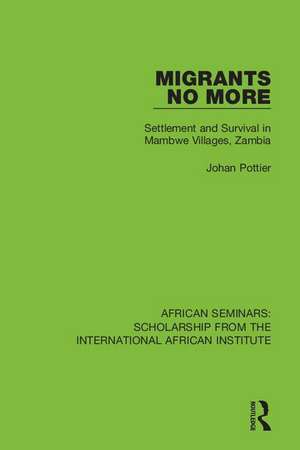
Migrants No More: Settlement and Survival in Mambwe Villages, Zambia: African Seminars: Scholarship from the International African Institute
Autor Johan Pottieren Limba Engleză Paperback – 24 aug 2020
Din seria African Seminars: Scholarship from the International African Institute
-
 Preț: 351.06 lei
 -
 Preț: 351.06 lei
 -
 Preț: 351.06 lei
 -
 Preț: 330.71 lei
 -
 Preț: 330.71 lei
 -
 Preț: 342.00 lei
 -
 Preț: 351.06 lei
 - 34%
 Preț: 6527.54 lei
Preț: 345.67 lei
Puncte Express: 519
Carte tipărită la comandă
Livrare economică 01-15 decembrie
Livrare prin curier în România Termenul estimat este afișat lângă disponibilitate.
Transport gratuit de la 400.00 lei Plată online sau ramburs, în funcție de opțiunile comenzii.
Retur gratuit în 14 zile Comandă securizată și suport în română.
Specificații
ISBN-13: 9780367000721
ISBN-10: 0367000725
Pagini: 226
Dimensiuni: 156 x 234 x 12 mm
Greutate: 0.33 kg
Ediția:1
Editura: Taylor & Francis
Colecția Routledge
Seria African Seminars: Scholarship from the International African Institute
Locul publicării:Oxford, United Kingdom
ISBN-10: 0367000725
Pagini: 226
Dimensiuni: 156 x 234 x 12 mm
Greutate: 0.33 kg
Ediția:1
Editura: Taylor & Francis
Colecția Routledge
Seria African Seminars: Scholarship from the International African Institute
Locul publicării:Oxford, United Kingdom
Public țintă
General, Postgraduate, and UndergraduateCuprins
1. Introduction 2. A Peripheral Setting 3. Migration Today: Viewed from a Rural District Town 4. Cohesion today: Kowa Revisited 5. Food Security, Food Trading and Local Administration 6. Land, Labour and Cash 7. Kinship and the Border Economy 8. New Developments in Shifting Agriculture 9. Settlement and Survival: Conclusions
Recenzii
'The gendered search for new sources of cash, the emergence of residence choices and women's struggles to secure a just reward for their involvements in trade and agriculture, here set against the backdrop of (agricultural) transition, are themes of continued relevance to contemporary Zambia.' Johan Pottier
Descriere
Originally published in 1988, this book documents genealogical developments which, together with changes in agricultural production, religious ethic, politics, gender relations, patterns of solidarity and trade were local adjustments to the economic crisis of the 1970s and 80s in Zambia.