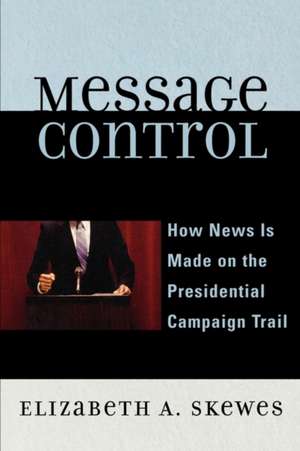
Message Control
Autor Elizabeth A Skewesen Limba Engleză Paperback – 9 apr 2007
Considerăm că Message Control reprezintă o analiză esențială a mecanismelor care distorsionează informația politică înainte ca aceasta să ajungă la alegător. Abordarea propusă de Elizabeth A. Skewes diferă de Polls, Expectations, and Elections de Richard Craig prin faptul că este mai puțin concentrată pe interpretarea abstractă a sondajelor și mult mai ancorată în realitatea fizică a reporterului de teren. În timp ce Richard Craig discută despre setarea așteptărilor prin cifre, Elizabeth A. Skewes ne introduce în interiorul 'bulei' mediatice, explicând cum rutina zilnică și proximitatea forțată față de staff-ul de campanie modelează știrile. Subliniem rigoarea cu care autoarea, din dubla sa perspectivă de cercetător și fost reporter, demonstrează cum 'jurnalismul de grup' (pack journalism) conduce la o uniformizare a mesajelor, similar cu observațiile din Edited For Television, dar extinzând analiza dincolo de mediul TV către procesele de gândire ale jurnaliștilor. Structura cărții este una progresivă: după stabilirea contextului general în primele capitole, textul evoluează spre aspecte practice, precum bătălia pentru accesul la candidați și criteriile de selecție a ceea ce este considerat 'newsworthy'. Analiza nu se limitează la a expune manipulările staff-ului politic, ci investighează onest de ce presa insistă pe picanterii și trăsături de caracter, deși audiența solicită dezbateri de substanță. Considerăm utilitatea acestui volum ca fiind majoră pentru înțelegerea modului în care procesul electoral este filtrat prin credințele și rutinele presei, oferind în final și un set de recomandări pentru corectarea acestor derapaje editoriale.
Preț: 344.38 lei
Carte tipărită la comandă
Livrare economică 27 noiembrie-11 decembrie
Specificații
ISBN-10: 0742554627
Pagini: 206
Dimensiuni: 152 x 229 x 13 mm
Greutate: 0.34 kg
Editura: Bloomsbury Publishing
V-ar putea interesa
-
 Chasing HillaryAmy ChozickPreț: 71.86 lei
 -
 Dictating RealityMartin MoorePreț: 176.13 lei
 -
 What It TakesRichard Ben CramerPreț: 204.99 lei
 -
 Introduction to JournalismCarole FlemingPreț: 246.72 lei
 -
 -24%Preț: 186.06 lei244.82 lei
 -
 Tabloid Tales: Global Debates over Media StandardsColin SparksPreț: 342.15 lei
 -
 An Introduction to JournalismSilvio WaisbordPreț: 209.47 lei
 -
 Preț: 139.94 lei
 -
 Inside CampaignsKenneth M. Goldstein-18%Preț: 589.93 lei719.44 lei
 -
 -19%Preț: 63.67 lei78.53 leiRecomandat
 -
 On the Ground: My Life as a Foreign CorrespondentBrian Stewart-18%Preț: 119.16 lei145.50 leiRecomandat
 -
 Shock of the NewsJonathan MillerPreț: 151.49 lei
 -
 BreakingMic WrightPreț: 142.26 lei
 -
 UnpresidentedJon Sopel-19%Preț: 74.59 lei92.07 lei
 -
 The War and the Death of NewsMartin BellPreț: 80.30 lei
 -
 All The Worst HumansPhil ElwoodPreț: 78.72 lei
 -
 The Only Way Is UpDavid Walker-20%Preț: 84.75 lei106.30 lei
 -
 The Power of JournalistsClaire Foster-Gilbert-22%Preț: 42.26 lei53.88 lei
De ce să citești această carte
Recomandăm această carte oricărui cititor interesat de culisele comunicării politice și de modul în care mass-media ne influențează percepția electorală. Veți învăța cum presiunea termenelor limită și viața alături de candidați transformă jurnalismul într-un instrument de control al mesajului. Este o lectură fundamentală pentru a înțelege de ce vedem mai degrabă spectacol politic decât dezbatere reală pe teme de politici publice.
Despre autor
Elizabeth A. Skewes este profesor asociat și cercetător în cadrul departamentului de jurnalism, aducând în mediul academic o vastă experiență practică ca fost reporter de teren. Specializarea sa se concentrează pe intersecția dintre media și procesele politice, fiind o voce respectată în analiza modului în care practicile jurnalistice influențează comportamentul electoral. Experiența sa directă în deplasările cu caravanele electorale prezidențiale conferă lucrărilor sale o notă de autenticitate și rigoare factologică, îmbinând observația participantă cu teoria comunicării.