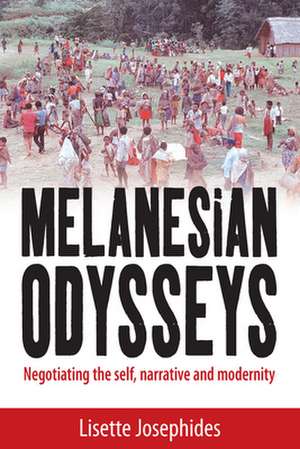
Melanesian Odysseys: No Series Linked
Autor Lisette Josephidesen Limba Engleză Hardback – iul 2008
Din seria No Series Linked
-
 Preț: 93.05 lei
-
 Preț: 201.89 lei
-
 Preț: 82.55 lei
-
 Preț: 42.15 lei
-
 Preț: 106.26 lei
-
 Preț: 118.02 lei
-
 Preț: 105.63 lei
-
 Preț: 96.40 lei
-
 Preț: 65.82 lei
-
 Preț: 85.75 lei
-
 Preț: 75.01 lei
-
 Preț: 112.25 lei
-
 Preț: 77.92 lei
-
 Preț: 64.75 lei
-
 Preț: 80.77 lei
-
 Preț: 236.55 lei
-
 Preț: 132.93 lei
-
 Preț: 159.78 lei
-
 Preț: 43.79 lei
-
 Preț: 87.90 lei
-
 Preț: 77.83 lei
-
 Preț: 76.01 lei
-
 Preț: 87.22 lei
-
 Preț: 153.69 lei
-
 Preț: 206.36 lei
-
 Preț: 384.15 lei
- 23%
 Preț: 763.62 lei
- 23%
 Preț: 760.74 lei
- 23%
 Preț: 754.83 lei
-
 Preț: 182.85 lei
- 23%
 Preț: 753.51 lei
-
 Preț: 250.29 lei
-
 Preț: 247.43 lei
-
 Preț: 270.45 lei
-
 Preț: 150.65 lei
-
 Preț: 266.17 lei
-
 Preț: 185.09 lei
- 23%
 Preț: 761.83 lei
- 23%
 Preț: 758.56 lei
-
 Preț: 265.55 lei
- 23%
 Preț: 753.62 lei
-
 Preț: 317.15 lei
-
 Preț: 254.40 lei
- 23%
 Preț: 845.91 lei
-
 Preț: 227.25 lei
-
 Preț: 387.52 lei
-
 Preț: 204.72 lei
- 23%
 Preț: 761.52 lei
-
 Preț: 196.07 lei
Preț: 758.47 lei
Preț vechi: 985.03 lei
-23%
Puncte Express: 1138
Carte tipărită la comandă
Livrare economică 02-16 decembrie
Livrare prin curier în România Termenul estimat este afișat lângă disponibilitate.
Transport gratuit pentru acest produs Plată online sau ramburs, în funcție de opțiunile comenzii.
Retur gratuit în 14 zile Comandă securizată și suport în română.
Specificații
ISBN-13: 9781845455255
ISBN-10: 1845455258
Pagini: 272
Dimensiuni: 157 x 235 x 19 mm
Greutate: 0.55 kg
Editura: BERGHAHN BOOKS
Colecția No Series Linked
Seria No Series Linked
ISBN-10: 1845455258
Pagini: 272
Dimensiuni: 157 x 235 x 19 mm
Greutate: 0.55 kg
Editura: BERGHAHN BOOKS
Colecția No Series Linked
Seria No Series Linked
V-ar putea interesa
-
 How the Other Half LivesJacob A RiisPreț: 92.17 lei
-
 An Introduction to Theories of Popular CultureDominic StrinatiPreț: 363.71 lei
-
 Fan CulturesMatthew HillsPreț: 395.42 lei
-
 Cultural Studies: A Critical IntroductionSimon DuringPreț: 363.66 lei
-
 The Stars Down to EarthTheodor AdornoPreț: 158.33 lei
-
 Natural Symbols: Explorations in CosmologyProfessor Mary DouglasPreț: 157.94 lei
-
 The Subcultures Reader: Second EditionKen Gelder-15%Preț: 483.41 lei568.71 lei
-
 -15%Preț: 430.99 lei507.05 lei
-
 The Cultural Studies ReaderSimon During-15%Preț: 460.42 lei541.67 lei
-
 Preț: 470.52 lei
-
 Saltwater SocialityKatharina Schneider-23%Preț: 761.29 lei988.70 lei
-
 Images of Power and the Power of ImagesJudith KapfererPreț: 223.64 lei
-
 When God Comes to TownRik PinxtenPreț: 199.69 lei
-
 Braving the StreetIrene GlasserPreț: 219.57 lei
-
 Places of PainHariz HalilovichPreț: 235.06 lei
-
 Changing Identifications and Alliances in North-east AfricaGünther Schlee-23%Preț: 758.94 lei985.64 lei
-
 Beyond Writing CultureOlaf Zenker-23%Preț: 761.77 lei989.31 lei
-
 Empire and AfterGraham MacpheePreț: 261.34 lei
Notă biografică
Lisette Josephides is Professor of Anthropology at Queen's University Belfast, following many years of fieldwork in Papua New Guinea and teaching positions at the University of Papua New Guinea, the London School of Economics and the University of Minnesota.
Cuprins
List of Illustrations
Dramatis Personae
Preface
Overtures, Ethnographic and Theoretical
Chapter 1. The Aesthetics of Fieldwork among the Kewa
Chapter 3. Narrating the Self I: Moral Constructions of the Self as Paradigmatic Accounts
Chapter 6. Portraits and Minimal Narratives: Elicitations of Social Reality
Index
Dramatis Personae
Preface
Overtures, Ethnographic and Theoretical
Chapter 1. The Aesthetics of Fieldwork among the Kewa
- The Style and Tone of Kewa Life
- Bickering, Bantering and Coming to Blows
- Place, Movement and Residential Mobility
- Daily Life Scrambling into the Field: Mining the Field and Eliciting Minefields
- The Person/Self/Individual
- An Archaeology of the Self Ascription: Distinguishing, Co-creating and Merging Self and Other
- A Modern History of the Self: Interlocution and Its Denial
- The Everyday Self: Language and Communication at Issue
- What Speech Does: Communication as Capability Strategies
- Elicitation, Explicitness, Rehearsed and Rehearsing Talk and Action
- Conclusion
Chapter 3. Narrating the Self I: Moral Constructions of the Self as Paradigmatic Accounts
- Theories of Narrative
- Narrative and Paradigmatic Thought
- Ethics, Morality and the Self in Paradigmatic Accounts
- The Storytellers (Wapa, Ragunanu, Pupula, Yakiranu, Payanu) Kewa
- Pre-contact Practices and Persons: A Narrative of Many Growing up
- Of Courtship and Marriage
- Of Magic and Gardens Spirit Houses
- Pig Kills Warfare and Pacification
- Conclusions: Moral Constructions of the Self as Paradigmatic Accounts
- The Storytellers (Rumbame, Alirapu, Mayanu, Mapi)
- Rumbame's Story
- Alirapu's Story
- Mayanu's Story (Excerpt)
- Mapi's Story
- Mapi: Visionary and Dreamer
- Four Features Revisited and Expanded
- Creating Moral Personhood
- Constructing Coherent Selves
- Constructing Critical Metanarratives
- Facing Modernity and Christianity
- Conclusion
- The Storytellers (Hapkas, Papola, Rimbu, Lari)
- The Stories: Third Set Hapkas's (Nasupeli's) Story
- Papola's Story
- Rimbu's Story
- Lari's Story
- Seizing the New World: Narrative, Consciousness and Communication
- The Heroic, the Epic, the Picaresque and the Symbolic
- Narrative as Form of Consciousness and Organization of Experience
- Experience and Consciousness
- Morality Narratives as Communication
Chapter 6. Portraits and Minimal Narratives: Elicitations of Social Reality
- Portraits, Stories and Minimal Narratives
- Elicitation and Explicitness
- Language, Talk and Action
- Norms and Claims: Rehearsed and Rehearsing
- Talk and Action
- Conclusion
- Courtship Problems with Bride Price
- Irregular Unions
- Polygyny and Conflict
- Ainu and Yako
- Giame and Yadi
- Lari and Rimbu
- Liame, Rosa and Kiru
- Rarapalu, Karupiri, Foti and Waliya
- Negotiating Marriage and Marital Life
- Love and All That
- Who's the Big Man of Us All?
- Rake's Death
- Duties to Persons, Rights in Persons: Wapa's Death
- Out with the Old, in with the New: Payanu's Death
- Death and Recurring Conflict: Conclusion
- Stories, Ethnography, Theory
- Mimesis as a Way of Knowing
- Ethnography as Difference, Locality and Chronicle
- Cultural Region and the Tyranny of Theoretical Regionalism
- Ethnography as Chronicle of Cultural History/History of Consciousness
Index