Cantitate/Preț
Produs

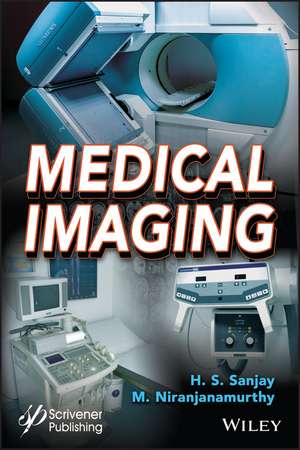
Medical Imaging

Autor H S Sanjay, M. Niranjanamurthy
en Limba Engleză Hardback – 7 iun 2023

În volumul Medical Imaging, structura materialului este riguros organizată pentru a ghida cititorul de la fundamentele fizice către aplicațiile clinice complexe. Primele capitole stabilesc cadrul teoretic prin analiza radiațiilor electromagnetice și a efectului fotoelectric, trecând rapid către aspectele tehnice de instrumentație, precum generatorii de raze X și sistemele de filtrare. Credem că această abordare progresivă este esențială într-un domeniu unde peste jumătate din deciziile clinice depind direct de calitatea și interpretarea corectă a imaginilor diagnostice. Ne-a atras atenția modul în care autorii H S Sanjay și M. Niranjanamurthy echilibrează teoria cu practica, oferind secțiuni detaliate despre fluoroscopie, angiografie și mamografie. Spre deosebire de The Essential Physics of Medical Imaging de Jerrold T. Bushberg PhD, care se concentrează masiv pe fizica pură și protecția împotriva radiațiilor, volumul de față, publicat de Wiley, pune un accent mai mare pe instrumentația modernă și pe tendințele actuale de dezvoltare. Clinicienii care folosesc Fundamentals of Medical Imaging de Paul Suetens ca referință vor găsi aici informații suplimentare despre aspectele de inginerie și service, vitale pentru tehnicienii și inginerii care susțin infrastructura medicală. Cuprinsul indică o acoperire vastă, de la randarea 3D până la aplicațiile farmaceutice ale imagisticii, făcând din acest text o resursă versatilă. Ritmul este unul clinic, axat pe precizie, eliminând ambiguitățile în favoarea unor explicații tehnice clare despre atenuarea coeficienților și funcția de răspuns a punctului (PSF).

Citește tot Restrânge

Preț: 119277 lei

Preț vechi: 125555 lei
-5%

Puncte Express: 1789

Carte disponibilă

Livrare economică 11-25 mai


Specificații

ISBN-13: 9781119785392
ISBN-10: 1119785391
Pagini: 272
Dimensiuni: 156 x 232 x 20 mm
Greutate: 1.29 kg
Ediția:1
Editura: Wiley
Locul publicării:Hoboken, United States

De ce să citești această carte

Recomandăm această lucrare profesioniștilor care au nevoie de o înțelegere tehnică profundă a dispozitivelor de diagnostic. Cititorul câștigă o perspectivă integrată asupra modului în care funcționează echipamentele de la raze X la RMN, fiind un instrument ideal pentru inginerii biomedicali, fizicienii medicali și studenții care doresc să facă trecerea de la teorie la mentenanța și operarea sistemelor de imagistică de ultimă generație.


Despre autor

H S Sanjay și M. Niranjanamurthy sunt experți recunoscuți în domeniul tehnologiei medicale, cu o vastă experiență în cercetare și dezvoltare. Activitatea lor se concentrează pe intersecția dintre inginerie și medicină, punând accent pe optimizarea sistemelor de diagnostic și pe implementarea noilor tehnologii de procesare a imaginilor. Contribuția lor în acest volum reflectă o înțelegere profundă a nevoilor actuale din sectorul healthcare, oferind soluții practice pentru provocările întâmpinate de personalul tehnic și medical în utilizarea cotidiană a aparaturii de înaltă performanță.


Notă biografică

H. S. Sanjay, PhD, is a professor in the Department of Medical Electronics, M S Ramaiah Institute of Technology. He earned his PhD in electronics engineering from Jain University and a post graduate degree in biomedical engineering from Manipal University. He has over 10 years of academic experience and has been teaching undergraduate students since 2009. He has contributed to five books and authored over 15 articles in scholarly journals, including being a reviewer for five journals. M. Niranjanamurthy, PhD, is an assistant professor in the Department of Computer Applications, M S Ramaiah Institute of Technology, Bangalore, Karnataka. He earned his PhD in computer science at JJTU. He has over 10 years of teaching experience and two years of industry experience as a software engineer. He has published four books and 56 papers in technical journals and conferences. He has two patents to his credit and has won numerous awards.

Cuprins

Preface xiii Acknowledgements xv 1 Introduction to Medical Imaging 1 1.1 Medical Imaging -- An Insight 1 1.2 Types of Diagnostic Imaging Modalities 2 1.3 3D Rendering 23 1.4 Diagnostic Images 23 1.5 Medical Imaging in Pharmaceutical Applications 23 2 Fundamentals of X-Rays 27 2.1 Electromagnetic Radiations 27 2.2 Wave Nature 28 2.3 Photoelectric Effect 34 2.4 Interaction Between X-Ray and Tissues 36 2.5 Factors Affecting Attenuation Coefficients 38 2.6 Attenuation Due to Coherent Scattering (ßcom) 39 2.7 Attenuation Due to Compton Scattering (ßcom ) and Photoelectric Effect (ßpho ) 39 2.8 Generation and Detection of X-Rays 41 2.9 X-Ray Generators 42 2.10 Filters 47 2.11 X-Ray Visualization 51 2.12 Detection of X-Rays 54 2.13 Radiation Detectors 60 2.14 X-Ray Diagnostic Approaches 62 2.15 Fluoroscopy 66 2.16 Angiography 67 2.17 Mammography 68 2.18 Xeroradiography 68 2.19 Image Subtraction 69 2.20 Conventional Tomography 73 2.21 Point Spread Function (PSF) 75 2.22 Image Noise 77 2.23 Image Contrast 78 2.24 Receiver Operating Curve (ROC) 79 2.25 Biological Effects of X-Ray Radiations?@79 3 X-Ray Computed Tomography 85 3.1 Introduction to X-Ray Computed Tomography 85 3.2 CT Number 87 3.3 X-Ray Detectors in CT Machines 88 3.4 CT Imaging 89 3.5 Computer Tomography-Based Diagnostics 104 3.6 Image Quality 107 3.7 CT Machine -- The Hardware Aspects 110 3.8 Generations of CT Machines 112 3.9 Biological Effects and Safety-Based Aspects 118 4 Ultrasound Imaging 121 4.0 Ultrasound 121 4.1 Basics of Acoustic Waves 121 4.2 Propagation of Waves in Homogeneous Media 122 4.3 Linear Wave Equation 122 4.4 Loudness and Intensity 123 4.5 Interference 124 4.6 Attenuation 125 4.7 Nonlinearity 126 4.8 Propagation of Waves in Non-Homogeneous Media 127 4.9 Reflection and Refraction 127 4.10 Scattering 129 4.11 Doppler Effect in the Propagation of the Acoustic Wave 130 4.12 Generation and Detection of Ultrasound 133 4.13 Ultrasonic Transducer 134 4.14 Mechanical Matching 135 4.15 Electrical Matching 136 4.16 Ultrasound Imaging 136 4.17 Image Reconstruction 140 4.18 Schlieren System 141 4.19 Doppler Imaging Approaches 141 4.20 Tissue Characterization 144 4.21 Ultrasound Image Characteristics 146 4.22 Biological Effects of Ultrasound 147 5 Radionuclide Imaging 151 5.1 Radionuclide Imaging -- A Brief History 151 5.2 An Insight Into Radioactivity 152 5.3 Generation of Nuclear Emission 159 5.4 Radionuclide Detection 166 5.5 Diagnostic Approaches Using Radiation Detector Probes 174 5.6 Radionuclide Image Characteristics 175 5.7 Biological Effects of Radionuclides 176 6 Magnetic Resonance Imaging 179 6.1 Basics of Nuclear Magnetic Resonance 179 6.2 Larmor Frequency 182 6.3 Relaxation 185 6.4 Image Contrast 188 6.5 Repetition Time (TR) and T1 Weighting 188 6.6 Echo Time (TE) and T2 Weighting 189 6.7 Saturation at Short Repetition Times 191 6.8 Flip Angle/Tip Angle 192 6.9 Presaturation 192 6.10 Magnetization Transfer 192 6.11 Slice Selection 193 6.12 Spatial Encoding 196 6.13 Phase Encoding 196 6.14 Frequency Encoding 197 6.15 K-Space 198 6.16 Image Noise 199 6.17 The MR Scanning Machine 201 6.18 Pulse Sequences 204 6.19 Parallel Imaging 209 6.20 MR Artifacts 210 6.21 Motion Artifacts 211 6.22 Flow Artifacts 211 6.23 Phase Wrapping 211 6.24 Chemical Shift 212 6.25 Magnetic Susceptibility 213 6.26 Truncation Artifact 213 6.27 Magic Angle 213 6.28 Eddy Currents 214 6.29 Partial Volume Artifact 214 6.30 Inhomogeneous Fat Suppression 214 6.31 Zipper Artifacts 214 6.32 Crisscross Artifact 215 6.33 Bioeffects and Safety 215 Glossary-Appendix 215 About the Authors 219 Index 221

Descriere

MEDICAL IMAGING Written and edited by a team of experts in the field, this is the most comprehensive and up-to-date study of and reference for the practical applications of medical imaging for engineers, scientists, students, and medical professionals. Medical imaging is one of the most important diagnostic tools in healthcare. More than 50% of the clinical market depends on diagnostic imaging to identify different pathological conditions in subjects. It is, therefore, essential for healthcare personnel and paramedical staff as well as the technicians and the supporting engineers to understand the basics of medical imaging. This subject is of utmost importance to every individual involved in the healthcare industry, right from research and development until application and service. Medical Imaging presents the salient aspects of diagnostic imaging modalities. The subjects that are covered are the basic functional principles, the concepts involved, the instrumentation-based aspects, applications, and the latest trends in imaging modalities. This book concentrates on X-rays imaging, computer tomography-based imaging, ultrasound techniques, radionuclide imaging, MRI techniques, and other important diagnostic modalities which are commonly used for medical diagnosis of various pathologies in human beings. Covering all of the latest advances, innovations, and developments in practical applications for medical imaging, this volume represents the most comprehensive, up-to-date coverage of the issues of the day and state of the art. Whether for the veteran engineer or scientist or a student, this volume is a must-have for any library.