
Mathematical Logic
Autor Tourlakisen Limba Engleză Hardback – aug 2008
Interdisciplinaritatea constituie fundamentul lucrării Mathematical Logic, autorul G Tourlakis reușind să creeze o punte solidă între rigoarea formală a matematicii, aplicațiile practice din informatică și fundamentele teoretice ale filosofiei. Considerăm că abordarea este una pragmatică, transformând logica dintr-o disciplină abstractă într-un instrument de lucru esențial pentru raționamentul deductiv. Lucrarea este structurată metodic în două arii principale, logica booleană și logica predicatelor, oferind studenților instrumentele necesare pentru scrierea demonstrațiilor matematice. Apreciem în mod deosebit dualitatea metodologică prezentată de G Tourlakis: textul nu se limitează la stilul tradițional „Hilbert”, ci introduce și stilul „ecuațional”, tot mai utilizat în inginerie și dezvoltarea sistemelor informatice. Această perspectivă modernă completează viziunea oferită de Introduction to Logic and to the Methodology of Deductive Sciences de Alfred Tarski, adăugând o componentă aplicată și o introducere necesară în teoria computabilității, elemente pe care textul clasic al lui Tarski nu le vizează în mod direct. În timp ce alte manuale se concentrează strict pe formalism, Mathematical Logic explorează și limitele disciplinei, analizând teoremele de incompletitudine ale lui Gödel pentru a demonstra ce poate și ce nu poate certifica logica în sisteme precum aritmetica Peano. Fiecare capitol este susținut de seturi de probleme și exemple care facilitează înțelegerea conceptelor de completitudine și consistență. Ediția publicată de Wiley se distinge prin claritatea expunerii, fiind adaptată pentru curriculumul universitar avansat, unde capacitatea de a formula argumente valide este crucială pentru succesul în cercetare sau practică profesională.
Preț: 702.73 lei
Preț vechi: 772.23 lei
-9%
Carte tipărită la comandă
Livrare economică 26 noiembrie-10 decembrie
Specificații
ISBN-10: 0470280743
Pagini: 312
Dimensiuni: 161 x 240 x 21 mm
Greutate: 0.64 kg
Ediția:1
Editura: Wiley
Locul publicării:Hoboken, United States
V-ar putea interesa
-
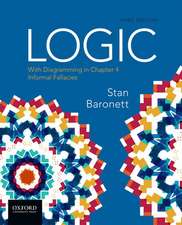 LogicStan Baronett-27%Preț: 805.28 lei1103.13 lei
 -
 Introduction to Formal LogicRussell Marcus-23%Preț: 602.84 lei782.91 lei
 -
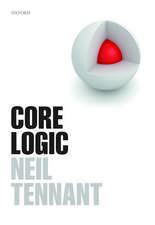 Core LogicNeil Tennant-32%Preț: 544.98 lei801.30 lei
 -
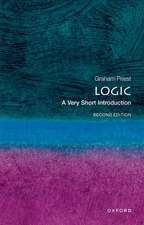 Logic: A Very Short IntroductionGraham Priest-19%Preț: 57.79 lei71.48 lei
 -
 What Is Mathematical Logic?Guillermo Badia-16%Preț: 180.74 lei216.06 lei
 -
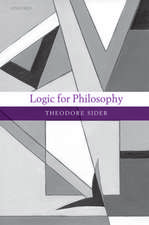 Logic for PhilosophyTheodore Sider-15%Preț: 200.38 lei236.85 lei
 -
 -20%Preț: 774.84 lei968.54 lei
 -
 Preț: 91.19 lei
 -
 Introduction to LogicAlfred TarskiPreț: 87.22 lei
 -
 A Beginner's Guide to Mathematical LogicRaymond M. SmullyanPreț: 142.98 lei
 -
 Preț: 159.11 lei
 -
 Logic For DummiesMark ZegarelliPreț: 116.49 lei
 -
 -24%Preț: 83.14 lei109.97 lei
 -
 Logical LabyrinthsRaymond Smullyan-9%Preț: 970.62 lei1066.61 lei
 -
 Classical Logic and Its Rabbit-Holes: A First CourseNelson P. Lande-21%Preț: 279.32 lei353.79 lei
 -
 The Mathematicians' LibraryThomas K. Briggs-21%Preț: 173.70 lei221.10 lei
 -
 Introducing Logic - compactDan CryanPreț: 64.38 lei
 -
 LogicEarl FontainellePreț: 51.96 lei
 -
 A System of Logic, Ratiocinative and Inductive Book 3 8th EditionStuart Mill JohnPreț: 131.36 lei
 -
 Logic in Computer ScienceHantao ZhangPreț: 470.50 lei
Public țintă
The intention is to serve computer science and mathematics majors predominantly in an upper year of undergraduate study; large segments of the text, notably all of Part I and selected portions of Part II, may be appropriate for some philosophy courses; reference appeal in departmental and public/private university librariesDe ce să citești această carte
Această lucrare este ideală pentru studenții și cercetătorii care doresc să stăpânească tehnicile de demonstrație formală. Cititorul câștigă o înțelegere profundă a logicii booleene și a predicatelor, beneficiind de un ghid care îmbină stilul clasic cu cel ecuațional. Este un volum esențial pentru oricine vrea să înțeleagă nu doar cum funcționează logica, ci și care sunt limitele sale fundamentale în matematică și informatică.