
Mastering Embedded Linux Programming - Second Edition
Autor Chris Simmondsen Limba Engleză Paperback – 30 iun 2017
Descoperim în Mastering Embedded Linux Programming-Second Edition un ghid tehnic riguros, conceput special pentru inginerii și programatorii care dețin deja cunoștințe de bază despre sistemele integrate și doresc să treacă la implementări profesionale de Linux. Ne-a atras atenția structura pragmatică a autorului Chris Simmonds, care presupune o familiaritate prealabilă cu programarea sistemelor, oferind în schimb o metodologie clară pentru construirea unor dispozitive fiabile, de la smart TV-uri la controllere industriale. Reținem că această ediție a doua marchează un punct de cotitură prin integrarea Linux 4.9 și a versiunii Morty a proiectului Yocto. Ca și Alex Gonzalez în Embedded Linux Development Using Yocto Project Cookbook, autorul distilează experiență reală în principii acționabile, axându-se pe utilizarea Yocto Project și Buildroot pentru automatizarea proceselor de construcție. Totuși, Chris Simmonds merge mai departe de simpla configurare, explorând în profunzime elementele fundamentale: toolchain-ul, bootloader-ul și kernel-ul, oferind cititorului control total asupra sistemului de fișiere root. În contextul operei sale, această lucrare reprezintă fundamentul pe care s-a construit ulterior Mastering Embedded Linux Programming - Third Edition. Dacă ediția a treia face tranziția către nucleul 5.4, volumul de față rămâne o referință critică pentru proiectele care depind de stabilitatea versiunii 4.9. Cartea excelează în explicarea strategiilor de stocare pentru memoria flash și a protocoalelor de actualizare la distanță, elemente vitale în Internet of Things. Pentru optimizarea performanței, autorul introduce instrumente avansate precum ftrace și valgrind, transformând debugging-ul dintr-o încercare repetată într-un proces analitic precis.
Preț: 377.03 lei
Preț vechi: 471.29 lei
-20%
Carte tipărită la comandă
Livrare economică 17 iunie-01 iulie
Specificații
ISBN-10: 1787283283
Pagini: 478
Dimensiuni: 191 x 235 x 26 mm
Greutate: 0.89 kg
Ediția:Second
Editura: Packt Publishing
V-ar putea interesa
-
 C Programming LanguageDennis Ritchie-20%Preț: 378.14 lei472.68 lei
 -
 -20%Preț: 326.24 lei407.80 lei
 -
 Preț: 467.04 lei
 -
 -20%Preț: 402.61 lei503.26 lei
 -
 -20%Preț: 345.17 lei431.46 lei
 -
 Deep LearningJohn D. Kelleher-20%Preț: 82.78 lei103.47 lei
 -
 Practical CryptographyBruce Schneier-20%Preț: 231.11 lei288.89 lei
 -
 Preț: 300.34 lei
 -
 Operating System Concepts Essentials, Second EditionA Silberschatz-20%Preț: 892.88 lei1116.11 lei
 -
 Remote Sensing of Water-Related HazardsAmir Aghakouchak-11%Preț: 1032.53 lei1160.15 lei
 -
 Designing Distributed SystemsBrendan Burns-20%Preț: 221.76 lei277.20 lei
 -
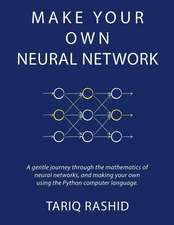 Make Your Own Neural NetworkTariq Rashid-20%Preț: 286.07 lei357.59 lei
 -
 Distributed Services with GoTravis Jeffery-20%Preț: 260.25 lei325.31 lei
 -
 Mastering Linux Kernel DevelopmentCh Raghav Maruthi-20%Preț: 295.99 lei369.99 lei
 -
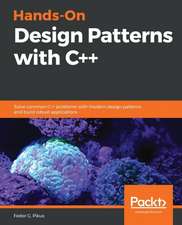 Hands-On Design Patterns with C++Fedor G. Pikus-20%Preț: 293.48 lei366.86 lei
 -
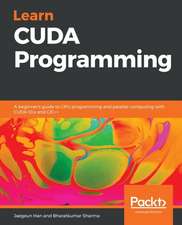 Learn CUDA ProgrammingBharatkumar SharmaPreț: 418.31 lei
 -
 -20%Preț: 179.03 lei223.79 lei
 -
 Hands-On GPU Computing with PythonAvimanyu Bandyopadhyay-20%Preț: 248.52 lei310.64 lei
 -
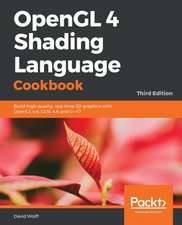 -20%Preț: 271.78 lei339.73 lei
 -
 Practical Mobile Forensics - Fourth EditionRohit Tamma-20%Preț: 242.22 lei302.77 lei
 -
 ROS Robotics ProjectsRamkumar Gandhinathan-20%Preț: 302.43 lei378.04 lei
 -
 Advanced C++Gazihan Alankus-20%Preț: 268.04 lei335.05 lei
 -
 Mastering Delphi ProgrammingPrimo¿ Gabrijel¿i¿Preț: 360.34 lei
 -
 Windows Kernel ProgrammingPavel Yosifovich-20%Preț: 201.38 lei251.73 lei
 -
 Medical Imaging SystemsAndreas Maier-20%Preț: 348.16 lei435.20 lei
 -
 InovatoriiWalter IsaacsonPreț: 89.00 lei
De ce să citești această carte
Această carte este esențială pentru inginerii care doresc să stăpânească ecosistemul Linux în context industrial. Cititorul câștigă competențe directe în configurarea Yocto Project, managementul consumului de energie și securizarea actualizărilor de firmware. Este o resursă practică ce elimină incertitudinile din procesul de dezvoltare, oferind soluții concrete pentru optimizarea performanței și depanarea complexă a sistemelor de tip System on Chip.
Descriere scurtă
Key Features
- Discover how to build and configure reliable embedded Linux devices
- This book has been updated to include Linux 4.9 and Yocto Project 2.2 (Morty)
- This comprehensive guide covers the remote update of devices in the field and power management
Embedded Linux runs many of the devices we use every day, from smart TVs to WiFi routers, test equipment to industrial controllers - all of them have Linux at their heart. Linux is a core technology in the implementation of the inter-connected world of the Internet of Things.
The comprehensive guide shows you the technologies and techniques required to build Linux into embedded systems. You will begin by learning about the fundamental elements that underpin all embedded Linux projects: the toolchain, the bootloader, the kernel, and the root filesystem. You'll see how to create each of these elements from scratch, and how to automate the process using Buildroot and the Yocto Project.
Moving on, you'll find out how to implement an effective storage strategy for flash memory chips, and how to install updates to the device remotely once it is deployed. You'll also get to know the key aspects of writing code for embedded Linux, such as how to access hardware from applications, the implications of writing multi-threaded code, and techniques to manage memory in an efficient way. The final chapters show you how to debug your code, both in applications and in the Linux kernel, and how to profile the system so that you can look out for performance bottlenecks.
By the end of the book, you will have a complete overview of the steps required to create a successful embedded Linux system.
What you will learn
- Evaluate the Board Support Packages offered by most manufacturers of a system on chip or embedded module
- Use Buildroot and the Yocto Project to create embedded Linux systems quickly and efficiently
- Update IoT devices in the field without compromising security
- Reduce the power budget of devices to make batteries last longer
- Interact with the hardware without having to write kernel device drivers
- Debug devices remotely using GDB, and see how to measure the performance of the systems using powerful tools such as perk, ftrace, and valgrind
- Find out how to configure Linux as a real-time operating system
If you are an engineer who wishes to understand and use Linux in embedded devices, this book is for you. It is also for Linux developers and system programmers who are familiar with embedded systems and want to learn and program the best in class devices. It is appropriate for students studying embedded techniques, for developers implementing embedded Linux devices, and engineers supporting existing Linux devices.