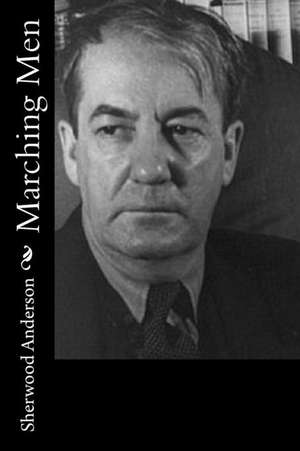
Marching Men
Autor Sherwood Andersonen Limba Engleză Paperback
Preț: 68.61 lei
Puncte Express: 103
Carte disponibilă
Livrare economică 29 octombrie-12 noiembrie
Livrare prin curier în România Termenul estimat este afișat lângă disponibilitate.
Transport gratuit de la 400.00 lei Plată online sau ramburs, în funcție de opțiunile comenzii.
Retur gratuit în 14 zile Comandă securizată și suport în română.
Specificații
ISBN-13: 9781541337954
ISBN-10: 1541337956
Pagini: 194
Dimensiuni: 152 x 229 x 10 mm
Greutate: 0.27 kg
ISBN-10: 1541337956
Pagini: 194
Dimensiuni: 152 x 229 x 10 mm
Greutate: 0.27 kg
Notă biografică
Sherwood Anderson (1876 -1941) was an American writer whose meticulous character development earned him recognition as a "writer's writer." Like a number of other famous writers such as Anton Chekhov, Charles Dickens, and Louisa May Alcott, Anderson's childhood and adolescence were marked by family hardship. When his father's business failed, the family moved frequently, and his mother became an alcoholic. As a result of these hardships, Anderson left school at the age of fourteen to help support the family finances. Anderson is best known for his short stories, particularly his collection published as Winesburg, Ohio (1919). His characters, whom he describes as "grotesques" in his first story, transform experiences into truths, which can be built-up, and once embraced, turn to falsehoods. He writes almost lovingly about his own collection of "grotesques," using a writing style often compared to his literary predecessor, William Dean Howells, as naturalism. Anderson invites the reader into his process as a writer, where he unfolds his characters' views of the world, intertwined as they are, in a small midwestern town. Anderson's appealing style influenced many other writers, including Willa Cather, Henry James, Ernest Hemingway, and William Faulkner, among others. His ability to delve into the human psyche and present characters with profound depth and empathy set him apart from many of his contemporaries. Sherwood Anderson: Winesburg, Ohio, 1919 While Winesburg, Ohio is not without its critics, it remains a beloved classic. Readers often find themselves engrossed in the lives of the characters and the vivid sketches narrated by George Willard. Anderson's narrative control is evident throughout the collection, prompting readers to reflect not only on the stories themselves but also on the man behind them. His ability to write with great empathy and insight into human nature has left a lasting impact on American literature. If you have not yet read Winesburg, Ohio, I encourage you to do so. Anderson's portrayal of small-town life and his exploration of the human condition offer a rich and rewarding reading experience.