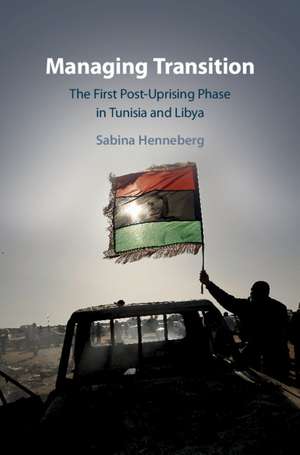
Managing Transition
Autor Sabina Hennebergen Limba Engleză Hardback – 17 dec 2020
Preț: 589.41 lei
Preț vechi: 662.26 lei
-11%
Puncte Express: 884
Carte tipărită la comandă
Livrare economică 10-24 octombrie
Livrare prin curier în România Termenul estimat este afișat lângă disponibilitate.
Transport gratuit pentru acest produs Plată online sau ramburs, în funcție de opțiunile comenzii.
Retur gratuit în 14 zile Comandă securizată și suport în română.
Specificații
ISBN-13: 9781108842006
ISBN-10: 1108842003
Pagini: 284
Dimensiuni: 152 x 229 x 18 mm
Greutate: 0.55 kg
Editura: Cambridge University Press
Locul publicării:Cambridge, United Kingdom
ISBN-10: 1108842003
Pagini: 284
Dimensiuni: 152 x 229 x 18 mm
Greutate: 0.55 kg
Editura: Cambridge University Press
Locul publicării:Cambridge, United Kingdom
Cuprins
1. Introduction; 2. The Tunisian provisional administration; 3. Impacts of the TPA; 4. The Libyan National Transition Council; 5: Impacts of the NTC; 6. Impacts of the TPA and NTC in later years; 7. Conclusions.
Recenzii
'Managing Transition provides an exceptional and comprehensive chronicle of the micro-practices and difficult dilemmas faced by interim governments in Tunisia and Libya following the Arab Uprisings in 2011. It is a compelling analysis of decision-makers' struggles with simultaneously enacting change and preserving continuity as the two nations undergo transition from authoritarian rule - Sabina Henneberg ultimately calls into question whether it is even possible to define the parameters of a 'successful' transition.' Edwige Fortier, Research Associate, Department of Development Studies, SOAS
'Sabina Henneberg elucidates the structural factors which incentivize first transitional governments to adopt populist, globalist, and usually dysfunctional policies. She shows how in Tunisia historical precedent and coalition building laid the groundwork for a constitutional transition, while in Libya, feckless leadership set the groundwork for appeasement and state implosion.' Jason Pack, Non-Resident Fellow at the Middle East Institute and Founder of Libya-Analysis LLC
'Sabina Henneberg elucidates the structural factors which incentivize first transitional governments to adopt populist, globalist, and usually dysfunctional policies. She shows how in Tunisia historical precedent and coalition building laid the groundwork for a constitutional transition, while in Libya, feckless leadership set the groundwork for appeasement and state implosion.' Jason Pack, Non-Resident Fellow at the Middle East Institute and Founder of Libya-Analysis LLC
Descriere
Demonstrates the importance of the first interim governments in shaping the trajectory of political transition in Tunisia and Libya after the 2011 uprisings.