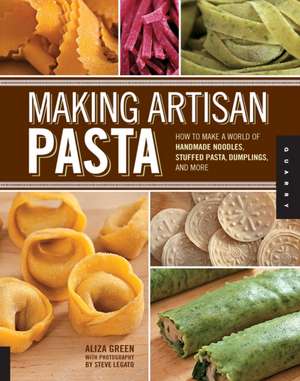
Making Artisan Pasta
Autor Aliza Green Fotografii de Steve Legatoen Limba Engleză Paperback – 2012
Diferența majoră pe care Making Artisan Pasta o aduce în biblioteca unui pasionat de gastronomie este rigoarea tehnică dublată de o deschidere culturală neașteptată. În timp ce majoritatea volumelor se limitează la tradiția italiană, Aliza Green propune o perspectivă globală asupra aluaturilor modelate manual. Ne-a atras atenția modul în care autoarea demitizează procesul fabricării pastelor, transformându-l dintr-o corvoadă logistică într-o activitate artizanală tactilă și relaxantă. Cine a experimentat deja rețetele de bază din Homemade Pasta Dough va aprecia aici saltul către complexitate și experiment. Dacă titlurile clasice se concentrează pe raportul dintre ou și făină, Aliza Green ne provoacă să explorăm texturi din hrișcă, secară sau mălai și să integrăm arome îndrăznețe direct în aluat, de la sfeclă roșie și sparanghel până la varianta desert cu ciocolată. Structura cărții este gândită progresiv: Partea I pune bazele fundamentale ale ingredientelor și metodelor de frământare (manuală sau asistată de tehnologie), în timp ce Partea a II-a explorează universul divers al pastelor umplute și al găluștelor. Subliniem calitatea vizuală a volumului; fotografiile realizate de Steve Legato funcționează ca un ghid pas cu pas, eliminând orice ambiguitate în momentul modelării formelor complexe precum gnocchi, lasagne sau ravioli. Este o resursă care încurajează precizia, dar care lasă loc liber creativității prin capitolul dedicat pastelor întinse manual (hand-stretched), o tehnică rară în manualele comerciale moderne.
Preț: 159.03 lei
Carte disponibilă
Livrare economică 09-23 noiembrie
Specificații
ISBN-10: 1592537324
Pagini: 176
Ilustrații: col. Illustrations
Dimensiuni: 212 x 267 x 18 mm
Greutate: 0.64 kg
Ediția:New.
Editura: Quarry Books
V-ar putea interesa
-
 Pasta, Pretty PleaseLinda Miller NicholsonPreț: 184.07 lei
 -
 Pasta SaucesFerguson ValeriePreț: 30.31 lei
 -
 Homemade Pasta DoughElisabetta ParisiPreț: 75.44 lei
 -
 -23%Preț: 78.11 lei101.48 lei
 -
 -27%Preț: 146.06 lei200.32 lei
De ce să citești această carte
Recomandăm această carte oricărui entuziast care dorește să treacă de la pastele uscate din comerț la satisfacția de a crea propriul aluat. Veți câștiga nu doar tehnici premiate cu James Beard, ci și curajul de a experimenta cu ingrediente precum cerneala de sepie sau făina de hrișcă. Este ghidul ideal pentru a transforma o cină obișnuită într-o experiență artizanală autentică, folosind doar câteva ustensile de bază și ingrediente de calitate.
Despre autor
Aliza Green este un chef de renume, consultant și autoare premiată cu prestigiosul premiu James Beard, fiind una dintre primele femei care a condus bucătării de top în Philadelphia. Recunoscută pentru expertiza sa în ingrediente și tehnici culinare fundamentale, ea a scris numeroase cărți de succes, printre care „The Fishmonger's Apprentice”. În Making Artisan Pasta, ea își folosește vasta experiență pentru a arhiva și preda tradiții culinare din întreaga lume, punând accent pe calitatea materiei prime și pe plăcerea muncii manuale în bucătărie.
Descriere scurtă
Inside, you'll find:
- Recipes for pasta doughs made completely from scratch, with such delicious ingredients as buckwheat and whole wheat flour, roasted red pepper, asparagus, and even squid ink and chocolate
- Fully illustrated step-by-step instructions for rolling, shaping, and stuffing dough for gnocchi, lasagna, cannelloni, pappardelle, tagliatelle, ravioli, and dozens of other styles of pasta
- Detailed instructions on how to make the ultimate in pasta: hand-stretched dough
- Chinese pot stickers, Polish pierogi, Turkish manti, and other delectable pastas from beyond its traditional Italian borders
- Artisan tips to help anyone, from novice to experienced, make unforgettable pasta
Through author and chef Aliza Green’s pasta expertise and encyclopedic knowledge of all things culinary, plus hundreds of gorgeous photos by acclaimed food photographer Steve Legato, you’ll never look at the supermarket pasta aisle the same way again.
Making Artisan Pasta is on Cooking Light's Top 100 Cookbooks of the Last 25 Years list for Best Technique and Equipment.
Cuprins
Introduction
PART I: THE BASICS
CHAPTER ONE: PASTA INGREDIENTS
Water
Eggs
Wheat
CHAPTER TWO: MAKING PASTA DOUGH FROM WHEAT AND OTHER FLOURS
Basic Egg Pasta Dough by Hand
Basic Egg Pasta Dough Using a Heavy-Duty Stand Mixer
Basic Egg Pasta Dough Using a Food Processor
Using Other Flours to Make Pasta Doughs
Whole Wheat Pasta Dough
Buckwheat Pasta Dough
Rye Pasta Dough
Cornmeal-Chipotle Pasta Dough
Semolina Pasta Dough
Methods for Forming Pasta
Hand-Stretched Pasta Dough
Rolling Pasta Dough with a Sheeter
CHAPTER THREE: FLAVORING PASTA DOUGH
Roasted Red Pepper Pasta Dough
Asparagus Pasta Dough
Spinach Pasta Dough (Pasta Verde)
Red Beet Pasta Dough
Squash Pasta Dough
Red Wine Pasta Dough
Porcini Mushroom Pasta Dough
SaffronߝWhite Wine Pasta Dough
Squid Ink Pasta Dough
Chocolate Pasta Dough
Lemon-Pepper Pasta Dough
PART II: THE PASTA
CHAPTER FOUR: DUMPLINGS
Potato Gnocchi
Semolina Gnocchi (Gnocchi alla Romana)
Ravioli Gnudi
Matzo Balls
Spaetzle
Passatelli
CHAPTER FIVE: PASTA SHEETS
Maltagliati
Laminated Parsley Pasta
Lasagna
Cannelloni
CHAPTER SIX: MAKING CUT PASTA
A World of Asian Noodles
Hand-Rolled Alsatian Nouilles
Cappellini
Porcini Tagliatelle
Straw and Hay
Pappardelle and Tagliolini
Pasta alla Chitarra
Buckwheat Pizzoccheri
Japanese Udon Noodles
CHAPTER SEVEN: SPECIALTY HAND-FORMED PASTA
Ricotta Cavatelli from Puglia
Sardinian Malloreddus
Genoese Chestnut Corzetti
Garganelli
Chinese Cat’s Ear Noodles (Mao Er Duo)
Pugliese Orecchiette
Umbrian Ombrichelliv
Greek Trahana
CHAPTER EIGHT: STUFFED PASTA
Making Ravioli Using a Plaque
Tortelloni
Tortellini
Caramelle
Pierogi
Chinese Pot Stickers
Ukrainian Sour Cherry Vareniki
Genoese Pansotti
Giant Asparagus Raviolo with Soft-Cooked Egg
Turkish Manti
Siberian Pelmeni
Glossary
Resources
Flour and Grain Weight and Volume Equivalents
Index
Acknowledgments
About the Author and Photographer
Recenzii
"James Beard Award winner Green teams up again with photographer Legato (after "The Fishmonger's Apprentice") to produce a beautifully photographed directory on how to make all types of pasta in your own kitchen, with just a few kitchen tools. And don't think only of Italian--there are a few representative recipes from other countries, such as pot stickers, pierogi, and udon noodles. Recipes vary by shape, flour type, and flavoring. By following the easy, step-by-step instructions and hundreds of photographs, readers will be inspired to make their own delicious creations. The book contains many useful extras such as nutrition information, resources, and a glossary, but those who want to serve a homemade sauce along with their pasta fresca may need to consult another resource. VERDICT: This is a terrific choice for any library as it will be useful for both experts and novices alike. "Mangia""!""--"Library Journal"
Notă biografică
A former food columnist for the Philadelphia Inquirer, Philadelphia Daily News, and Cooking Light Magazine, Green is known for her encyclopedic knowledge of every possible ingredient, its history, culture, and use in the kitchen and bakery and for her lively story-telling. Green also leads culinary tours—her next is scheduled for October 2013 to Puglia, Italy, which she calls “land of 1,000-year-old olive trees.” Green’s books have garnered high praise from critics, readers, and culinary professionals alike, including a James Beard award for “Best Single-Subject Cookbook” in 2001 for Ceviche!: Seafood, Salads, and Cocktails with a Latino Twist (Running Press, 2001), which she co-authored with Chef Guillermo Pernot. For more information about Aliza’s books and tours or to send her a message, visit her website at http://www.alizagreen.com.
Extras
In Rome, Thursdays are the day when many restaurants and home cooks serve gnocchi in this style, a local specialty. The traditional presentation is to layer the circles of pasta in overlapping rings into a dome shape. Here, they are in a single layer for better browning. In Sardinia, semolina gnocchi are known as pillas and are sauced with meat ragu and grated pecorino Sardo and browned in the oven.
- 3 1/2 cups (825 ml) whole milk
- 1 teaspoon fine sea salt
- 1/2 teaspoon freshly grated nutmeg
- 1/2 pound (225 g) semolina
- 1 large egg, at room temperature
- 2 egg yolks
- 2 ounces (55 g), or about 3⁄4 cup, grated Parmigiano-Reggiano cheese or Grana Padano cheese, plus extra for sprinkling on top
- 6 tablespoons (85 g) unsalted butter, softened
SPECIAL EQUIPMENT: 2-inch (5-cm) round cookie cutter; 2-quart (1.9-L) shallow baking dish or gratin dish
YIELD: about forty 2-inch (5-cm) gnocchi, serves 6 to 8
1. Bring milk with salt and nutmeg to a simmer in a 2- to 3-quart (1.9- to 2.8-L) heavy saucepan (not aluminum, which will discolor the mix) over moderately low heat. Add semolina in a slow stream while constantly stirring to prevent lumps.
2. Reduce heat and simmer, stirring constantly with a wooden spoon or a heavy whisk until the mixture begins to pull away from the sides of the pan, about 5 minutes (mixture will be very stiff).
3. Remove from heat, cool slightly, then beat in eggs and yolks. Beat in 1/2 cup (50 g) of the cheese and 3 tablespoons (45 g) of the butter, and stir or whisk until mixture is smooth.
4. Spread gnocchi mixture into a 1/2-inch (1-cm)ߝthick slab on an oiled or parchment paperߝlined baking sheet using a lightly oiled silicone spatula. Press plastic wrap or parchment paper over top and smooth the top with the palms of your hands. Chill until cold and firm, about 1 hour. This amount fills a 10 x 15- inch (25 x 38-cm) jelly-roll pan perfectly.
5. Preheat the oven to 450ºF (230ºC, or gas mark 8). Rub a medium shallow baking dish (or a French gratin dish) with 1 tablespoon (15 g) of butter.
6. Have ready a bowl of cold water. Cut out "coins" from gnocchi mixture using a 2-inch (5-cm) ridged or plain round cookie cutter. Rinse the cutter in water after each cut. Reserve the scraps. At the end, gather all the scraps together and push them together to form another small 1/2-inch (1-cm)ߝthick slab and cut out more coins.
7. Gently transfer the coins (they will be soft) to the baking dish, overlapping them slightly. Sprinkle with the remaining cheese and dot with the remaining butter. (You may cover and refrigerate the gnocchi up to 2 days before baking. Allow 40 minutes for baking.)
8. Bake the gnocchi in the upper third of the oven 25 minutes, or until the gnocchi are slightly puffed and lightly browned. If desired, place under a preheated broiler for 2 minutes to brown the top, standing by to make sure the tops don’t burn. Let the gnocchi stand 5 minutes to firm up before serving.