
Magic Rays of Light: The Early Years of Television in Britain: British Film Institute
Autor John Wyveren Limba Engleză Hardback – 8 ian 2026
Television began with intimate entanglements with interwar cinema, theatre, music and dance. And, despite reaching only tiny audiences, from its beginnings television responded to key strands of social history, embracing legacies of the Great War, changing roles for women, suburban living and more.
Magic Rays of Light is a unique and comprehensive cultural history of early television, exploring its technologies and institutions, while also celebrating the programmes and the people, the ideas and the innovations of the first decade of what would become the most consequential medium of the subsequent century.
Din seria British Film Institute
- 22%
 Preț: 259.73 lei
 - 22%
 Preț: 248.98 lei
 -
 Preț: 246.38 lei
 - 31%
 Preț: 660.41 lei
 - 19%
 Preț: 320.66 lei
 - 31%
 Preț: 509.13 lei
 - 23%
 Preț: 254.48 lei
 - 21%
 Preț: 520.42 lei
 - 28%
 Preț: 212.38 lei
 - 32%
 Preț: 606.53 lei
 -
 Preț: 65.55 lei
 - 23%
 Preț: 249.64 lei
 - 15%
 Preț: 204.85 lei
 - 17%
 Preț: 171.08 lei
 - 25%
 Preț: 177.10 lei
 - 29%
 Preț: 783.92 lei
 - 33%
 Preț: 583.98 lei
 - 56%
 Preț: 211.09 lei
 - 33%
 Preț: 584.40 lei
 - 23%
 Preț: 253.17 lei
 - 23%
 Preț: 250.09 lei
 - 49%
 Preț: 150.76 lei
 - 23%
 Preț: 253.17 lei
 - 34%
 Preț: 64.14 lei
 - 23%
 Preț: 258.12 lei
 - 29%
 Preț: 913.32 lei
 - 32%
 Preț: 566.16 lei
 - 27%
 Preț: 185.83 lei
 - 13%
 Preț: 233.91 lei
 - 23%
 Preț: 274.30 lei
 - 17%
 Preț: 170.52 lei
 - 17%
 Preț: 171.38 lei
 -
 Preț: 64.62 lei
 - 33%
 Preț: 585.54 lei
 - 33%
 Preț: 583.59 lei
 - 29%
 Preț: 648.31 lei
 - 24%
 Preț: 250.54 lei
 - 33%
 Preț: 586.44 lei
 - 24%
 Preț: 250.54 lei
 - 36%
 Preț: 647.04 lei
 - 27%
 Preț: 207.53 lei
 - 33%
 Preț: 65.65 lei
 - 22%
 Preț: 281.51 lei
 - 30%
 Preț: 494.89 lei
 - 17%
 Preț: 275.81 lei
 - 23%
 Preț: 249.75 lei
Preț: 624.89 lei
Preț vechi: 876.40 lei
-29%
Puncte Express: 937
Carte disponibilă
Livrare economică 02-16 noiembrie
Livrare prin curier în România Termenul estimat este afișat lângă disponibilitate.
Transport gratuit pentru acest produs Plată online sau ramburs, în funcție de opțiunile comenzii.
Retur gratuit în 14 zile Comandă securizată și suport în română.
Specificații
ISBN-13: 9781839028199
ISBN-10: 183902819X
Pagini: 528
Ilustrații: 40 bw illus
Dimensiuni: 162 x 236 x 30 mm
Greutate: 1.04 kg
Editura: Bloomsbury Publishing
Colecția British Film Institute
Seria British Film Institute
Locul publicării:London, United Kingdom
ISBN-10: 183902819X
Pagini: 528
Ilustrații: 40 bw illus
Dimensiuni: 162 x 236 x 30 mm
Greutate: 1.04 kg
Editura: Bloomsbury Publishing
Colecția British Film Institute
Seria British Film Institute
Locul publicării:London, United Kingdom
V-ar putea interesa
-
 Calling Una MarsonJennifer ObidikePreț: 143.00 lei
 -
 Broadcasting BritainRobert Seatter-22%Preț: 154.46 lei197.38 lei
 -
 Preț: 260.51 lei
 -
 The Boy Who Invented TVKathleen Krull-18%Preț: 47.25 lei57.82 lei
 -
 Glasgow (newspaper edition)Terry DearyPreț: 49.02 lei
 -
 John Logie Baird: Television PioneerRussell W. Burns-18%Preț: 836.86 lei1020.57 lei
 -
 -19%Preț: 115.40 lei143.23 lei
 -
 A History Of Early Television Vol 1Stephen HerbertPreț: 317.70 lei
 -
 Designing the BBC: A History of Motion GraphicsIain Macdonald-15%Preț: 186.42 lei219.96 lei
 -
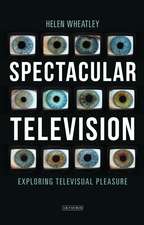 Spectacular Television: Exploring Televisual PleasureHelen Wheatley-25%Preț: 175.59 lei234.00 lei
 -
 The BBC: A People's HistoryDavid Hendy-18%Preț: 88.70 lei107.81 lei
 -
 We Hope You Have Enjoyed the ShowJeff Evans-17%Preț: 120.72 lei145.52 lei
 -
 The Story of British Video ActivismEd Webb-Ingall-16%Preț: 212.07 lei253.61 lei
 -
 -20%Preț: 71.89 lei89.77 lei
 -
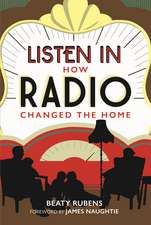 Listen In: How Radio Changed the HomeBeaty RubensPreț: 247.02 lei
 -
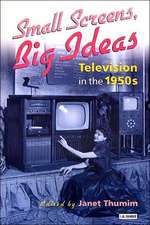 Small Screens, Big IdeasJanet ThumimPreț: 178.52 lei
 -
 The Birth of British RadarAnne StobbsPreț: 90.86 lei
 -
 The New TelevisionRachel ChurnerPreț: 312.51 lei
 -
 Issues and Singularity in the British Media Volume 2Renée Dickason-8%Preț: 651.85 lei708.54 lei
Cuprins
Introduction
1. Listening In, Looking Forward
2. 'Practical television is here'
3. 'A new technique'
4. The Importance of Isidore
5. Starting Out at the Palace
6. Performing television
7. Dramatic success
8. The world elsewhere
9. The challenge of cinema television
10. Looking In
Coda
Bibliography
Index
1. Listening In, Looking Forward
2. 'Practical television is here'
3. 'A new technique'
4. The Importance of Isidore
5. Starting Out at the Palace
6. Performing television
7. Dramatic success
8. The world elsewhere
9. The challenge of cinema television
10. Looking In
Coda
Bibliography
Index
Recenzii
The first thoroughly extensive study of the period . While Wyver's book is undeniably constructed as a work of serious research, it is also funny, enlightening [and] revelatory . He has also unearthed a story of cultural pioneers so very nearly forgotten. Someone should adapt it into a TV series.
It is entirely appropriate that this book's title mentions magic: what John Wyver has achieved here is nothing short of miraculous. Wyver takes a period of television production long thought to be out of our grasp and constructs a painstakingly researched history of its key personnel, programmes, and technological developments. He illuminates the relationships between early television and cinema, theatre and radio, and highlights the creativity and innovation of those making it. This will change everything we understand about the early development of television in the UK.
Wyver offers us a startlingly original way of understanding television's origin story. Through meticulous research and brilliant storytelling, he reveals just how intimately connected this strange invention was to inter-war British cultural life, as well as conveying all the delicious drama that accompanied its birth as a new mass medium. Wonderful.
This is a meticulously-researched and extremely detailed account of the early days of television in Britain. Wyver has produced a thoroughly engaging account of those pioneering years and this book needs to be on the shelf of everyone with an interest in media history.
The cluster of centenaries of television make this the ideal moment to publish an account of its infancy. Who better to write that history than John Wyver, who unites the deep intuitions of the programme-maker with the bloodhound instincts of the researcher-scholar? What television could have been, and what it became, make for a compelling account that will immediately become the standard work on the subject.
Wyver [delivers] a highly informative and richly detailed account of this period in media history ... Wyver has followed an astonishing archival trail which stands out for its richness of detail, and the author's historical instinct for chasing the sources is shown to be formidable.
It is entirely appropriate that this book's title mentions magic: what John Wyver has achieved here is nothing short of miraculous. Wyver takes a period of television production long thought to be out of our grasp and constructs a painstakingly researched history of its key personnel, programmes, and technological developments. He illuminates the relationships between early television and cinema, theatre and radio, and highlights the creativity and innovation of those making it. This will change everything we understand about the early development of television in the UK.
Wyver offers us a startlingly original way of understanding television's origin story. Through meticulous research and brilliant storytelling, he reveals just how intimately connected this strange invention was to inter-war British cultural life, as well as conveying all the delicious drama that accompanied its birth as a new mass medium. Wonderful.
This is a meticulously-researched and extremely detailed account of the early days of television in Britain. Wyver has produced a thoroughly engaging account of those pioneering years and this book needs to be on the shelf of everyone with an interest in media history.
The cluster of centenaries of television make this the ideal moment to publish an account of its infancy. Who better to write that history than John Wyver, who unites the deep intuitions of the programme-maker with the bloodhound instincts of the researcher-scholar? What television could have been, and what it became, make for a compelling account that will immediately become the standard work on the subject.
Wyver [delivers] a highly informative and richly detailed account of this period in media history ... Wyver has followed an astonishing archival trail which stands out for its richness of detail, and the author's historical instinct for chasing the sources is shown to be formidable.