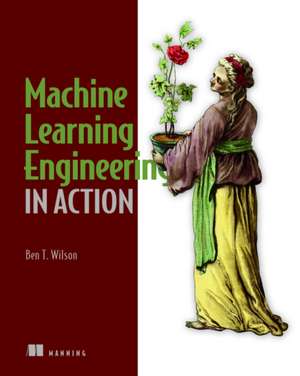
Machine Learning Engineering in Action
Autor Ben Wilsonen Limba Engleză Paperback – 14 apr 2022
Recomandăm Machine Learning Engineering in Action inginerilor de date, arhitecților de sistem și dezvoltatorilor software care doresc să depășească etapa experimentelor izolate și să construiască sisteme de inteligență artificială robuste. Găsim în această carte o abordare tehnică riguroasă, care tratează învățarea automată nu ca pe o disciplină academică, ci ca pe o ramură a ingineriei software ce necesită mentenabilitate, securitate și eficiență operațională. Ne-a atras atenția modul în care Ben Wilson structurează fluxul de lucru, începând cu evaluarea pragmatică a problemelor de data science pentru a găsi soluția optimă în funcție de buget și așteptări. Dacă The Pragmatic Programmer for Machine Learning de Marco Scutari v-a oferit cadrul teoretic necesar înțelegerii pipeline-urilor, această carte oferă instrumentele practice și pattern-urile de design necesare pentru producție. Autorul insistă pe adoptarea standardelor de dezvoltare software care permit gestionarea facilă a codului și automatizarea monitorizării. Spre deosebire de lucrările sale anterioare din domeniul ecologiei marine sau istoriei, cum este Empire of the Deep, acest titlu reflectă expertiza sa actuală de Solutions Architect la Databricks. Cartea analizează critic alegerea tehnologiilor și oferă soluții testate pe teren pentru validarea statistică și prototiparea standardizată. Ritmul este alert, axat pe rezolvarea problemelor tehnice concrete care apar atunci când un model trebuie să ruleze la scară largă, asigurând o tranziție fluidă de la faza de cercetare la cea de implementare efectivă.
Preț: 395.44 lei
Preț vechi: 494.29 lei
-20%
Carte disponibilă
Livrare economică 26 octombrie-09 noiembrie
Livrare express 10-16 octombrie pentru 57.46 lei
Specificații
ISBN-10: 1617298719
Pagini: 300
Dimensiuni: 185 x 232 x 32 mm
Greutate: 1.03 kg
Editura: Manning Publications
V-ar putea interesa
-
 Modern Software EngineeringDavid Farley-20%Preț: 223.84 lei279.80 lei
 -
 Just Enough Data Science and Machine LearningMark LevenePreț: 342.01 lei
 -
 The AI PlaybookEric Siegel-17%Preț: 180.30 lei216.51 lei
 -
 Machine Learning in ProductionChristian Kastner-20%Preț: 572.46 lei715.57 lei
 -
 -39%Preț: 391.86 lei645.65 lei
 -
 -20%Preț: 192.78 lei240.98 lei
 -
 Operating AIUlrika Jagare-20%Preț: 196.93 lei246.15 lei
 -
 Machine Learning For DummiesLuca Massaron-20%Preț: 146.59 lei183.23 lei
 -
 Experimentation for EngineersDavid Sweet-20%Preț: 325.74 lei407.17 lei
 -
 Deep Learning Design PatternsAndrew Ferlitsch-20%Preț: 420.81 lei526.02 lei
 -
 Distributed Machine Learning PatternsYuan Tang-20%Preț: 326.97 lei408.71 lei
 -
 Llms in ProductionChristopher Brousseau-20%Preț: 337.81 lei422.26 lei
 -
 Machine Learning System DesignValerii Babushkin-20%Preț: 384.35 lei480.44 lei
 -
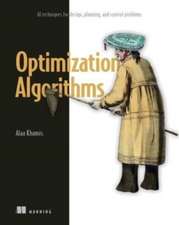 Optimization AlgorithmsAlaa Khamis-20%Preț: 392.66 lei490.83 lei
 -
 Managing Machine Learning ProjectsSimon Thompson-20%Preț: 276.81 lei346.02 lei
 -
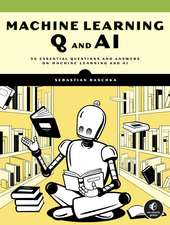 -20%Preț: 243.40 lei304.25 lei
 -
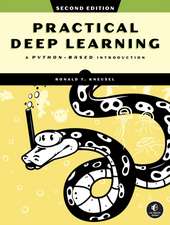 Practical Deep Learning, 2nd Edition: A Python-Based IntroductionRonald T. Kneusel-36%Preț: 331.28 lei514.93 lei
 -
 The Developer's Guide to AIJacob Orshalick-36%Preț: 269.66 lei422.58 lei
 -
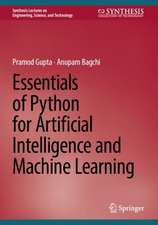 Preț: 433.14 lei
 -
 -20%Preț: 318.24 lei397.80 lei
De ce să citești această carte
Se adresează practicienilor care vor să transforme modelele de ML în produse software fiabile. Cititorul câștigă un set de bune practici pentru scrierea unui cod testabil și strategii de automatizare a depanării. Este o resursă esențială pentru a evita datoria tehnică și pentru a livra proiecte de Machine Learning care sunt ușor de scalat și de întreținut în timp.
Despre autor
Dr. Ben Wilson este un expert versatil, în prezent Solutions Architect la Databricks, unde proiectează sisteme complexe de procesare a datelor. Cu un doctorat obținut la Universitatea din Aberdeen, Wilson a avut o carieră academică remarcabilă în studiul ecologiei marine înainte de a se dedica ingineriei software. Această dublă specializare îi oferă o perspectivă unică asupra rigurozității științifice aplicate în tehnologie. Este un autor prolific, publicând atât lucrări științifice, cât și volume de istorie sau ghiduri tehnice, experiența sa vastă fiind reflectată în claritatea și structura logică a volumului Machine Learning Engineering in Action.
Descriere scurtă
In Machine Learning Engineering in Action, you will learn:
Evaluating data science problems to find the most effective solution
Scoping a machine learning project for usage expectations and budget
Process techniques that minimize wasted effort and speed up production
Assessing a project using standardized prototyping work and statistical validation
Choosing the right technologies and tools for your project
Making your codebase more understandable, maintainable, and testable
Automating your troubleshooting and logging practices
Ferrying a machine learning project from your data science team to your end users is no easy task. Machine Learning Engineering in Action will help you make it simple. Inside, you’ll find fantastic advice from veteran industry expert Ben Wilson, Principal Resident Solutions Architect at Databricks.
Ben introduces his personal toolbox of techniques for building deployable and maintainable production machine learning systems. You’ll learn the importance of Agile methodologies for fast prototyping and conferring with stakeholders, while developing a new appreciation for the importance of planning. Adopting well-established software development standards will help you deliver better code management, and make it easier to test, scale, and even reuse your machine learning code. Every method is explained in a friendly, peer-to-peer style and illustrated with production-ready source code.
About the technology
Deliver maximum performance from your models and data. This collection of reproducible techniques will help you build stable data pipelines, efficient application workflows, and maintainable models every time. Based on decades of good software engineering practice, machine learning engineering ensures your ML systems are resilient, adaptable, and perform in production.
About the book
Machine Learning Engineering in Action teaches you core principles and practices for designing, building, and delivering successful machine learning projects. You’ll discover software engineering techniques like conducting experiments on your prototypes and implementing modular design that result in resilient architectures and consistent cross-team communication. Based on the author’s extensive experience, every method in this book has been used to solve real-world projects.
What's inside
Scoping a machine learning project for usage expectations and budget
Choosing the right technologies for your design
Making your codebase more understandable, maintainable, and testable
Automating your troubleshooting and logging practices
About the reader
For data scientists who know machine learning and the basics of object-oriented programming.
About the author
Ben Wilson is Principal Resident Solutions Architect at Databricks, where he developed the Databricks Labs AutoML project, and is an MLflow committer.
Table of Contents
PART 1 AN INTRODUCTION TO MACHINE LEARNING ENGINEERING
1 What is a machine learning engineer?
2 Your data science could use some engineering
3 Before you model: Planning and scoping a project
4 Before you model: Communication and logistics of projects
5 Experimentation in action: Planning and researching an ML project
6 Experimentation in action: Testing and evaluating a project
7 Experimentation in action: Moving from prototype to MVP
8 Experimentation in action: Finalizing an MVP with MLflow and runtime optimization
PART 2 PREPARING FOR PRODUCTION: CREATING MAINTAINABLE ML
9 Modularity for ML: Writing testable and legible code
10 Standards of coding and creating maintainable ML code
11 Model measurement and why it’s so important
12 Holding on to your gains by watching for drift
13 ML development hubris
PART 3 DEVELOPING PRODUCTION MACHINE LEARNING CODE
14 Writing production code
15 Quality and acceptance testing
16 Production infrastructure