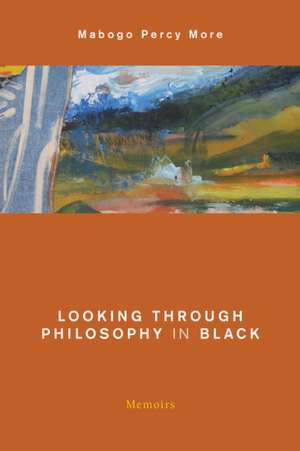
Looking Through Philosophy in Black: Memoirs: Global Critical Caribbean Thought
Autor Mabogo Percy Moreen Limba Engleză Paperback – 11 dec 2018



Preț: 331.02 lei
Preț vechi: 427.25 lei
-23%
Puncte Express: 497
Carte tipărită la comandă
Livrare economică 20 noiembrie-04 decembrie
Livrare prin curier în România Termenul estimat este afișat lângă disponibilitate.
Transport gratuit de la 400.00 lei Plată online sau ramburs, în funcție de opțiunile comenzii.
Retur gratuit în 14 zile Comandă securizată și suport în română.
Specificații
ISBN-13: 9781786609397
ISBN-10: 1786609398
Pagini: 288
Ilustrații: 22 b/w illustrations;
Dimensiuni: 148 x 226 x 22 mm
Greutate: 0.43 kg
Editura: Bloomsbury Publishing
Colecția Rowman & Littlefield
Seria Global Critical Caribbean Thought
Locul publicării:New York, United States
ISBN-10: 1786609398
Pagini: 288
Ilustrații: 22 b/w illustrations;
Dimensiuni: 148 x 226 x 22 mm
Greutate: 0.43 kg
Editura: Bloomsbury Publishing
Colecția Rowman & Littlefield
Seria Global Critical Caribbean Thought
Locul publicării:New York, United States
Cuprins
Preface and Acknowledgements / Part I: A Philosophical Autobiography / 1. Introduction by Way of Freedom / 2. Formative Student Years / 3. Philosophy Lecturer / 4. Overseas Experiences / 5. The Returnings / 6. Black (Africana) Philosophy / 7. Philosophy and jazz / 8. Post 'Retirement' / 9. The Frantz Fanon Award / Part II: Essays / 10. Philosophy in South Africa: Before, Under and After Apartheid / 11. Locating Frantz Fanon in (Post) Apartheid South Africa / 12. Gordon on Contingency: A Sartrean Interpretation / 13. Black Solidarity: A Philosophical Defense / 14. Biko: Africana Existentialist Philosopher / Bibliography / Index
Recenzii
The title of the autobiography captures the intentions of the memoir: in reading these reflections, the non-black audience is given a glimpse of what it is like for the black person to be in philosophy, embodied as a black person and possessing a different epistemology. Simply put, More's memoir is about the negotiation that black scholars have to make in order so "survive" in the academy. . Overall, Looking Through Philosophy in Black reads as an ode, an ode to the black bodies that wish to continue with their careers in philosophy.
Looking Through Philosophy in Black is a compelling story of one man's struggle for philosophy against the odds, willed by the author's determination to think freedom under the heel of apartheid South Africa. Buoyed by the Black Consciousness Movement-the author was a classmate of the murdered student leader Abram Onkgopotse Tiro-Mabogo Percy More became a philosopher. Recognized today as one of the most important interlocutors of Steve Biko and Black Consciousness philosophy, More challenges us to reflect on "Being-Black-in-an-Anti-Black-World"-the ontological impossibility of being Black and being a philosopher-as he engages Africana philosophies born of struggle. Looking Through Philosophy in Black is a remarkable and engaging story of life and the human condition. Doggedly resisting philosophy's epistemic apartheid, its racism and its colored-blindness, More asks us to contest the absurd mediocrity, downright incompetency and paucity of thinking in higher education and by extension in civil society.
Looking Through Philosophy in Black: Memoirs is not only a chronicler and definer, it is a courageous narrative that takes philosophy head-on from the locus of blackness. Mabogo P. More makes a unique and extraordinary contribution to self-writing with a lucid craft that grapples with the question of being in the world.
A compelling account of a life lived in fidelity to the urgency of freedom, More's autobiography is marked by a profound and sustained commitment, against the odds, to philosophy as a practice of freedom. This account of the life of the mind, made against the dead weight of racism, moves from the outskirts of Johannesburg to the world via jazz, philosophy and struggle.
Looking Through Philosophy in Black is a tour de force, a work that delivers. It is a powerful existential reflection on African and Africana philosophy, and at the same time a highly revealing account of what it means to be a Black philosopher today.
Looking Through Philosophy in Black is a compelling story of one man's struggle for philosophy against the odds, willed by the author's determination to think freedom under the heel of apartheid South Africa. Buoyed by the Black Consciousness Movement-the author was a classmate of the murdered student leader Abram Onkgopotse Tiro-Mabogo Percy More became a philosopher. Recognized today as one of the most important interlocutors of Steve Biko and Black Consciousness philosophy, More challenges us to reflect on "Being-Black-in-an-Anti-Black-World"-the ontological impossibility of being Black and being a philosopher-as he engages Africana philosophies born of struggle. Looking Through Philosophy in Black is a remarkable and engaging story of life and the human condition. Doggedly resisting philosophy's epistemic apartheid, its racism and its colored-blindness, More asks us to contest the absurd mediocrity, downright incompetency and paucity of thinking in higher education and by extension in civil society.
Looking Through Philosophy in Black: Memoirs is not only a chronicler and definer, it is a courageous narrative that takes philosophy head-on from the locus of blackness. Mabogo P. More makes a unique and extraordinary contribution to self-writing with a lucid craft that grapples with the question of being in the world.
A compelling account of a life lived in fidelity to the urgency of freedom, More's autobiography is marked by a profound and sustained commitment, against the odds, to philosophy as a practice of freedom. This account of the life of the mind, made against the dead weight of racism, moves from the outskirts of Johannesburg to the world via jazz, philosophy and struggle.
Looking Through Philosophy in Black is a tour de force, a work that delivers. It is a powerful existential reflection on African and Africana philosophy, and at the same time a highly revealing account of what it means to be a Black philosopher today.