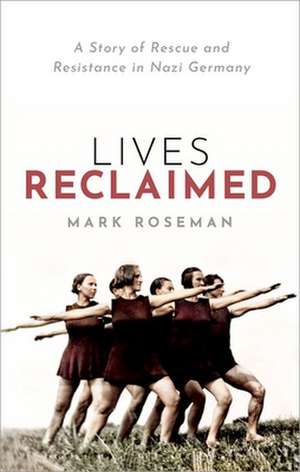
Lives Reclaimed: A Story of Rescue and Resistance in Nazi Germany
Autor Mark Rosemanen Limba Engleză Hardback – 26 sep 2019
Apreciem, înainte de toate, modul în care Lives Reclaimed se ancorează în analiza riguroasă a documentelor de arhivă — rapoarte Gestapo și jurnale private — pentru a reconstrui activitatea discretă a grupului „Bund”. Această organizație din Essen, condusă de Artur Jacobs, a evoluat de la un cerc de educație pentru adulți axat pe perfecționare morală la o rețea clandestină care a sfidat regimul prin gesturi de o umanitate radicală. Remarcăm studiile de caz prezentate de Mark Roseman, care detaliază cum membrii grupului au trimis pachete cu alimente în lagăre de concentrare și au oferit adăpost celor persecutați, riscându-și propria supraviețuire.
Cartea propune o reevaluare a conceptului de rezistență, îndepărtându-se de narativele clasice despre eroismul militar sau politic. Lives Reclaimed este o alternativă necesară la titluri precum Rescue de Milton Meltzer pentru cursurile de istoria Holocaustului, având avantajul unei abordări micro-istorice care explorează motivațiile etice ale unui grup civil specific, în loc să ofere o panoramă generală a salvatorilor. Dacă în lucrările sale anterioare, cum este The Villa, The Lake, The Meeting, Mark Roseman analiza mecanismele birocratice ale exterminării, aici el schimbă perspectiva către rezistența etică din interiorul societății germane.
Această lucrare ocupă un loc central în opera autorului, completând cercetările sale din The Cambridge History of the Holocaust. Stilul narativ este precis, evitând sentimentalismul în favoarea unei analize scrupuloase a modului în care niște cetățeni obișnuiți și-au păstrat busola morală într-un sistem totalitar. Este o resursă esențială pentru înțelegerea nuanțelor opoziției civile în perioada 1933-1945.
Preț: 161.09 lei
Preț vechi: 212.55 lei
-24%
Carte disponibilă
Livrare economică 05-10 noiembrie
Specificații
ISBN-10: 0198802846
Pagini: 352
Dimensiuni: 160 x 237 x 33 mm
Greutate: 0.6 kg
Editura: OUP OXFORD
Colecția OUP Oxford
Locul publicării:Oxford, United Kingdom
V-ar putea interesa


De ce să citești această carte
Recomandăm această carte cititorilor interesați de istoria socială a celui de-al Doilea Război Mondial și de etica rezistenței. Lives Reclaimed oferă o perspectivă documentată asupra modului în care solidaritatea comunitară poate funcționa sub teroare. Veți câștiga o înțelegere profundă a „rezistenței prin bunătate”, un concept care demonstrează că opoziția față de rău nu a fost doar politică, ci și profund umană.
Despre autor
Mark Roseman este un istoric de prestigiu, profesor la Universitatea din Southampton și specialist recunoscut în istoria Germaniei moderne și a Holocaustului. A fost distins cu Premiul Fraenkel pentru istorie contemporană, o recunoaștere a rigoării cercetărilor sale. Opera sa include titluri fundamentale precum A Past in Hiding și studii critice despre Conferința de la Wannsee. Prin activitatea sa de editor pentru The Cambridge History of the Holocaust, Roseman a contribuit semnificativ la sistematizarea cunoștințelor despre această perioadă tragică, fiind una dintre cele mai autoritare voci academice din Marea Britanie în acest domeniu.
Descriere
Recenzii
Mark Roseman tells the story well, and asks important questions: about his subjects and our own entanglement in evil today.
Fascinating study ... Roseman's book is a brilliant, humane, and timely study. It brings both individual Bundists and also a whole period vividly to life.
Mark Roseman's Lives Reclaimed is a landmark book in the history of Holocaust rescue for several reasons: it illuminates a virtually unknown group of quirky utopian socialists who transformed themselves into a network of German rescuers, its source base is composed primarily of rare contemporary documents and only secondarily of post-war accounts, and it is a story brilliantly researched and exceptionally well-told.
Humanity is fleeting and unpredictable, but it can be rendered, with patience and skill, into history, and thereby become exemplary. This is what Mark Roseman has done, and his readers will be grateful.
Compelling reading. We have come to think of tales of rescue from Nazi persecution as being about extraordinary individuals. Mark Roseman brings us a very different kind of story-of a small and deeply interconnected group of ethical socialists in Germany who supported each other and the Jews they hid. By showing how the dynamics within small groups can make an enormous difference, Roseman also opens new perspectives on the writing of history.
In this remarkable reconstruction of a hitherto unknown resistance group, Mark Roseman tells the gripping story of ordinary Germans who did their utmost to assist Jews and dissidents targeted by the Nazi regime. Motivated by ethical principles and believing they could change society for the better, their story serves as a model of moral political conduct for our own turbulent era.
Once again, Roseman has written a pioneering work that changes our vision of life under the Hitler dictatorship.
Captivating. This is a book for our turbulent times: a story of compassion and resistance and a call to courage and solidarity.
Roseman is the first historian to tell the story of the Bund, a communitarian group whose ethical radar remained intact during the Nazi era. Insightful, engagingly written, and scrupulously researched, this important book illuminates both the terror that a small, disproportionately female opposition group faced and its success in saving lives.
Notă biografică
Cuprins
- Introduction
- 1: Years of Innocence
- 2: The Assault
- 3: From Vanguard to Refuge
- 4: The Call to Arms
- 5: Lifelines
- 6: In Plain Sight
- 7: The Test of Total War
- 8: The Endgame
- 9: Our Flock has Grown Lonely
- 10: Beyond Recognition
- Conclusion: The Rescue of History
- Notes
- Index