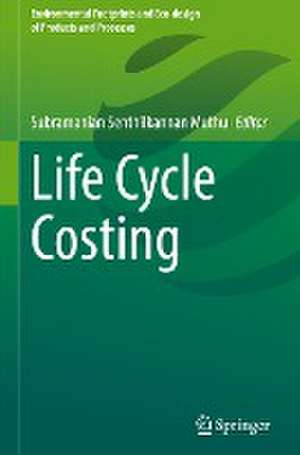
Life Cycle Costing: Environmental Footprints and Eco-design of Products and Processes
Editat de Subramanian Senthilkannan Muthuen Limba Engleză Hardback – 10 oct 2023
Din seria Environmental Footprints and Eco-design of Products and Processes
- 18%
 Preț: 1121.94 lei
 - 24%
 Preț: 751.18 lei
 - 24%
 Preț: 794.05 lei
 - 24%
 Preț: 905.98 lei
 - 18%
 Preț: 748.52 lei
 - 18%
 Preț: 948.22 lei
 - 18%
 Preț: 889.45 lei
 - 18%
 Preț: 860.48 lei
 - 18%
 Preț: 920.13 lei
 -
 Preț: 368.96 lei
 - 18%
 Preț: 1067.84 lei
 - 18%
 Preț: 1077.10 lei
 - 20%
 Preț: 1074.41 lei
 - 18%
 Preț: 1186.57 lei
 - 24%
 Preț: 983.66 lei
 - 24%
 Preț: 882.49 lei
 - 24%
 Preț: 878.74 lei
 - 24%
 Preț: 1069.95 lei
 - 24%
 Preț: 969.00 lei
 - 18%
 Preț: 1035.93 lei
 - 18%
 Preț: 1035.54 lei
 - 18%
 Preț: 811.10 lei
 - 18%
 Preț: 741.86 lei
Preț: 859.03 lei
Preț vechi: 1047.60 lei
-18%
Puncte Express: 1289
Carte disponibilă
Livrare economică 31 octombrie-14 noiembrie
Livrare prin curier în România Termenul estimat este afișat lângă disponibilitate.
Transport gratuit pentru acest produs Plată online sau ramburs, în funcție de opțiunile comenzii.
Retur gratuit în 14 zile Comandă securizată și suport în română.
Specificații
ISBN-13: 9783031409929
ISBN-10: 3031409922
Pagini: 184
Ilustrații: V, 184 p. 42 illus., 32 illus. in color.
Dimensiuni: 155 x 235 mm
Greutate: 0.52 kg
Ediția:1st ed. 2023
Editura: Springer Nature Switzerland
Colecția Springer
Seria Environmental Footprints and Eco-design of Products and Processes
Locul publicării:Cham, Switzerland
ISBN-10: 3031409922
Pagini: 184
Ilustrații: V, 184 p. 42 illus., 32 illus. in color.
Dimensiuni: 155 x 235 mm
Greutate: 0.52 kg
Ediția:1st ed. 2023
Editura: Springer Nature Switzerland
Colecția Springer
Seria Environmental Footprints and Eco-design of Products and Processes
Locul publicării:Cham, Switzerland
V-ar putea interesa
-
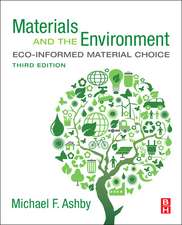 Materials and the Environment: Eco-informed Material ChoiceMichael F. Ashby-32%Preț: 354.92 lei519.54 lei
 -
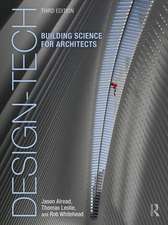 Design-Tech: Building Science for ArchitectsJason Alread-8%Preț: 465.32 lei505.78 leiRecomandat
 -
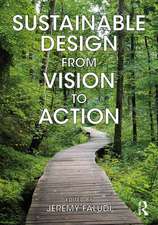 Sustainable Design from Vision to ActionJeremy FaludiPreț: 375.57 lei
 -
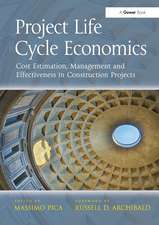 Preț: 343.83 lei
 -
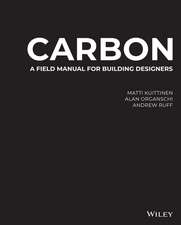 Carbon - A Field Manual for Building DesignersAlan OrganschiPreț: 424.06 lei
 -
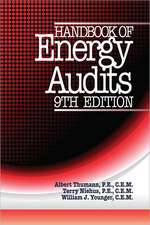 Handbook of Energy Audits, Ninth EditionAlbert Thumann-14%Preț: 902.45 lei1049.36 lei
 -
 On Natural CapitalPartha DasguptaPreț: 146.84 lei
 -
 -17%Preț: 357.78 lei430.34 lei
 -
 Towards a Sustainable Future - Life Cycle ManagementZbigniew Stanislaw KlosPreț: 355.36 lei
 -
 Life Cycle Assessment & Circular EconomySubramanian Senthilkannan Muthu-18%Preț: 783.46 lei955.44 lei
 -
 Circular Economy in Engineering Design and ProductionSamira KeivanpourPreț: 306.79 lei
 -
 Sustainability of Thermochemical Waste Conversion TechnologiesCynthia Ofori-Boateng-18%Preț: 1004.64 lei1225.16 lei
 -
 Life Cycle AssessmentMichael Hauschild-23%Preț: 1052.48 lei1366.85 lei
 -
 Preț: 430.45 lei
 -
 -14%Preț: 605.72 lei704.32 lei
 -
 Lean & Green: Best PracticeDaniel ReichertPreț: 451.09 lei
 -
 Architecture and Energy - Bauen in Zeiten des KlimawandelsAnnette Becker-20%Preț: 219.79 lei275.01 lei
 -
 Environment and Sustainability for ESG and SDGsToshiyuki Sueyoshi-18%Preț: 769.91 lei938.92 lei
Cuprins
Chapter 1: Application of Life Cycle Costing in Building Energy Performance.- Chapter 2: Life Cycle Cost Analysis of Nearly-Zero Energy Buildings: An Introduction to the Methodologies.- Chapter 3:Analysis of Life Cycle Cost, Barriers and Strategies towards Enhancing its Application: Case Study of Commercial Buildings .- Chapter 4: Applications of Life Cycle Costing in Waste-to-Energy Projects.- Chapter 5: Life Cycle Cost Assessment of Various Wave Energy Converters (Based on Energy & Carbon Intensity).- Chapter 6: Towards Optimising Life Cycle Costs of High-Rise Residential Apartments: A Case of Sri Lanka.
Notă biografică
Dr. Subramanian Senthilkannan Muthu is currently the Chief Sustainability Officer at Green Story Inc, Canada, based out of Hong Kong. He earned his PhD from The Hong Kong Polytechnic University, and is a renowned expert in the areas of Environmental Sustainability in Textiles & Clothing Supply Chain, Product Life Cycle Assessment (LCA) and Product Carbon Footprint Assessment (PCF) in various industrial sectors. He has five years of industrial experience in textile manufacturing, research and development and textile testing and over a decade's of experience in life cycle assessment (LCA), carbon and ecological footprints assessment of various consumer products. He has published more than 100 research publications, written numerous book chapters and authored/edited over 170 books in the areas of Carbon Footprint, Recycling, Environmental Assessment, Life Cycle Assessment and Environmental Sustainability.
Textul de pe ultima copertă
Life Cycle Costing (LCC) is a well-known and popular method to evaluate the economic sustainability, which as the term implies is structured on the life cycle of a product or process. LCC is a method primarily consisting of estimating the total cost of a product, taking into account the whole life cycle of the product as well as the direct and external costs. It is one of the important methods and tools under the sustainability umbrella. This book describes the concept of LCC and offers several interesting case studies.
Caracteristici
Describes the concept and basic ideas surrounding Life Cycle Costing Offers information on use of waste products for energy Contains eight chapters by various scholars
Descriere
Descriere de la o altă ediție sau format:
Life Cycle Costing (LCC) is a well-known and popular method to evaluate the economic sustainability, which as the term implies is structured on the life cycle of a product or process.
Life Cycle Costing (LCC) is a well-known and popular method to evaluate the economic sustainability, which as the term implies is structured on the life cycle of a product or process.