
Leon Battista Alberti and Nicholas Cusanus: Towards an Epistemology of Vision for Italian Renaissance Art and Culture: Visual Culture in Early Modernity
Autor Charles H. Carmanen Limba Engleză Hardback – 18 aug 2014
Din seria Visual Culture in Early Modernity
-
 Preț: 386.98 lei
 -
 Preț: 354.48 lei
 -
 Preț: 345.24 lei
 -
 Preț: 386.40 lei
 - 18%
 Preț: 1207.19 lei
 - 15%
 Preț: 455.62 lei
 -
 Preț: 361.65 lei
 -
 Preț: 415.28 lei
 -
 Preț: 423.07 lei
 -
 Preț: 423.99 lei
 -
 Preț: 421.13 lei
 -
 Preț: 353.35 lei
 -
 Preț: 385.34 lei
 -
 Preț: 419.06 lei
 -
 Preț: 411.99 lei
 - 15%
 Preț: 465.94 lei
 -
 Preț: 421.11 lei
 -
 Preț: 445.17 lei
 - 18%
 Preț: 1218.82 lei
 -
 Preț: 452.82 lei
 -
 Preț: 429.56 lei
 -
 Preț: 470.36 lei
 -
 Preț: 447.75 lei
 -
 Preț: 420.82 lei
 - 49%
 Preț: 669.25 lei
 - 15%
 Preț: 426.71 lei
 -
 Preț: 421.83 lei
 - 15%
 Preț: 458.65 lei
 - 25%
 Preț: 986.10 lei
 - 25%
 Preț: 984.77 lei
 - 25%
 Preț: 991.24 lei
 - 25%
 Preț: 1047.35 lei
 - 26%
 Preț: 980.62 lei
 - 25%
 Preț: 955.03 lei
 - 25%
 Preț: 963.02 lei
 - 29%
 Preț: 944.31 lei
 - 25%
 Preț: 987.07 lei
 - 25%
 Preț: 956.29 lei
 - 25%
 Preț: 957.56 lei
 - 25%
 Preț: 985.46 lei
 - 25%
 Preț: 959.73 lei
Preț: 847.77 lei
Preț vechi: 1196.29 lei
-29%
Puncte Express: 1272
Carte indisponibilă temporar
Doresc să fiu notificat când acest titlu va fi disponibil:
Se trimite...
Specificații
ISBN-13: 9781472429230
ISBN-10: 1472429230
Pagini: 218
Dimensiuni: 174 x 246 x 18 mm
Greutate: 0.7 kg
Ediția:1
Editura: Taylor & Francis
Colecția Routledge
Seria Visual Culture in Early Modernity
Locul publicării:Oxford, United Kingdom
ISBN-10: 1472429230
Pagini: 218
Dimensiuni: 174 x 246 x 18 mm
Greutate: 0.7 kg
Ediția:1
Editura: Taylor & Francis
Colecția Routledge
Seria Visual Culture in Early Modernity
Locul publicării:Oxford, United Kingdom
V-ar putea interesa
-
 On PaintingLeon Alberti-29%Preț: 47.33 lei67.13 lei
 -
 The Geometry of Christian Contemplation: Measure without MeasureDavid Albertson-33%Preț: 615.17 lei921.81 lei
 -
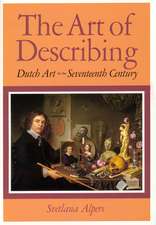 The Art of Describing: Dutch Art in the Seventeenth CenturySvetlana AlpersPreț: 307.46 lei
 -
 Rewriting AlbertiPeter EisenmanPreț: 184.30 lei
 -
 All Things Are Full of Gods: The Mysteries of Mind and LifeDavid Bentley HartPreț: 94.42 lei
 -
 -21%Preț: 280.74 lei353.29 lei
 -
 Craftsman's HandbookCennio D'Andrea Cennini-21%Preț: 67.21 lei84.92 lei
 -
 Secret KnowledgeDavid HockneyPreț: 236.43 lei
 -
 Platonic TheologyMarsilio FicinoPreț: 236.61 lei
 -
 Perspective as Symbolic FormErwin PanofskyPreț: 167.80 lei
 -
 Botticelli's SecretJoseph LuzziPreț: 155.91 lei
 -
 Concerning the Spiritual in ArtWassily KandinskyPreț: 38.49 lei
 -
 -39%Preț: 122.12 lei199.31 leiRecomandat
 -
 StudioloGiorgio AgambenPreț: 103.19 lei
 -
 EthicsBenedict De SpinozaPreț: 42.29 lei
 -
 The Divine ComedyDante AlighieriPreț: 44.29 lei
 -
 After DantePeter Cookson SmithPreț: 124.66 lei
 -
 The Book of Miracles. 45th Ed.Till-Holger BorchertPreț: 191.38 lei
 -
 -26%Preț: 80.46 lei109.21 leiRecomandat
Notă biografică
Charles H. Carman is Associate Professor of Art History at the University of Buffalo, USA.
Recenzii
'... casts new light on familiar material ...' Renaissance Quarterly
'The main strength of this book lies in Carman’s aptitude for close reading, and his keen analyses provide a fresh and nuanced encounter with Alberti’s On Painting. Carman also performs thorough inquiries into the meaning of key terms in Alberti’s work, such as istoria and nature. ...his sophisticated readings of Alberti’s work buttress the view that Renaissance culture was not only interested in that which can be observed in nature, but it also continued the medieval search for the ideal and fixed ontology of reality.' CAA Reviews
'The main strength of this book lies in Carman’s aptitude for close reading, and his keen analyses provide a fresh and nuanced encounter with Alberti’s On Painting. Carman also performs thorough inquiries into the meaning of key terms in Alberti’s work, such as istoria and nature. ...his sophisticated readings of Alberti’s work buttress the view that Renaissance culture was not only interested in that which can be observed in nature, but it also continued the medieval search for the ideal and fixed ontology of reality.' CAA Reviews
Cuprins
List of Illustrations, Preface: Perspectiva ut Poesis, Acknowledgements, 1. Alberti and Cusanus: An Overview, 2. On Painting: Setting the Stage and “Tutta la Storia”, 3. The Eye of the Mind: Where it Goes, What it Sees, 4. Divine and Human Vision: Perspective and the Coincidence of Opposites, 5. Disclosing Metaphors 1: Ways into Perspective, 6. Disclosing Metaphors 2: The Window, The Flower, and The Map, Conclusion, Bibliography, Index
Descriere
Providing a fresh evaluation of Alberti’s text On Painting (1435), along with comparisons to various works of Nicholas Cusanus this study reveals a hitherto unsuspected shared epistemology of vision. Analyzing a range of artworks in light of Alberti’s and Cusanus’s ideals of vision, the author attributes a more deeply Christian Neoplatonic ideal than is typically accorded to Alberti, and adds a new dimension to our understanding of theories of vision in the Italian Renaissance.