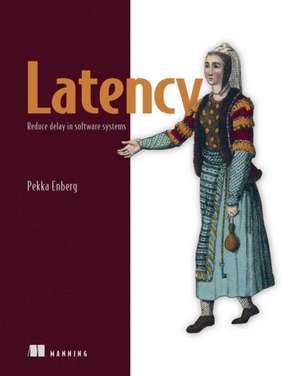
Latency
Autor Pekka Enbergen Limba Engleză Hardback – 20 noi 2025
Actualizarea majoră pe care o aduce Latency în peisajul literaturii tehnice este tranziția de la discuții abstracte despre performanță la implementări concrete, bazate pe experiența autorului Pekka Enberg în proiecte critice precum kernel-ul Linux și ScyllaDB. Remarcăm o abordare extrem de pragmatică: nu se limitează la a defini ce este latența, ci oferă cititorului instrumentele necesare pentru a construi un sistem de benchmark capabil să vizualizeze întârzierile dintre cauză și efect. Ne-a atras atenția structura axată pe inginerie aplicată. Autorul ghidează inginerii de backend prin mecanismele interne ale sistemelor de operare și ale rețelelor, explicând de ce codul se comportă diferit în medii distribuite. Dacă Understanding Software Dynamics de Richard Sites v-a oferit cadrul teoretic și fundamentele dinamicii software, această carte oferă instrumentele practice și strategiile specifice de optimizare prin colocare, partiționare și caching. Totodată, volumul explorează soluții ingenioase pentru situațiile limită: cum să „ascunzi” latența atunci când constrângerile fizice de infrastructură nu mai permit reducerea ei. Exemplele de cod sunt scrise în [Rust](language), un limbaj recunoscut pentru performanță și siguranță, ceea ce face ca textul să fie deosebit de relevant pentru proiectele moderne de înaltă disponibilitate. Stilul este tehnic și dens, eliminând superlativele inutile în favoarea unor metrici clare și a unor proiecte de tip hands-on care pot fi replicate în mediile de producție de către orice inginer software care stăpânește fundamentele sistemelor de backend.
Preț: 327.44 lei
Preț vechi: 409.30 lei
-20%
Carte disponibilă
Livrare economică 05-19 noiembrie
Livrare express 21-27 octombrie pentru 69.12 lei
Specificații
ISBN-10: 1633438082
Pagini: 264
Dimensiuni: 189 x 235 x 16 mm
Greutate: 0.45 kg
Editura: Manning Publications
V-ar putea interesa
-
 Smalltalk Best Practice PatternsKent Beck-20%Preț: 408.65 lei510.81 lei
 -
 Core Java for the ImpatientCay Horstmann-20%Preț: 364.02 lei455.03 lei
 -
 Understanding Software DynamicsRichard Sites-20%Preț: 310.88 lei388.60 lei
 -
 MeditationsMarcus AureliusPreț: 34.00 lei
 -
 Code Complete: A practical handbook of software constructionSteve McConnell-20%Preț: 285.38 lei356.73 lei
 -
 Networking All-In-One for DummiesDoug Lowe-20%Preț: 258.11 lei322.63 lei
 -
 Linux Command Line and Shell Scripting BibleRichard Blum-20%Preț: 410.86 lei513.56 lei
 -
 Coding For Dummies, All New EditionPaul McFedries-20%Preț: 117.52 lei146.90 lei
 -
 Preț: 123.51 lei
 -
 Camel in ActionClaus Ibsen-20%Preț: 497.44 lei621.80 lei
 -
 Street CoderSedat Kapanoglu-20%Preț: 277.22 lei346.53 lei
 -
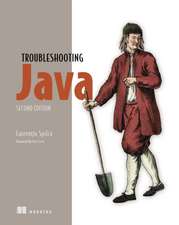 Troubleshooting Java, Second EditionLaurentiu Spilca-20%Preț: 337.22 lei421.52 lei
 -
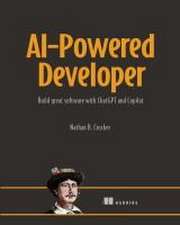 AI-Powered DeveloperNathan B Crocker-20%Preț: 281.01 lei351.26 lei
 -
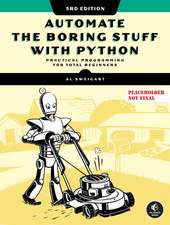 -34%Preț: 293.51 lei447.85 lei
 -
 -35%Preț: 243.51 lei372.78 lei
 -
 EnshittificationCory DoctorowPreț: 170.65 lei
 -
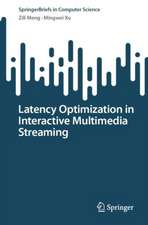 -20%Preț: 315.57 lei394.47 lei
 -
 .NET 10 RevealedKajetan Duszy¿ski-20%Preț: 240.60 lei300.75 lei
 -
 Mastering ASP.NET Core 10Mabrouk Mahdhi-20%Preț: 250.42 lei313.02 lei
De ce să citești această carte
Recomandăm această carte inginerilor de backend care doresc să treacă de la optimizări intuitive la o metodologie riguroasă de control al performanței. Veți câștiga o înțelegere profundă a modului în care hardware-ul și rețeaua influențează viteza aplicației, învățând tehnici directe de reducere a latenței în Rust. Este o resursă esențială pentru cei care dezvoltă sisteme distribuite unde fiecare milisecundă contează.
Descriere
Descriere scurtă
From first principles to production-ready code, Latency teaches you how to make your software faster at every layer of the stack. You’ll learn what latency really is, how it differs from bandwidth, and why it matters for user experience. Then, guided by practical examples, you’ll apply Little’s Law, design lock-free algorithms, and architect caching systems that scale. You’ll discover how your code runs differently on distributed systems, databases, and operating systems, and understand the common latency-causing issues in each situation.
In Latency you’ll learn how to:
- Define latency, distinguish it from bandwidth, and understand its impact on user experience
- Model performance with Little’s Law and Amdahl’s Law, then measure and visualize delays
- Optimize data access with colocation, replication, partitioning, and caching
- Accelerate logic with algorithmic improvements, memory tuning, and lock-free concurrency
- Minimize delays with asynchronous processing, predictive techniques, and speculative execution
About the technology
From lost microseconds routing server messages to page loads that keep users waiting, latency can kill good software. This one-of-a-kind book shows you how to spot, understand, and fix unwanted latency in your applications and infrastructure.
About the book
Latency: Reduce delay in software systems shows you how to troubleshoot latency in existing applications and create low latency systems from the ground up. In it, you’ll discover high-impact fixes for measuring latency and advanced optimizations in memory management, concurrency models, and predictive execution. The tips and tricks, hands-on projects, and personal insights make this book as enjoyable as it is practical.
What's inside
- How to model and measure latency
- Organizing application data for low latency
- Accelerating your code
- Hiding latency
For software engineers with a working knowledge of backends. Examples in Rust.
About the author
Pekka Enberg has experience in operating systems, databases, and distributed systems, having worked on the Linux kernel and the Scylla and Turso databases.
Table of Contents
Part 1
1 Introduction
2 Modeling and measuring latency
Part 2
3 Colocation
4 Replication
5 Partitioning
6 Caching
Part 3
7 Eliminating work
8 Wait-free synchronization
9 Exploiting concurrency
Part 4
10 Asynchronous processing
11 Predictive techniques
A Further reading