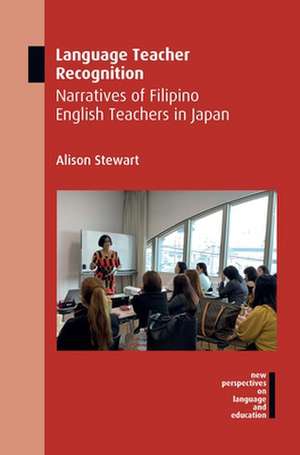
Language Teacher Recognition: NEW PERSPECTIVES ON LANGUAGE AND EDUCATION, cartea 80
Autor Alison Stewarten Limba Engleză Hardback – 2 mar 2020








Preț: 859.30 lei
Preț vechi: 1115.97 lei
-23%
Puncte Express: 1289
Carte tipărită la comandă
Livrare economică 07-21 decembrie
Livrare prin curier în România Termenul estimat este afișat lângă disponibilitate.
Transport gratuit pentru acest produs Plată online sau ramburs, în funcție de opțiunile comenzii.
Retur gratuit în 14 zile Comandă securizată și suport în română.
Specificații
ISBN-13: 9781788927895
ISBN-10: 1788927893
Pagini: 152
Dimensiuni: 161 x 240 x 13 mm
Greutate: 0.4 kg
Editura: MULTILINGUAL MATTERS
Colecția New Perspectives on Language and Education
Seria NEW PERSPECTIVES ON LANGUAGE AND EDUCATION
ISBN-10: 1788927893
Pagini: 152
Dimensiuni: 161 x 240 x 13 mm
Greutate: 0.4 kg
Editura: MULTILINGUAL MATTERS
Colecția New Perspectives on Language and Education
Seria NEW PERSPECTIVES ON LANGUAGE AND EDUCATION
Notă biografică
Alison Stewart is Professor of English Education at Gakushuin University, Japan. Her research interests include language teaching and identity and language teacher associations.
Descriere
This book presents the career narratives of an under-researched group of teachers: immigrant Filipino teachers of English working mainly with young and very young learners in Japan. It provides a nuanced and revealing critique of poststructuralist views of identity and proposes recognition theories as an alternative perspective.