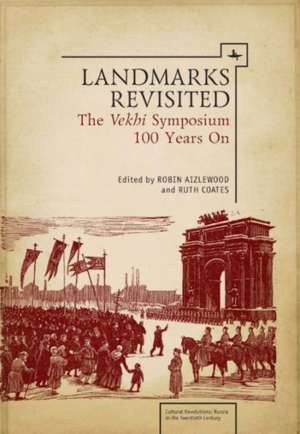
Landmarks Revisited: Cultural Revolutions: Russia in the Twentieth Century
Editat de Robin Aizlewood, Ruth Coatesen Limba Engleză Paperback – 30 mai 2018
Preț: 376.33 lei
Puncte Express: 564
Carte tipărită la comandă
Livrare economică 30 noiembrie-14 decembrie
Livrare prin curier în România Termenul estimat este afișat lângă disponibilitate.
Transport gratuit de la 400.00 lei Plată online sau ramburs, în funcție de opțiunile comenzii.
Retur gratuit în 14 zile Comandă securizată și suport în română.
Specificații
ISBN-13: 9781618118288
ISBN-10: 1618118285
Pagini: 324
Dimensiuni: 156 x 234 x 18 mm
Greutate: 0.45 kg
Editura: Academic Studies Press
Seria Cultural Revolutions: Russia in the Twentieth Century
ISBN-10: 1618118285
Pagini: 324
Dimensiuni: 156 x 234 x 18 mm
Greutate: 0.45 kg
Editura: Academic Studies Press
Seria Cultural Revolutions: Russia in the Twentieth Century
V-ar putea interesa
-
 Capital CrimesMax DecharnePreț: 122.39 lei
 -
 Homage to CataloniaGeorge Orwell-19%Preț: 46.69 lei57.49 lei
 -
 Oxford Dictionary of National Biography 2005-2008Lawrence Goldman-13%Preț: 760.99 lei870.64 lei
 -
 -20%Preț: 129.43 lei161.39 lei
 -
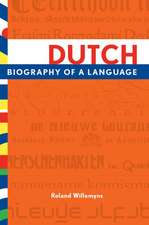 Dutch: Biography of a LanguageRoland Willemyns-28%Preț: 355.69 lei493.47 lei
 -
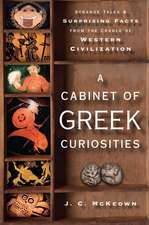 -18%Preț: 100.06 lei122.62 lei
 -
 Routledge Intensive Russian CourseRobin Aizlewood-8%Preț: 456.96 lei496.70 lei
 -
 After the Civil WarMichael RichardsPreț: 289.18 lei
 -
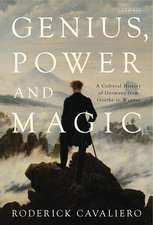 Genius, Power and Magic: A Cultural History of Germany from Goethe to WagnerRoderick Cavaliero-18%Preț: 389.40 lei477.23 lei
 -
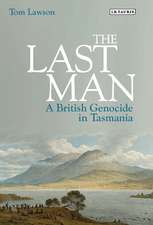 The Last Man: A British Genocide in TasmaniaTom Lawson-16%Preț: 383.96 lei458.60 lei
 -
 -18%Preț: 356.15 lei435.08 lei
 -
 GallipoliPeter Hart-18%Preț: 89.52 lei108.96 lei
Notă biografică
Robin Aizlewood holds an honorary position at UCL, having been director of UCL School of Slavonic and East European Studies, and also of the inter-university Centre for East European Language-Based Area Studies. He is the author of two books on Maiakovskii's verse (Verse Forma and Meaning in the Poetry of Vladimir Maiakovskii, 1989, and Two Essays on Maiakovskii's Verse, 2000) and a wide range of studies of nineteenth- and early twentieth-century Russian philosophy and literature, both prose and poetry. Ruth Coates is senior lecturer in Russian studies at the University of Bristol, UK. She is the author of Christianity in Bakhtin: God and the Exiled Author, 1998, and numerous articles on the Russian intellectual tradition. She is currently researching the reception of the doctrine of deification in Russian culture, with an emphasis on the late imperial period.
Descriere
Offers a new and comprehensive assessment of the 1909 Landmarks symposium and its legacy from a variety of disciplinary perspectives by leading scholars in their fields.
Recenzii
“Vekhi (1909) was a collection of essays by major Russian thinkers who set out to examine and challenge the boundaries between social thought, epistemology, religion, and law. In its wide-ranging and stimulating papers, the present volume offers a rich and helpful contextualization of this important work and ponders its impact on later decades in political and moral philosophy.”
“The chapters of Landmarks Revisited are of a uniformly high level of scholarship and sophistication. It will be profitably read by anyone with an interest in the intellectual, philosophical, and religious life of Russia in the early twentieth century.”
"The various scholarly articles, some of which feature fresh research, others reassessments in the context of contemporary European political thought or of the Russian political, sociological and religious tradition past and present, and still others in-depth examinations of the polemics aroused by the 1909 publication, combine effectively to point up the compendium’s continued resonance for today’s readers."
"The volume is particularly strong on emphasizing the centrality of religion to these Russian thinkers and their thought systems, and the considerations of Vekhi’s contributors on the ‘inner self’: a privileged realm separate from politics and vulgar materialism. As with Vekhi itself, the essays in this collection have many interesting things to say on the role of the intelligentsia and its relationship to wider society, and how both Russian liberals and neo-Slavophiles championed ‘inner freedom’, against what they saw as the crude didacticism of the revolutionary intelligentsia. This volume is, therefore, a solid accompaniment to the original volume of 1909, and will prove useful to those interested in Russian intellectual history, political philosophy and the relationship between religious and political thought in the late imperial period."
“The chapters of Landmarks Revisited are of a uniformly high level of scholarship and sophistication. It will be profitably read by anyone with an interest in the intellectual, philosophical, and religious life of Russia in the early twentieth century.”
"The various scholarly articles, some of which feature fresh research, others reassessments in the context of contemporary European political thought or of the Russian political, sociological and religious tradition past and present, and still others in-depth examinations of the polemics aroused by the 1909 publication, combine effectively to point up the compendium’s continued resonance for today’s readers."
"The volume is particularly strong on emphasizing the centrality of religion to these Russian thinkers and their thought systems, and the considerations of Vekhi’s contributors on the ‘inner self’: a privileged realm separate from politics and vulgar materialism. As with Vekhi itself, the essays in this collection have many interesting things to say on the role of the intelligentsia and its relationship to wider society, and how both Russian liberals and neo-Slavophiles championed ‘inner freedom’, against what they saw as the crude didacticism of the revolutionary intelligentsia. This volume is, therefore, a solid accompaniment to the original volume of 1909, and will prove useful to those interested in Russian intellectual history, political philosophy and the relationship between religious and political thought in the late imperial period."