
Korzybski: A Biography
Autor Bruce I. Kodishen Limba Engleză Paperback – 30 iun 2011
Recomandăm această biografie riguroasă care pornește de la analizele practice ale lui Alfred Korzybski asupra modului în care limbajul și sistemul nervos uman filtrează realitatea. Considerăm că valoarea acestui volum rezidă în documentarea minuțioasă a modului în care Korzybski a încercat să aplice rigoarea matematică în psihiatrie și viața cotidiană pentru a genera 'factori de sănătate'. Autorul Bruce I. Kodish utilizează surse primare inedite — corespondență privată și note de lucru — pentru a explica geneza conceptului de 'time-binding', capacitatea umană de a clădi pe fundația cunoștințelor generațiilor anterioare.
Textul oferă o perspectivă clară asupra tranziției de la inginerie la filozofie practică, evidențiind ritmul de viață epuizant al unui om care a supraviețuit ororilor Primului Război Mondial și a căutat soluții pentru crizele sociale recurente. Korzybski acoperă aceeași arie tematică precum Manhood of Humanity, dar cu o abordare biografică și contextuală care lipsește din scrierile teoretice originale. Dacă lucrările lui Korzybski, precum Selections from Science & Sanity, se concentrează pe sistemul non-aristotelic de gândire, biografia lui Kodish umanizează aceste teorii complexe, arătând cum experiențele de viață au modelat dictonul faimos 'Harta nu este teritoriul'. Stilul narativ transformă o materie densă, interdiscipinară, într-o lectură accesibilă, fără a sacrifica precizia academică necesară pentru a înțelege influența sa în psihoterapia cognitiv-comportamentală și ecologia media.
Preț: 221.63 lei
Carte tipărită la comandă
Livrare economică 29 mai-12 iunie
Specificații
ISBN-10: 0970066406
Pagini: 694
Dimensiuni: 170 x 244 x 35 mm
Greutate: 1.09 kg
Editura: Extensional Publishing
V-ar putea interesa
-
 The Legacy of the Siege of Leningrad, 1941–1995: Myth, Memories, and MonumentsLisa A. KirschenbaumPreț: 240.53 lei
 -
 The Kalamata Diary: Greece, War, and EmigrationEduardo D. Faingold-30%Preț: 327.23 lei467.99 lei
 -
 'We Are Going to Pick Potatoes'Irene Levin Berman-15%Preț: 570.25 lei670.88 lei
 -
 At the Hinge of HistoryJoseph C HarschPreț: 228.84 lei
 -
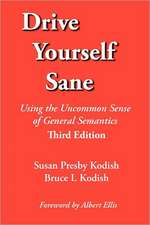 Drive Yourself SaneSusan Presby KodishPreț: 83.63 lei
 -
 The Pitiful Plight of the Assyrian Christians in Persia and KurdistanWilliam Walker RockwellPreț: 81.97 lei
 -
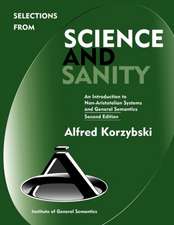 Selections from Science &SanityAlfred KorzybskiPreț: 98.73 lei
 -
 Deutsche Reichstagsakten, BAND XIII, Der Reichstag zu Nürnberg 1542Historische Kommission bei der Bayerischen Akademie d. Wissenschaften-23%Preț: 1277.17 lei1658.65 lei
 -
 Deutsche Reichstagsakten, Der Reichsdeputationstag zu Worms 1564Historische Kommission bei der Bayerischen Akademie d. Wissenschaften-23%Preț: 821.21 lei1066.51 lei
 -
 Das Wort Aus Stein: Bauen Im NationalsozialismusSebastian BrüninghausPreț: 251.12 lei
 -
 Verkauftes LandHans-Peter AckermannPreț: 137.70 lei
 -
 Der Thingplatz auf den Kleinen Brandbergen in Halle-KröllwitzHelko TrentzschPreț: 83.44 lei
 -
 The British Submarine WarfareCharles W. Domville-FifePreț: 375.77 lei
 -
 Frankreich und PreußenPhilippe MeyerPreț: 179.19 lei
De ce să citești această carte
Această lucrare este esențială pentru cei interesați de semantica generală și istoria ideilor secolului XX. Cititorul câștigă o înțelegere profundă a legăturii dintre structura limbajului și sănătatea mentală, primind un context biografic vital pentru a descifra textele dificile ale lui Korzybski. Este o recomandare certă pentru psihologi, comunicatori și studenți la filozofie care doresc să exploreze rădăcinile gândirii critice moderne.
Despre autor
Bruce I. Kodish este un cercetător dedicat semanticii generale, fiind distins în 1998 cu prestigiosul premiu J. Talbot Winchell de către Institutul de Semantică Generală. Experiența sa ca educator și lider în acest domeniu este reflectată în claritatea cu care expune idei filozofice complexe. Pe lângă biografia de referință a lui Korzybski, Kodish a explorat aplicații practice ale gândirii structurate și în alte domenii, fiind autorul lucrărilor Back Pain Solutions și Dare to Inquire. Abordarea sa îmbină rigoarea cercetării cu o perspectivă empatică asupra condiției umane.
Descriere scurtă
Traces of Korzybski's pioneering work can be found today in a variety of fields such as cognitive science, cognitive-behavioral psychotherapy, communication, media ecology, medicine, organizational development, philosophical counseling and philosophy, etc. In spite of this, Korzybski's radically interdisciplinary work remains relatively unassimilated into standard academic fields and hard to accurately fit into familiar popular categories. Thus, Korzybski, who originated the saying "The map is not the territory", remains a relatively neglected and misunderstood figure, shrouded in controversy: some people have considered him a genius while others have called him a crank. Drawing on an array of sources including Korzybski's personal correspondence, notes, scrapbooks, and both published and unpublished writings, as well as personal discussions and interviews with some of Korzybski's closest co-workers, Bruce I. Kodish situates Korzybski's contributions in the context of his times and provides surprising insights into his work as a whole. Kodish's clear prose provides a compellingly readable narrative of Korzybski's very busy, sometimes too busy, exciting and exhausting life while making accessible some of the most complex areas of Korzybski's thought. For years to come, this outstanding biography will remain the standard work on Alfred Korzybski's extraordinarily adventurous and significant life and work.