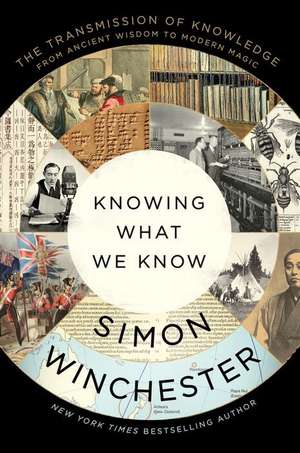
Knowing What We Know
Autor Simon Winchesteren Limba Engleză Paperback – 23 apr 2024
Aplicabilitatea practică a acestui volum rezidă în capacitatea sa de a oferi o perspectivă istorică asupra modului în care gestionăm datele într-o eră a supraîncărcării informaționale. În Knowing What We Know, Simon Winchester realizează o cronică a metodelor prin care umanitatea a dobândit, stocat și transmis cunoașterea, de la tăblițele de lut din Babilon până la algoritmii contemporani. Notăm cu interes modul în care autorul nu se limitează la o simplă cronologie, ci chestionează direct dacă accesul instantaneu la informație, facilitat de smartphone-uri, nu ne privează de însăși capacitatea de a gândi profund și de a atinge înțelepciunea. Considerăm că structura narativă, care trece prin momentele cheie ale inventării tiparului de către Gutenberg și apariția Google, servește drept avertisment asupra riscului de a „goli” mintea umană de procese fundamentale precum analiza matematică sau orientarea spațială. Cititorii familiarizați cu All the Knowledge in the World de Simon Garfield vor aprecia modul în care Winchester extinde discuția de la istoria enciclopediei spre implicațiile neurologice și etice ale externalizării memoriei. Această lucrare se poziționează ca o sinteză filozofică a operei sale anterioare; dacă în The Map That Changed the World sau Exactly se concentra pe precizia tehnică și cartografierea lumii fizice, aici Simon Winchester analizează infrastructura invizibilă a intelectului uman. Tonul este unul de observație critică, evitând entuziasmul tehnologic orb în favoarea unei reflecții asupra a ceea ce înseamnă să fii un om rațional într-un secol care confundă adesea informația cu cunoașterea.
Preț: 122.94 lei
Carte disponibilă
Livrare economică 09-23 noiembrie
Specificații
ISBN-10: 0063142899
Pagini: 432
Dimensiuni: 135 x 202 x 26 mm
Greutate: 0.31 kg
Editura: Harpercollins
De ce să citești această carte
Această carte este esențială pentru cei care doresc să înțeleagă cum tehnologia ne reconfigurează procesele cognitive. Cititorul va câștiga o perspectivă istorică fascinantă asupra educației și jurnalismului, primind un argument solid pentru recuperarea gândirii critice. Este o recomandare ideală pentru profesori, studenți la științe umaniste sau oricine se simte copleșit de fluxul constant de date digitale, oferind un context vital pentru supraviețuirea intelectuală în era AI.
Despre autor
Simon Winchester este un renumit scriitor și jurnalist britanic-american, născut în 1944, cunoscut pentru cariera sa remarcabilă la publicația The Guardian, unde a relatat despre evenimente istorice precum scandalul Watergate. Autor al numeroase volume de non-ficțiune apreciate la nivel internațional, Winchester s-a specializat în istorii narative care îmbină știința, tehnica și aventura umană. Experiența sa vastă în documentarea evoluției civilizației, reflectată în lucrări precum Land sau The Breath of the Gods, îi conferă autoritatea necesară pentru a explora în prezentul volum mecanismele complexe ale cunoașterii umane.
Notă biografică
Descriere scurtă
With the advent of the internet, any topic we want to know about is instantly available with the touch of a smartphone button. With so much knowledge at our fingertips, what is there left for our brains to do? At a time when we seem to be stripping all value from the idea of knowing things?no need for math, no need for map-reading, no need for memorization?are we risking our ability to think? As we empty our minds, will we one day be incapable of thoughtfulness?
Addressing these questions, Simon Winchester explores how humans have attained, stored, and disseminated knowledge. Examining such disciplines as education, journalism, encyclopedia creation, museum curation, photography, and broadcasting, he looks at a whole range of knowledge diffusion?from the cuneiform writings of Babylon to the machine-made genius of artificial intelligence, by way of Gutenberg, Google, and Wikipedia to the huge Victorian assemblage of the Mundanaeum, the collection of everything ever known, currently stored in a damp basement in northern Belgium.
Studded with strange and fascinating details, Knowing What We Know is a deep dive into learning and the human mind. Throughout this fascinating tour, Winchester forces us to ponder what rational humans are becoming. What good is all this knowledge if it leads to lack of thought? What is information without wisdom? Does Rene Descartes's Cogito, ergo sum??I think therefore I am,? the foundation for human knowledge widely accepted since the Enlightenment?still hold?
And what will the world be like if no one in it is wise?