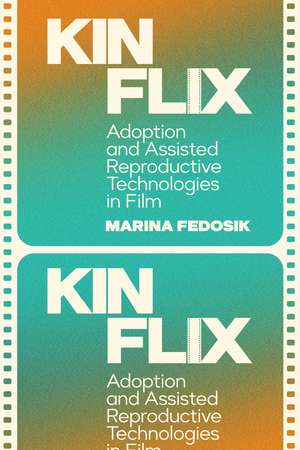
Kinflix: Adoption and Assisted Reproductive Technologies in Film: Formations: Adoption, Kinship, and Culture
Autor Marina Fedosiken Limba Engleză Paperback – 3 noi 2025
Apreciem rigurozitatea cu care Marina Fedosik abordează în Kinflix intersecția dintre adopție și tehnologiile de reproducere asistată (ART), folosind studiile de caz cinematografice pentru a demonta structurile narative tradiționale. Volumul debutează cu o examinare a modului în care ecranele noastre negociază formarea familiilor non-tradiționale, pornind de la premisa că modelul „heterocoital” rămâne ancora simbolică dominantă, chiar și atunci când tehnologia sau procedurile legale dictează alte realități.
Considerăm că structura cărții, organizată tematic pe genuri cinematografice, oferă o progresie logică și accesibilă pentru cercetători. Capitolul dedicat melodramei analizează „problema celor două mame”, în timp ce secțiunile despre horror și comedie explorează limitele ordinii biologice prin prisma unor pelicule precum The Omen sau Raising Arizona. Un punct forte al lucrării este capitolul final despre science-fiction, unde autoarea discută „viitorurile reproductive” prin lentila filmului Blade Runner. Cele 11 ilustrații alb-negru incluse nu sunt simple adaosuri estetice, ci puncte de referință esențiale pentru analizele de cadru propuse.
Cititorii familiarizați cu Surrogacy and the Reproduction of Normative Family on TV de Lulu Le Vay vor aprecia modul în care Fedosik extinde discuția de la televiziune la cinema, aducând în plus dimensiunea istorică a adopției ca tehnologie socială precursoare tehnicilor moderne de laborator. Spre deosebire de abordările pur ideologice, Kinflix caută momentele de tensiune în care experiența trăită a familiilor diverse reușește să destabilizeze scripturile culturale rigide ale Hollywood-ului.

Preț: 250.03 lei
Carte disponibilă
Livrare economică 14-28 noiembrie
Specificații
ISBN-10: 0814259634
Pagini: 244
Ilustrații: 11 b&w images
Dimensiuni: 152 x 229 x 18 mm
Greutate: 0.34 kg
Editura: Ohio State University Press
Colecția Ohio State University Press
Seria Formations: Adoption, Kinship, and Culture
De ce să citești această carte
Recomandăm această carte pentru perspectiva sa interdisciplinară asupra modului în care cultura vizuală influențează percepția noastră despre rudenie. Cititorul va câștiga un instrumentar critic de analiză a media, înțelegând cum filmele de consum pot fie să întărească, fie să conteste normele biologice tradiționale. Este o resursă esențială pentru studenții și profesioniștii din studii media, sociologie și studii de gen, oferind o bază teoretică solidă pentru înțelegerea peisajului biocultural contemporan.
Despre autor
Marina Fedosik este o cercetătoare specializată în studii de gen și media, cu un interes academic profund în reprezentarea structurilor de rudenie non-tradiționale. Prin contribuția sa în cadrul seriei Formations: Adoption, Kinship, and Culture publicată de Ohio State University Press, Fedosik se impune ca o voce critică în dialogul despre tehnologiile de reproducere și impactul lor social. Activitatea sa academică se concentrează pe intersecția dintre literatură, film și experiențele trăite ale adopției, oferind analize care depășesc clișeele narative pentru a explora complexitatea identității în era post-FIV.
Descriere scurtă
Resisting simple ideological readings of film genres, Fedosik unsettles cultural scripts around adoption and reproduction and scrutinizes moments where formulaic genre logic may be troubled by representations of lived experience that transcend common tropes of family formation. She argues that adoption as a reproductive technology is uniquely situated to expose cultural tensions around nontraditional methods of reproduction that are rapidly developing in the post-IVF biocultural landscape. Rapidly changing reproductive technologies, Fedosik asserts, demand a cultural response—and require more expansive reflection on reproductive futurities.
Recenzii
Notă biografică
Extras
While much attention is paid to the specifics of representations of adoption and ART in visual texts, the end goal of the book is to uncover the overarching logic of cultural thinking about human biological and social reproduction, including conceptual shifts in accepted ideas as well as cultural resistances to such changes. This tug-of-war, staged in nontraditional reproduction narratives, signals the need to meet ongoing technological changes with new ways of thinking about human identity, kinship, and resultant social formations. The chapters of the book examine the logic of nontraditional reproduction representations in different genres of cinema in order to uncover possible reasons for insistence on heterocoital origin as a matter of humanity. By extending thinking into the territory where a child’s heterocoital origin is unknown, uncertain, or does not exist and therefore cannot be called upon to secure personhood and belonging as a matter of culturally established and institutionalized heterocoital frameworks, narratives of nontraditional reproduction push us to consider consequences of non-heterocoital reproductive and kinship practices for our social life and especially their stakes for entities whose universally recognized human origin is in question.
Some of such consequences have already been foreshadowed in critical adoption studies (CAS)—a field that critically examines ideas about origins, kinship, family, identity, and belonging that are often taken for granted. For example, cultural insistence on heterocoital origin as a condition for a recognizable social identity is revealed by an essential adoption paradox. The cultural demand to develop and maintain an adoptive kinship bond indistinguishable from biogenetic affiliation is persistently coupled with this bond’s constant “derealization” by imagining it as just like the real one. Adoption revealed early the presence of such cultural imperatives through the existence of adoption-specific double binds. Time and time again, the cultural distinction between adoptive and “real”—in other words, heterocoital—kinship compels adoption participants to negotiate paradoxes of identity and belonging that originate from this dichotomy. For example, Barbara Melosh observes that, typically, in Western cultures the adoptive family has to appear “as if begotten,” and yet it is perpetually measured against the biological model it can never fully replicate. Sally Sales invokes a similar double bind when she explains that the adoptee’s individualization and personhood depend on simultaneous identification and differentiation from the “original [biological] kin.” Sales demonstrates that the Western, middle-class cultural process of individuation depends on biogenetic origin knowledge, and so the adopted child’s origin is always constitutive to the adoptive family and adoptee’s selfhood. This identity-belonging paradigm persists whether the cultural imperative is to hide and repress the biogenetic origin of the child or to acknowledge and cultivate it.
Cuprins
List of Illustrations
Introduction Adoption and Other Forms of Post-Heterocoital Reproductions
Chapter 1 Adoption and ARTs in (Melo)Drama: The Two Mothers Problem
Chapter 2 Adoption and ARTs in Horror Film: The Hidden Spring of Heterocoital Origin
Chapter 3 Adoption and ARTs in Comedy: Testing the Limits of the Heterocoital Order
Chapter 4 Adoption and ARTs in Science Fiction: Reproductive Futurities
Conclusion
Acknowledgments
Works Cited
Index