Cărți de Karl Marx

Karl Heinrich Marx (German: [maʁks]; 5 May 1818 – 14 March 1883) was a German philosopher, critic of political economy, economist, historian, sociologist, political theorist, journalist and socialist revolutionary. Born in Trier, Germany, Marx studied law and philosophy at the universities of Bonn and Berlin. He married German theatre critic and political activist Jenny von Westphalen in 1843. Due to his political publications, Marx became stateless and lived in exile with his wife and children in London for decades, where he continued to develop his thought in collaboration with German thinker Friedrich Engels and publish his writings, researching in the British Museum Reading Room. His best-known titles are the 1848 pamphlet The Communist Manifesto and the three-volume Das Kapital (1867–1883). Marx's political and philosophical thought had enormous influence on subsequent intellectual, economic, and political history. His name has been used as an adjective, a noun, and a school of social theory.
Marx's critical theories about society, economics, and politics, collectively understood as Marxism, hold that human societies develop through class conflict. In the capitalist mode of production, this manifests itself in the conflict between the ruling classes (known as the bourgeoisie) that control the means of production and the working classes (known as the proletariat) that enable these means by selling their labour-power in return for wages. Employing a critical approach known as historical materialism, Marx predicted that capitalism produced internal tensions like previous socioeconomic systems and that those would lead to its self-destruction and replacement by a new system known as the socialist mode of production. For Marx, class antagonisms under capitalism—owing in part to its instability and crisis-prone nature—would eventuate the working class's development of class consciousness, leading to their conquest of political power and eventually the establishment of a classless, communist society constituted by a free association of producers. Marx actively pressed for its implementation, arguing that the working class should carry out organised proletarian revolutionary action to topple capitalism and bring about socio-economic emancipation.
Marx has been described as one of the most influential figures in human history, and his work has been both lauded and criticised. His work in economics laid the basis for some current theories about labour and its relation to capital. Many intellectuals, labour unions, artists, and political parties worldwide have been influenced by Marx's work, with many modifying or adapting his ideas. Marx is typically cited as one of the principal architects of modern social science.
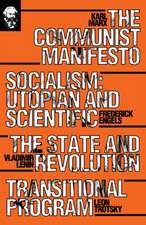
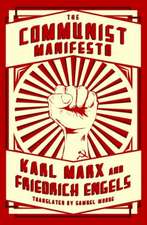
The Communist Manifesto
The German Ideology
Marx: Later Political Writings
The 18th Brumaire of Louis Bonaparte
On Religion
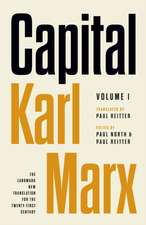
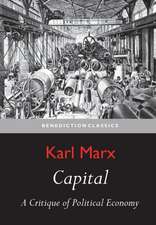
Das Kapital
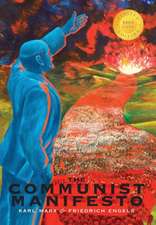
The Communist Manifesto
A World Without Jews
Surveys from Exile: American Soldiers and Torture
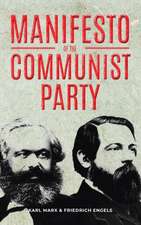
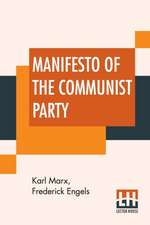
Manifesto of the Communist Party
Marx's Concept of Man: Including 'Economic and Philosophical Manuscripts'
Essential Writings of Karl Marx: Economic and Philosophic Manuscripts, Communist Manifesto, Wage Labor and Capital, Critique of the Gotha Program
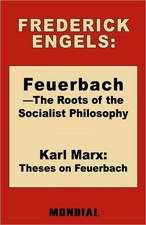
Feuerbach - The Roots of the Socialist Philosophy. Theses on Feuerbach
Critique of Other Socialisms
The Classics of Marxism
Critique of Hegel's 'Philosophy Of Right'
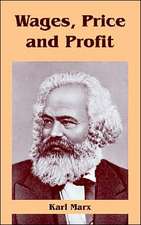
Wages, Price and Profit
Value, Price and Profit
The Revolutions of 1848
Karl Marx: Selected Writings
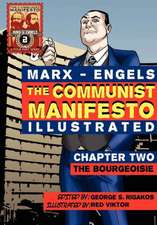
The Communist Manifesto (Illustrated) - Chapter Two
Capital: A Critique of Political Economy - Vol. III-Part I: The Process of Capitalist Production as a Whole

The Eighteenth Brumaire Of Louis Bonaparte
Selected Essays
The Communist Manifesto (Illustrated) - Chapter One
The Portable Karl Marx
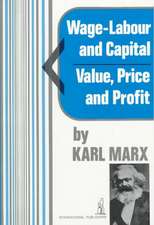
Wage-Labour and Capital & Value, Price and Profit
The First International and After
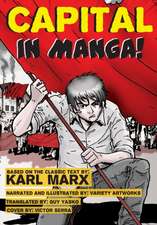
Capital - In Manga!
The Communist Manifesto [Manifesto of the Communist Party]
The Communist Manifesto: 150th Anniversary Commemorative Edition
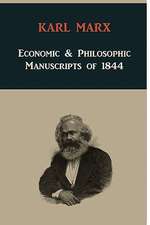
Economic & Philosophic Manuscripts of 1844
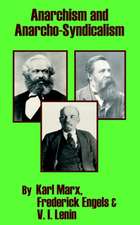
Anarchism and Anarcho-Syndicalism
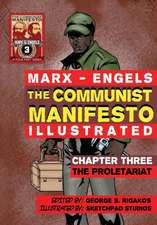
The Communist Manifesto (Illustrated) - Chapter Three
The Wealth of Nations (Book One) and the Manifesto of the Communist Party. a Combined Edition
Revolution in Spain
Manifesto Of The Communist Party
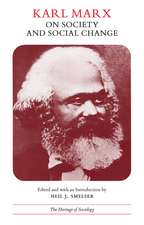
Karl Marx on Society and Social Change: With Selections by Friedrich Engels
A Contribution to the Critique of Political Economy
The Communist Manifesto & Wages, Price and Profit
The Communist Manifesto
The Poverty of Philosophy
The Eastern Question
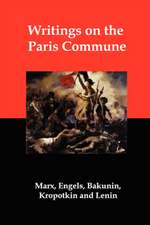
Writings on the Paris Commune

Procedure
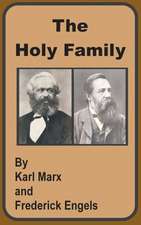
The Holy Family
Wage Labour and Capital / Value Price and Profit
The Communist Manifesto
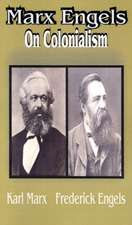
Marx Engles: On Colonialism
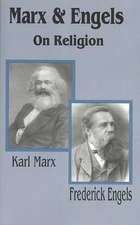
Marx & Engels on Religion
The Civil War in France

Complete Works of Karl Marx (Grapevine edition)
Revolution and Counter-Revolution; Or, Germany in 1848
Notes on INDIAN HISTORY

The Eighteenth Brumaire of Louis Bonaparte (Socialist Essay)
Manifesto of the Communist Party - The Communist Manifesto
The Communist Manifesto
Marx and Engels on the Trade Unions

Manifesto of the Communist Party
Marx, K: The Communist Manifesto
An Unfinished Revolution
Secret Diplomatic History Of The Eighteenth Century (1899)
The Civil War in the United States
Social Class and Stratification: Classic Statements and Theoretical Debates
The Communist Manifesto Illustrated: All Four Parts
Capital V1
Capital V3, Part 2, The Process Of Capitalist Production As A Whole
Capital V3, Part 1, The Process Of Capitalist Production As A Whole
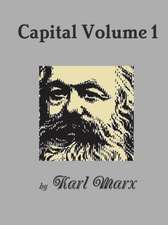
Capital Volume 1
The Communist Manifesto (with an Introduction by Algernon Lee)
Capital (Volume 1
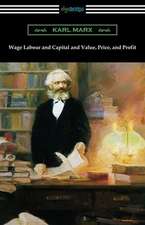
Wage Labour and Capital and Value, Price, and Profit
Selected Essays by Karl Marx
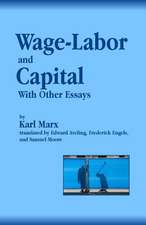
Wage-Labor and Capital with Other Essays
Das Capital Volume One
The Communist Manifesto
The Communist Manifesto - Large Print Edition
Manifesto of the Comunist Party
Revolution And Counter-Revolution
On the Question of Free Trade
Eighteenth Brumaire of Louis Napoleon
Mr. George Howell's History of the International Working-Men's Association
A Criticism of the Hegelian Philosophy of Right
On the King of Prussia and Social Reform
Moralising Criticism and Critical Morality
French Materialism
The English Revolution
Revolution and Counter
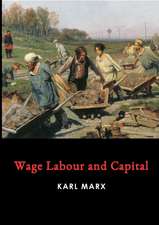
Wage Labor and Capital
Wages - Price and Profit
- 1
- 2