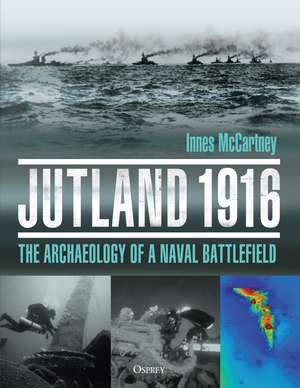
Jutland 1916: The Archaeology of a Naval Battlefield
Autor Innes McCartneyen Limba Engleză Hardback – 31 oct 2018
Descoperim în Jutland 1916 o abordare care transformă fundamental înțelegerea celei mai mari bătălii navale din Primul Război Mondial. Ceea ce aduce nou lucrarea lui Innes McCartney este utilizarea datelor obținute prin tehnologia multi-beam în cadrul studiului din 2015, oferind o claritate arheologică ce lipsea istoriografiei tradiționale. În loc să se bazeze doar pe jurnale de bord și mărturii adesea contradictorii din „ceața războiului”, autorul confruntă înregistrările de acum un secol cu realitatea fizică a epavelor de pe fundul mării.
Notăm cu interes rigoarea cu care sunt analizate exploziile devastatoare care au dus la pierderea a cinci nave britanice majore, precum și soarta celor 13 distrugătoare și a navelor germane sabordate în faza de noapte a bătăliei. Această ediție publicată de Bloomsbury Publishing sub amprenta Osprey Publishing nu este doar o cronică militară, ci un raport de arheologie marină care identifică locații precise și expune realitatea dureroasă a siturilor jefuite ilegal. Cititorii familiarizați cu Scapa 1919 vor aprecia continuitatea stilului lui Innes McCartney, care îmbină expertiza tehnică cu narațiunea istorică, transformând datele brute în concluzii despre erorile umane și deficiențele de design ale epocii.
În contextul operei sale, volumul de față extinde cercetările începute în lucrări precum The Maritime Archaeology of a Modern Conflict sau British Submarines 1939–45. Dacă în studiile anterioare autorul s-a concentrat pe submarine și conflicte din Canalul Mânecii, aici miza este de o scară mult mai mare: ciocnirea dintre Grand Fleet și High Seas Fleet. Spre deosebire de relatările pur tactice, precum cea din The Battle of Jutland de John Brooks, McCartney folosește dovezile materiale pentru a confirma sau infirma teoriile despre muniție și controlul focului, oferind un verdict final asupra unor enigme ce au persistat timp de un secol.
Preț: 170.03 lei
Preț vechi: 224.69 lei
-24%
Carte disponibilă
Livrare economică 18 mai-01 iunie
Specificații
ISBN-10: 1472835417
Pagini: 272
Ilustrații: Colour and black and white photographs and diagrams
Dimensiuni: 189 x 246 x 19 mm
Greutate: 1.16 kg
Editura: Bloomsbury Publishing
Colecția Osprey Publishing
Locul publicării:London, United Kingdom
V-ar putea interesa
-
 Preț: 291.15 lei
 -
 -26%Preț: 46.95 lei63.04 lei
 -
 Preț: 140.53 lei
 -
 Preț: 122.49 lei
 -
 Preț: 185.74 lei
 -
 Controlling the Cost of C4I Upgrades on Naval ShipsJohn F SchankPreț: 168.75 lei
 -
 Naval Powers in the Indian Ocean and the Western PacificHoward M. Hensel-18%Preț: 1073.05 lei1308.60 lei
 -
 -18%Preț: 1208.19 lei1473.40 lei
 -
 Scapa 1919: The Archaeology of a Scuttled FleetInnes McCartney-34%Preț: 172.42 lei260.73 lei
 -
 Warships in the Baltic Campaign 1918-20Angus Konstam-29%Preț: 57.88 lei81.22 lei
 -
 The Death of the USS ThresherNorman PolmarPreț: 98.50 lei
 -
 -21%Preț: 92.49 lei116.47 lei
 -
 British Submarines 1939–45Innes McCartney-33%Preț: 63.11 lei94.64 lei
 -
 British Submarines of World War IInnes Mccartney-34%Preț: 62.58 lei94.31 lei
De ce să citești această carte
Recomandăm această lucrare pasionaților de istorie navală și arheologie care caută fapte concrete dincolo de speculațiile istorice. Cititorul câștigă o perspectivă tehnică unică asupra bătăliei de la Iutlanda, susținută de fotografii color și diagrame detaliate ale epavelor. Este un volum esențial pentru înțelegerea modului în care tehnologia modernă poate rescrie istoria militară, oferind totodată un semnal de alarmă privind conservarea siturilor subacvatice protejate.
Caracteristici
Notă biografică
Descriere scurtă
Recenzii
a timely and valuable record of an important battlefield
a worthy companion for anyone studying the battle ... highly readable with some fascinating photos
This beautifully produced book has made a major contribution to our understanding of the battle, adding archaeological rigour to events usually discussed in terms of chance, human error and uncertainty. Old myths have been dispatched, fake photographs exposed and the fog of war lifted.