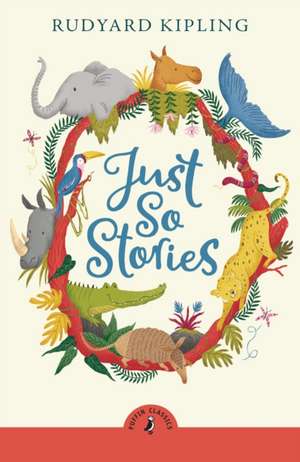
Just So Stories: Puffin Classics
Autor Rudyard Kiplingen Limba Engleză Paperback – 15 aug 2024 – vârsta până la 9 ani
Pășim într-un univers al curiozității pure, unde explicațiile științifice lasă loc magiei și umorului blând. Just So Stories nu este doar o culegere de basme, ci o invitație la a vedea lumea prin ochii unui copil pentru care fiecare detaliu al naturii — cocoșa cămilei, petele leopardului sau trompa elefantului — ascunde o aventură fantastică. Atmosfera este una de intimitate caldă, reflectând originea acestor texte ca povești de noapte bună spuse de Rudyard Kipling fiicei sale. Găsim aici o limbă engleză jucăușă, plină de onomatopee și repetiții ritmice, care transformă lectura cu voce tare într-o experiență aproape muzicală. Observăm cum autorul își folosește experiența din India și pasiunea pentru folclorul universal pentru a crea mituri moderne. Dacă în The Jungle Book natura era adesea aspră și guvernată de „Legea Junglei”, în Just So Stories ea devine un teren de joacă ingenios. Cititorul care a apreciat explorarea identității și a peisajului exotic din Kim va găsi aici aceeași fascinație pentru diversitatea lumii, dar transpusă într-un registru ludic și accesibil. Structura volumului urmărește o progresie de la transformări fizice ale animalelor către invenții umane fundamentale, precum scrisul și alfabetul, oferind o cosmogonie miniaturală pentru cei mici. Este o operă care confirmă geniul narativ al lui Rudyard Kipling, capabil să transforme întrebările simple în literatură perenă.
Din seria Puffin Classics
- 28%
 Preț: 47.71 lei
 - 16%
 Preț: 49.31 lei
 - 29%
 Preț: 46.88 lei
 - 19%
 Preț: 45.27 lei
 -
 Preț: 58.34 lei
 -
 Preț: 67.73 lei
 -
 Preț: 66.00 lei
 -
 Preț: 63.69 lei
 - 30%
 Preț: 74.63 lei
 -
 Preț: 58.74 lei
 - 18%
 Preț: 46.82 lei
 -
 Preț: 53.85 lei
 -
 Preț: 63.07 lei
 -
 Preț: 59.51 lei
 -
 Preț: 60.47 lei
 -
 Preț: 64.54 lei
 -
 Preț: 54.48 lei
 - 27%
 Preț: 47.84 lei
 - 17%
 Preț: 48.26 lei
 - 16%
 Preț: 43.81 lei
 -
 Preț: 61.56 lei
 -
 Preț: 69.06 lei
 - 18%
 Preț: 46.76 lei
 -
 Preț: 63.49 lei
 - 26%
 Preț: 56.24 lei
 -
 Preț: 62.60 lei
 -
 Preț: 66.89 lei
 - 17%
 Preț: 48.76 lei
 - 27%
 Preț: 48.86 lei
 - 17%
 Preț: 47.75 lei
 - 20%
 Preț: 45.50 lei
 - 18%
 Preț: 53.36 lei
 -
 Preț: 56.68 lei
 - 27%
 Preț: 48.76 lei
 - 25%
 Preț: 48.76 lei
 - 27%
 Preț: 48.96 lei
 -
 Preț: 63.21 lei
 -
 Preț: 67.39 lei
 -
 Preț: 64.50 lei
 -
 Preț: 63.69 lei
 - 20%
 Preț: 55.69 lei
 - 30%
 Preț: 51.26 lei
 - 27%
 Preț: 49.54 lei
 -
 Preț: 48.09 lei
 -
 Preț: 62.60 lei
 - 26%
 Preț: 47.91 lei
 - 16%
 Preț: 49.21 lei
 - 18%
 Preț: 47.12 lei
 -
 Preț: 59.40 lei
 - 28%
 Preț: 47.82 lei
Preț: 46.79 lei
Preț vechi: 64.47 lei
-27%
Carte disponibilă
Livrare economică 20 noiembrie-01 decembrie
Livrare express 03-07 noiembrie pentru 35.16 lei
Specificații
ISBN-10: 0241734320
Pagini: 224
Ilustrații: b & w line
Dimensiuni: 127 x 196 x 18 mm
Greutate: 0.16 kg
Editura: Penguin Books
Seria Puffin Classics
V-ar putea interesa
-
 -17%Preț: 42.08 lei51.00 lei
 -
 Just So Stories for Little ChildrenRudyard KiplingPreț: 44.90 lei
 -
 Preț: 155.52 lei
 -
 Iron CoffinsHerbert Werner-26%Preț: 69.65 lei93.91 lei
 -
 Preț: 151.23 lei
 -
 The Orange Fairy BookAndrew LangPreț: 116.96 lei
 -
 Preț: 108.95 lei
 -
 Preț: 93.73 lei
 -
 Harry Potter Box Set: The Complete CollectionJ. K. Rowling-21%Preț: 452.68 lei570.12 lei
 -
 The Jungle Book & Just So StoriesRudyard Kipling-28%Preț: 45.99 lei63.47 lei
 -
 The Man Who Would Be KingRudyard KiplingPreț: 42.62 lei
 -
 The Jungle BookRudyard KiplingPreț: 35.70 lei
 -
 Preț: 129.37 lei
 -
 How the Leopard Got His SpotsRudyard KiplingPreț: 36.22 lei
 -
 Just So & Other StoriesRudyard Kipling-11%Preț: 64.06 lei71.98 lei
 -
 Just So Stories for Little ChildrenJohn JovenPreț: 105.76 lei
 -
 KimRudyard KiplingPreț: 28.01 lei
 -
 The Secret GardenFrances Hodgson BurnettPreț: 36.46 lei
 -
 The Railway ChildrenE. NesbitPreț: 36.22 lei
 -
 The Children of the New ForestCaptain Frederick MarryatPreț: 37.26 lei
 -
 Little Women & Good WivesLouisa May AlcottPreț: 38.45 lei
 -
 Peter Pan & Peter Pan in Kensington GardensJ. M. BarriePreț: 36.99 lei
 -
 Tales from ShakespeareCharles LambPreț: 36.86 lei
 -
 The Man Who Would Be King & Other StoriesRudyard KiplingPreț: 28.01 lei
 -
 The Complete Just-So StoriesRudyard KiplingPreț: 78.50 lei
De ce să citești această carte
Recomandăm această ediție din colecția Collins Classics oricărui părinte care dorește să cultive imaginația copiilor prin texte clasice, dar și adulților care apreciază rafinamentul stilistic al unui laureat Nobel. Cititorul câștigă o poartă spre o epocă în care poveștile explicau lumea cu umor și blândețe, fiind lectura ideală pentru momentele de liniște de dinaintea somnului.
Despre autor
Rudyard Kipling (1865–1936) a fost un poet, nuvelist și romancier britanic, născut în Bombay, India. Această moștenire culturală duală i-a marcat profund opera, oferindu-i o perspectivă unică asupra interacțiunii dintre Orient și Occident. Recunoscut ca unul dintre cei mai mari inovatori ai nuvelei, el a devenit, în 1907, cel mai tânăr laureat al Premiului Nobel pentru Literatură. Deși opera sa a stârnit controverse politice de-a lungul timpului, geniul său narativ și capacitatea de a crea universuri memorabile pentru copii, precum cel din The Jungle Book, îi asigură un loc permanent în canonul literaturii universale.
Notă biografică
Descriere scurtă
Rediscover the Puffin Classics collection and bring the best-loved classics to a new generation - including this charming edition of Just So Stories
The delightful tales of whales and cats and kangaroos and crabs - everything from how the camel got in a humph (and got his hump!) to how the alphabet was invented. Enchanting and funny, these fantastical stories continue to delight each and every generation.
With an inspiring introduction by Jonathan Stroud, author of the 'Bartimaeus' trilogy, and including fun-filled endnotes.
Descriere
Originally told by Rudyard Kipling to his children at bedtime, this compendium of witty tales imagines how animals came to be as they are now. Discover how the massive whale got a tiny throat by swallowing a mariner, how the lazy camel got a hump so that he had no excuse not to work, and why the leopard's spots were painted on.
Kipling's imagination runs wild as he creates charming origin stories that still enchant and delight children to this day. This edition features Kipling's iconic original illustrations.
Recenzii
Textul de pe ultima copertă
Cuprins
How the Camel Got His Hump
How the Rhinoceros Got His Skin
How the Leopard Got His Spots
The Elephant's Child/How the Elephant got his Trunk
The Sing-Song of Old Man Kangaroo
The Beginning of the Armadillos
How the First Letter Was Written
How the Alphabet Was Made
The Crab That Played with the Sea
The Cat That Walked by Himself
The Butterfly That Stamped