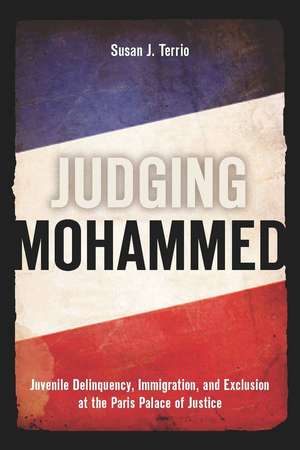
Judging Mohammed: Juvenile Delinquency, Immigration, and Exclusion at the Paris Palace of Justice
Autor Susan Terrioen Limba Engleză Paperback – 18 feb 2009
Observăm o lacună persistentă în literatura academică de limbă engleză privind mecanismele interne ale sistemului judiciar francez contemporan, în special în ceea ce privește intersecția dintre imigrație și delincvența juvenilă. Volumul Judging Mohammed vine să umple acest gol, oferind o analiză critică a modului în care tinerii de origine imigrantă sunt procesați de sistemul legal în perioada de după revoltele violente din 2005. Remarcăm rigoarea metodologică a autoarei Susan Terrio, care a petrecut cinci ani în sălile de judecată din Paris, documentând modul în care identitatea etnică și statutul de imigrant influențează deciziile magistraților.
Această lucrare extinde cadrul propus de Youth Justice and Migration de Olga Petintseva cu date noi din contextul francez, oferind o perspectivă comparativă necesară asupra modului în care discursurile profesionale marginalizează minoritățile. În timp ce Dangers of Youth de Briony Neilson examinează bazele istorice ale justiției pentru minori în Franța secolului al XIX-lea, Susan Terrio ne aduce în prezent, arătând cum promisiunea republicană a egalității este subminată de practici care transformă instanța într-un instrument de excludere.
Apreciem modul în care lucrarea se raportează la temele anterioare ale autoarei din The Places We Share, unde aceasta explora globalizarea trăită la nivel individual. În Judging Mohammed, această perspectivă se rafinează, mutând accentul pe spațiile instituționale unde se negociază cetățenia și apartenența. Textul dezvăluie o schimbare alarmantă de paradigmă: de la un model centrat pe asistență socială, către un sistem punitiv ce reflectă anxietățile societății franceze față de propria identitate multiculturală.
Preț: 207.51 lei
Carte disponibilă
Livrare economică 02-16 noiembrie
Specificații
ISBN-10: 080475960X
Pagini: 368
Dimensiuni: 152 x 229 x 20 mm
Greutate: 0.5 kg
Editura: Stanford University Press
Colecția Stanford University Press
V-ar putea interesa
-
 Preț: 89.84 lei
 -
 -11%Preț: 354.68 lei396.66 lei
 -
 Our Violent World: Terrorism in SocietyKevin McDonaldPreț: 277.68 lei
 -
 SecurityLucia ZednerPreț: 437.63 lei
 -
 Power, Conflict and CriminalisationPhil Scraton-15%Preț: 425.72 lei500.84 lei
 -
 The Anatomy of MotiveJohn E DouglasPreț: 56.19 lei
 -
 Catch Me If You CanFrank Abagnale-19%Preț: 57.70 lei71.46 lei
 -
 ChopperMark Brandon Read-19%Preț: 52.70 lei64.77 lei
 -
 Preț: 409.85 lei
 -
 Crime, Risk and JusticeKevin StensonPreț: 409.16 lei
De ce să citești această carte
Recomandăm această carte cercetătorilor în criminologie și sociologie juridică care doresc să înțeleagă realitatea din spatele ușilor închise ale tribunalelor pentru minori. Cititorul câștigă o perspectivă rară asupra modului în care prejudecățile instituționale modelează destinele tinerilor imigranți. Este o resursă esențială pentru a înțelege cum crizele sociale, precum revoltele din 2005, modifică iremediabil politicile de control social și justiția juvenilă în Europa.
Despre autor
Susan Terrio este un cercetător recunoscut, specializat în antropologie culturală și studii franceze, cu un interes profund pentru modul în care instituțiile statului interacționează cu populațiile marginalizate. Opera sa se concentrează pe mecanismele de excludere și pe experiențele subiecților aflați la intersecția dintre migrație și lege. În lucrările sale, cum este și The Places We Share, Terrio utilizează metode etnografice de lungă durată pentru a oferi o voce celor care traversează frontiere culturale și juridice, transformând datele brute în narațiuni sociologice complexe despre identitate și putere în lumea contemporană.
Descriere scurtă
Despite official rhetoric of protection, Judging Mohammed reveals how the treatment of these children in the juvenile courts system undermines legal guarantees of equality and due process and reinforces existing hierarchies. Based on five years of extensive research in the largest and most influential juvenile court in France, this work follows young people inside the system, from arrest to court trials. Revealing an alarming turn toward accountability, restitution, and retribution, this groundbreaking study uncovers the disquieting reasons behind France's shifting approaches to the identification, treatment, and representation of its delinquent youth.
Recenzii
"Judging Muhammad illuminates new ways of understanding youth. The book reveals the enormous impact changes in contemporary French society are having on the lives of young people and their families."—Deborah Durham, Sweet Briar College
"Terrio's honest look at juvenile delinquency in France appears at an exceptionally important moment, both in France and globally. Judging Muhammad illustrates how a form of cultural racism has been incorporated into the French courtroom, penalizing the most marginal citizens. It is an excellent, timely, and insightful work."—Miriam Ticktin, The New School