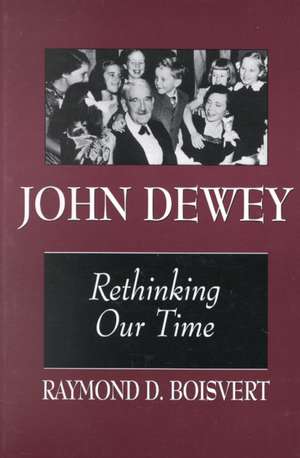
John Dewey
Autor Raymond D. Boisverten Limba Engleză Paperback – 30 oct 1997
Written in a manner accessible to non-specialists, this book provides an introduction to all areas central to John Dewey's philosophy: aesthetics, social and political philosophy, education, the philosophy of religion, and theory of knowledge. Boisvert situates Dewey as a thinker who could appreciate the advance of science while remaining an "empirical naturalist" committed to the revelatory powers of lived experience.
Preț: 253.07 lei
Puncte Express: 380
Carte tipărită la comandă
Livrare economică 26 noiembrie-10 decembrie
Livrare prin curier în România Termenul estimat este afișat lângă disponibilitate.
Transport gratuit de la 400.00 lei Plată online sau ramburs, în funcție de opțiunile comenzii.
Retur gratuit în 14 zile Comandă securizată și suport în română.
Specificații
ISBN-13: 9780791435304
ISBN-10: 079143530X
Pagini: 204
Dimensiuni: 152 x 229 x 12 mm
Greutate: 0.34 kg
Editura: S U N y Press
ISBN-10: 079143530X
Pagini: 204
Dimensiuni: 152 x 229 x 12 mm
Greutate: 0.34 kg
Editura: S U N y Press
Notă biografică
Raymond D. Boisvert is Professor of Philosophy at Siena College. He is the author of Dewey's Metaphysics.