
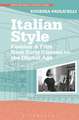
Italian Style: Fashion & Film from Early Cinema to the Digital Age: Topics and Issues in National Cinema
Autor Professor Eugenia Paulicellien Limba Engleză Hardback – 22 sep 2016
Preț: 836.71 lei
Preț vechi: 1106.57 lei
-24%
Puncte Express: 1255
Carte tipărită la comandă
Livrare economică 30 noiembrie-14 decembrie
Livrare prin curier în România Termenul estimat este afișat lângă disponibilitate.
Transport gratuit pentru acest produs Plată online sau ramburs, în funcție de opțiunile comenzii.
Retur gratuit în 14 zile Comandă securizată și suport în română.
Specificații
ISBN-13: 9781441189158
ISBN-10: 1441189157
Pagini: 288
Ilustrații: 40 bw illus/16 color illus
Dimensiuni: 152 x 229 x 26 mm
Greutate: 0.57 kg
Editura: Bloomsbury Publishing
Colecția Bloomsbury Academic
Seria Topics and Issues in National Cinema
Locul publicării:New York, United States
ISBN-10: 1441189157
Pagini: 288
Ilustrații: 40 bw illus/16 color illus
Dimensiuni: 152 x 229 x 26 mm
Greutate: 0.57 kg
Editura: Bloomsbury Publishing
Colecția Bloomsbury Academic
Seria Topics and Issues in National Cinema
Locul publicării:New York, United States
V-ar putea interesa
-
 Bella FiguraKamin Mohammadi-37%Preț: 57.29 lei91.54 lei
 -
 Iconic: The Masters of Italian FashionMegan Hess-24%Preț: 95.47 lei125.59 lei
 -
 -33%Preț: 217.37 lei326.18 lei
 -
 Italian GlamourEnrico QuintoPreț: 444.92 lei
Cuprins
List of Illustrations
Acknowledgments
1 Fashion, Film, Modernity
a. Nostra Dea: the goddess of fashion
b. Pirandello, cinema, and clothing: elective affinities
c. "The Tight Frock-Coat": performing dress
d. Film, costume, fashion, and intermediality
e. Italian style: fashion and film
2 Italian Fashion and Film in the 1910s: From the Futurists to Rosa Genoni
a. The Futurists, fashion, film, and performance
b. Rosa Genoni: Per una moda italiana: fashioning the diva
3 From the Body of the Diva to the Body of the Nation
a. The Italian divas and the "gowns of emotions"
b. Lyda Borelli (1887-1959): the ethereal melancholic beauty and Ma l'amore mio non muore! (love everlasting)
c. The veil: modernity in motion in Nino Oxilia's Rapsodia Satanica
d. Francesca Bertini (1892-1985): the glamorous embodied
e. Nino Oxilia's Sangue Bleu (1914) and Gustavo Serena's Assunta Spina (1915)
f. Pina Menichelli (1890-1981): "the other woman" and the end of an era
4 Fashion, Film, Modernity, under Fascism
a. Fashion in motion: the LUCE newsreels
b. Rhythms of the modern city: fashion in Corrado D'Errico's Stramilano (1929)
c. Contessa di Parma (Alessandro Blasetti, 1937): a manifesto for the promotion of Italian fashion and Turin as a fashion city
d. Grandi Magazzini (1939, Mario Camerini): fashion consumption, gender roles, and work in Milan
e. Epilogue: towards a new dawn
5 Launching Italian Style in Cinema and Fashion: The Films of Michelangelo Antonioni
a. The fabric of film: Sette canne, un vestito (1949)
b. The 1950s: Cronaca di un amore, La signora senza camelie and Le amiche
c. The fashion show in Cronaca: a narrative mise en abyme
d. "Was I a good femme fatale?" (Lucia Bosè (Clara) in La signora senza camelie)
e. The fashion show in Le amiche: the end of the game
f. The 1960s: from costume to fashion. L'Avventura and beyond
g. Outsiders, doubles, wanderers
h. Conclusion: a visual tactility
6 Rome, Fashion, Film
a. From "Hollywood on the Tiber" to La Dolce Vita
b. Rome as a fashion city in the postwar years 161
c. La Dolce Vita
d. La Dolce Vita and its discontents
e. Roma (Fellini, 1971): space and time
f. The broken watch of history
g. The ecclesiastical fashion show
7 After La Dolce Vita: La Grande Bellezza (2013) by Paolo Sorrentino
a. Fashion, film, and Rome today: national identity revisited
Appendices:
a. The Photographic Archive by Giuseppe Palmas (1918-1977)
b. Interview with Fernanda Gattinoni, Rome, June 16, 2000
c. Dressing the Dreams: Interview with Dino Trappetti-Tirelli Costumi Rome, December 2015
d. Interview with Teresa Allegri, founder of Annamode, Rome, Fondazione Annamode, June 6, 2013
e. Adriana Berselli
f. Some notes on the set of L'avventura (1960) by Michelangelo Antonioni
g. "Cesare Attolini" and La Grande Bellezza: Interview with Massimiliano Attolini, Son of Cesare and Grandson of Vincenzo, Founder of the Sartoria
Selected Bibliography
Filmography
Index
Acknowledgments
1 Fashion, Film, Modernity
a. Nostra Dea: the goddess of fashion
b. Pirandello, cinema, and clothing: elective affinities
c. "The Tight Frock-Coat": performing dress
d. Film, costume, fashion, and intermediality
e. Italian style: fashion and film
2 Italian Fashion and Film in the 1910s: From the Futurists to Rosa Genoni
a. The Futurists, fashion, film, and performance
b. Rosa Genoni: Per una moda italiana: fashioning the diva
3 From the Body of the Diva to the Body of the Nation
a. The Italian divas and the "gowns of emotions"
b. Lyda Borelli (1887-1959): the ethereal melancholic beauty and Ma l'amore mio non muore! (love everlasting)
c. The veil: modernity in motion in Nino Oxilia's Rapsodia Satanica
d. Francesca Bertini (1892-1985): the glamorous embodied
e. Nino Oxilia's Sangue Bleu (1914) and Gustavo Serena's Assunta Spina (1915)
f. Pina Menichelli (1890-1981): "the other woman" and the end of an era
4 Fashion, Film, Modernity, under Fascism
a. Fashion in motion: the LUCE newsreels
b. Rhythms of the modern city: fashion in Corrado D'Errico's Stramilano (1929)
c. Contessa di Parma (Alessandro Blasetti, 1937): a manifesto for the promotion of Italian fashion and Turin as a fashion city
d. Grandi Magazzini (1939, Mario Camerini): fashion consumption, gender roles, and work in Milan
e. Epilogue: towards a new dawn
5 Launching Italian Style in Cinema and Fashion: The Films of Michelangelo Antonioni
a. The fabric of film: Sette canne, un vestito (1949)
b. The 1950s: Cronaca di un amore, La signora senza camelie and Le amiche
c. The fashion show in Cronaca: a narrative mise en abyme
d. "Was I a good femme fatale?" (Lucia Bosè (Clara) in La signora senza camelie)
e. The fashion show in Le amiche: the end of the game
f. The 1960s: from costume to fashion. L'Avventura and beyond
g. Outsiders, doubles, wanderers
h. Conclusion: a visual tactility
6 Rome, Fashion, Film
a. From "Hollywood on the Tiber" to La Dolce Vita
b. Rome as a fashion city in the postwar years 161
c. La Dolce Vita
d. La Dolce Vita and its discontents
e. Roma (Fellini, 1971): space and time
f. The broken watch of history
g. The ecclesiastical fashion show
7 After La Dolce Vita: La Grande Bellezza (2013) by Paolo Sorrentino
a. Fashion, film, and Rome today: national identity revisited
Appendices:
a. The Photographic Archive by Giuseppe Palmas (1918-1977)
b. Interview with Fernanda Gattinoni, Rome, June 16, 2000
c. Dressing the Dreams: Interview with Dino Trappetti-Tirelli Costumi Rome, December 2015
d. Interview with Teresa Allegri, founder of Annamode, Rome, Fondazione Annamode, June 6, 2013
e. Adriana Berselli
f. Some notes on the set of L'avventura (1960) by Michelangelo Antonioni
g. "Cesare Attolini" and La Grande Bellezza: Interview with Massimiliano Attolini, Son of Cesare and Grandson of Vincenzo, Founder of the Sartoria
Selected Bibliography
Filmography
Index
Recenzii
The insight at the heart of Paulicelli's earnest and unflashy book is that dress cultivates mood and can variously intimate the languor or lasciviousness of a specific moment or the state of an entire country ... [Paulicelli is] knowledgeable and unafraid to wade deep into obscure Italian films and textile history.
This critically elegant and highly readable book tackles anew how fashion and cinema combine social history with aesthetics. Impressively well researched, Italian Style is a compelling exploration of how the fashion industry and its costume designers shaped the cultural context of national identity. With vigor and clarity, Paulicelli illuminates such films as Fellini's Roma, Antonioni's Le amiche, and Sorrentino's La grande bellezza. A must-read for anyone with an interest in cinema and passion for this glorious art.
"Paulicelli's book is a tour de force of film and fashion scholarship, a beautifully written and authoritative exploration of Italian national identity that will appeal to a wide readership. In mapping out Italy's rich cultural heritage from early twentieth century modernism, through the economic miracle years to the present day, this book sets out to do nothing less than define Italian style as embodied by the dialogue between fashion and film. That Italian Style achieves this is testament to its brilliance."
An important initial assessment of the intertwined destinies of fashion and film in Italy from the start of the twentieth century to the present . Well researched, theoretically grounded, and densely argued, this book is an important read for scholars and students of fashion and/or film.
This critically elegant and highly readable book tackles anew how fashion and cinema combine social history with aesthetics. Impressively well researched, Italian Style is a compelling exploration of how the fashion industry and its costume designers shaped the cultural context of national identity. With vigor and clarity, Paulicelli illuminates such films as Fellini's Roma, Antonioni's Le amiche, and Sorrentino's La grande bellezza. A must-read for anyone with an interest in cinema and passion for this glorious art.
"Paulicelli's book is a tour de force of film and fashion scholarship, a beautifully written and authoritative exploration of Italian national identity that will appeal to a wide readership. In mapping out Italy's rich cultural heritage from early twentieth century modernism, through the economic miracle years to the present day, this book sets out to do nothing less than define Italian style as embodied by the dialogue between fashion and film. That Italian Style achieves this is testament to its brilliance."
An important initial assessment of the intertwined destinies of fashion and film in Italy from the start of the twentieth century to the present . Well researched, theoretically grounded, and densely argued, this book is an important read for scholars and students of fashion and/or film.
Caracteristici
Connects
theoretical,
historical
threads
with
the
latest
experimentation
of
the
fashion
film
of
Italian
brands
Notă biografică
Eugenia Paulicelli is Professor of Italian, Comparative Literature and Women's Studies at Queens College and The Graduate Center, The City University of New York (CUNY), USA. At The Graduate Center she directs Fashion Studies in the Master of Arts in Liberal Studies (MALS) and the PhD Concentration. Among her books: Fashion under Fascism: Beyond the Black Shirt (2004); Moda e Moderno (editor, 2006); The Fabric of Cultures: Fashion, Identity, Globalization (co-editor, 2009); Writing Fashion in Early Modern Italy (2014); Rosa Genoni: Fashion is a Serious Business (2015). Visit her website at www.eugeniapaulicelli.com.