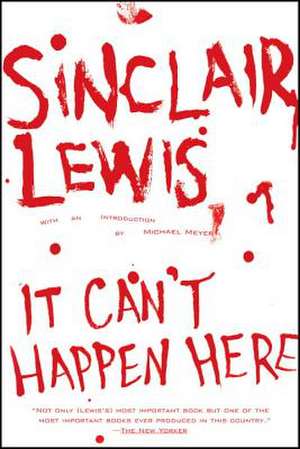
It Can't Happen Here
Autor Sinclair Lewisen Limba Engleză Paperback – oct 2005
Suntem de părere că puține texte din literatura secolului XX reușesc să captureze cu atâta precizie tensiunea dintre idealul democratic și impulsul autoritarist precum o face acest roman vizionar. În It Can't Happen Here, forțele opuse nu sunt doar facțiuni politice, ci însăși sufletul unei națiuni oscilând între libertate și promisiunea falsă a ordinii absolute. Sinclair Lewis construiește o premisă care, deși ancorată în realitățile Marii Depresiuni, pare smulsă din buletinele de știri contemporane: ascensiunea unui lider populist care transformă frica în instrument de control, totul sub masca patriotismului. Stilul este unul de o intensitate febrilă, îmbinând satira politică tăioasă cu un realism sumbru. Dacă în lucrări anterioare precum Main Street sau Babbitt autorul explora conformismul sufocant al micii burghezii și limitările vieții provinciale, aici el extinde această critică la nivel macro, vizând structurile puterii de stat. Ritmul narativ reflectă urgența scrierii sale; este o proză care nu lasă loc de relaxare, ci forțează cititorul să asiste la degradarea graduală, dar sigură, a instituțiilor civile. Cititorul care a apreciat analizele lucide despre fragilitatea sistemelor politice din Can It Happen Here? de Cass R Sunstein va găsi aici aceleași avertismente profetice, însă transpuse într-o formă literară vibrantă, unde personajele devin simboluri ale rezistenței sau ale complicității. Recomandăm această lectură nu doar ca pe un document istoric al anilor '30, ci ca pe o oglindă necesară a oricărei societăți care consideră libertatea un bun garantat pe vecie.
Preț: 112.51 lei
Carte disponibilă
Livrare economică 17 noiembrie-01 decembrie
Specificații
ISBN-10: 045121658X
Pagini: 400
Dimensiuni: 137 x 202 x 22 mm
Greutate: 0.3 kg
Editura: Penguin Publishing Group
V-ar putea interesa
-
 -32%Preț: 96.17 lei141.57 lei
 -
 EuropeBrendan Simms-25%Preț: 103.84 lei138.14 lei
 -
 All the King's MenRobert Penn Warren-16%Preț: 80.41 lei96.10 lei
 -
 The Longest AfternoonBrendan SimmsPreț: 91.80 lei
 -
 The Pursuit of PowerRichard J. Evans-20%Preț: 117.20 lei146.53 lei
 -
 -25%Preț: 59.44 lei79.05 lei
 -
 The Grapes of WrathJohn Steinbeck-24%Preț: 55.78 lei73.18 lei
 -
 Revenge of OdessaFrederick ForsythPreț: 154.21 lei
 -
 Holy SmokeFanny Howe-19%Preț: 69.18 lei85.28 lei
 -
 Did It Happen Here?Daniel Steinmetz-JenkinsPreț: 171.95 lei
 -
 Did It Happen Here?Daniel Steinmetz-JenkinsPreț: 107.58 lei
 -
 2054Elliot AckermanPreț: 79.09 lei
 -
 Berlin ShuffleUlrich Alexander BoschwitzPreț: 136.50 lei
 -
 The Bonfire of the InsanitiesJohn CracePreț: 121.47 lei
 -
 Can We Be Great Again?Jeremy HuntPreț: 192.06 lei
 -
 Fascism or GenocideRoss BarkanPreț: 125.12 lei
 -
 The Hour of the PredatorGiuliano Da EmpoliPreț: 90.89 lei
 -
 One Day, Everyone Will Have Always Been Against ThisOmar El AkkadPreț: 140.57 lei
 -
 -24%Preț: 142.68 lei188.68 lei
De ce să citești această carte
Recomandăm acest roman oricărui cititor interesat de mecanismele puterii și de istoria ideilor politice. Sinclair Lewis oferă o lecție magistrală despre modul în care retorica populistă poate submina democrația din interior. Este o carte esențială pentru a înțelege rădăcinile autoritarismului modern, oferind perspective valoroase despre rolul presei libere și responsabilitatea civică în perioade de criză socială și economică.
Despre autor
Harry Sinclair Lewis (1885–1951) a fost un romancier și dramaturg american de calibru mondial, fiind primul scriitor din Statele Unite onorat cu Premiul Nobel pentru Literatură în 1930. Recunoașterea Academiei Suedeze a venit ca omagiu pentru arta sa descriptivă viguroasă și capacitatea de a crea tipologii umane memorabile prin spirit și umor. Opera sa, marcată de titluri fundamentale precum Arrowsmith și Elmer Gantry, este definită de o critică acerbă la adresa materialismului și a capitalismului american din perioada interbelică. Lewis rămâne unul dintre cei mai fini observatori ai psihologiei colective americane.
Descriere scurtă
"Written at white heat." —Chicago Tribune
"A message to thinking Americans." —Springfield Republican
"Not only [Lewis's] most important book but one of the most important books ever produced in this country." —The New Yorker
Notă biografică
Recenzii
An eerily prescient foreshadowing of current affairs
Eighty years later the novel feels frighteningly contemporary
Not only Lewis's most important book but one of the most important books ever produced in the United States