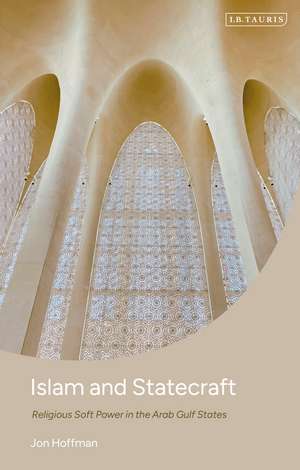
Islam and Statecraft: Religious Soft Power in the Arab Gulf States
Autor Jon Hoffmanen Limba Engleză Paperback – 23 ian 2025
Observăm în Islam and Statecraft o schimbare de paradigmă necesară în studiul relațiilor internaționale din Orientul Mijlociu. În loc să pornească de la premisa că religia dictează deciziile politice, Jon Hoffman inversează lentila de analiză pentru a demonstra cum elitele politice modelează și instrumentalizează versiuni specifice ale Islamului pentru a-și atinge obiectivele strategice. Tema centrală a „puterii blânde” (soft power) religioase este explorată nu ca un dat cultural, ci ca o construcție deliberată menită să asigure supraviețuirea regimurilor și proiecția influenței în regiune.
Structura volumului este riguroasă, debutând cu fundamentele teoretice ale relației dintre religie și politica externă, pentru ca ulterior să dedice capitole extinse analizei comparative a trei actori cheie: Arabia Saudită, Qatar și Emiratele Arabe Unite. Această abordare permite cititorului să urmărească modul în care narațiunile religioase sunt adaptate contextelor naționale specifice după evenimentele Primăverii Arabe. Lucrarea completează perspectiva oferită de Islam in Foreign Policy de Adeed I. Dawisha, adăugând o dimensiune contemporană esențială: analiza modului în care intersecția dintre amenințările interne și externe constrânge strategiile de soft power ale statelor moderne.
Deși Jon Hoffman a publicat anterior lucrări în domenii diverse, precum Inventing Success, expertiza sa de bază ca analist la Cato Institute și profesor la George Mason University conferă acestui volum o profunzime academică dublată de o înțelegere practică a geopoliticii. Spre deosebire de Statecraft in the Middle East, care pune accent pe narațiunile societale generale, Islam and Statecraft izolează variabila religioasă și o plasează în centrul mecanismelor de control statal și diplomație regională.
Preț: 164.70 lei
Preț vechi: 193.97 lei
-15%
Carte disponibilă
Livrare economică 17 noiembrie-01 decembrie
Specificații
ISBN-10: 0755655672
Pagini: 288
Dimensiuni: 124 x 204 x 6 mm
Greutate: 0.37 kg
Editura: Bloomsbury Publishing
Colecția I.B.Tauris
Locul publicării:London, United Kingdom
De ce să citești această carte
Această lucrare este esențială pentru cercetătorii și profesioniștii din domeniul politicii externe care doresc să înțeleagă realitățile pragmatice din spatele retoricii religioase în Orientul Mijlociu. Cititorul câștigă un instrument critic de analiză a modului în care statele din Golf folosesc Islamul ca activ strategic pentru stabilitatea internă și influența internațională, depășind clișeele despre excepționalismul religios în regiune.
Descriere
This book develops a comprehensive analytical framework for the notion of "religious soft power" capable of incorporating power-based, identity-based, and ideational variables to examine how states couple religion with their broader foreign policy conduct. This framework is applied to the Middle East through the specific examination of three countries - Saudi Arabia, Qatar, and the United Arab Emirates - in the period following the Arab Uprisings to demonstrate how specific religious narratives, identities, histories, and ideologies are constructed by political elites in the Middle East for the advancement of what are inherently political objectives, namely the imperatives of regime preservation and power projection.
Cuprins
Introduction
Chapter 1: Religion and Foreign Policy
Chapter 2: Islam and Statecraft in the Middle East
Chapter 3: Saudi Arabia
Chapter 4: Qatar
Chapter 5: United Arab Emirates (UAE)
Conclusion
References
Recenzii
With Islam and Statecraft, Jon Hoffman opens up entirely new vistas for understanding how Arab Gulf nations deploy Islam to advance their regional and international agendas. A stunning and significant portrait of the new geopolitics of religion that should be read by scholars and policymakers alike.
Religion has been a tool of statecraft for over a millennium but how does this manifest itself in the modern Middle East among pro-American autocratic regimes? This groundbreaking study reveals how and why it happens with a focus on foreign policy. An essential read on religion and authoritarianism in the Arab World.