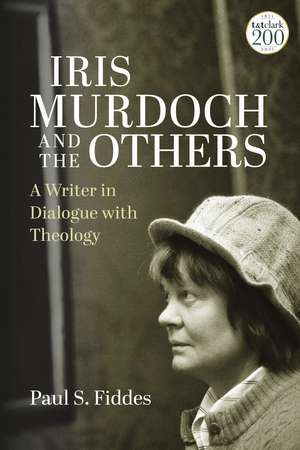
Iris Murdoch and the Others: A Writer in Dialogue with Theology
Autor Professor Paul S. Fiddesen Limba Engleză Paperback – 18 mai 2023
The book demonstrates that characteristic themes in Murdoch's novels and philosophy - the love of the Good, the death of the ego, illusory consolations, the death of God, the modifying of the will by 'waiting', the sublime and the beautiful, and attention to other things and persons - all take on a greater meaning when placed in the context of her life-long conversation with theology. The exploration of this context is deepened in this volume by reference to annotations and notes that Murdoch made in a number of theological books in her personal library.
Preț: 197.36 lei
Preț vechi: 270.16 lei
-27%
Puncte Express: 296
Carte tipărită la comandă
Livrare economică 08-22 iunie
Specificații
ISBN-13: 9780567703385
ISBN-10: 056770338X
Pagini: 232
Dimensiuni: 152 x 232 x 16 mm
Greutate: 0.36 kg
Editura: Bloomsbury Publishing
Colecția T&T Clark
Locul publicării:London, United Kingdom
ISBN-10: 056770338X
Pagini: 232
Dimensiuni: 152 x 232 x 16 mm
Greutate: 0.36 kg
Editura: Bloomsbury Publishing
Colecția T&T Clark
Locul publicării:London, United Kingdom
Cuprins
Introduction. What Kind of Dialogue?
Chapter 1
Iris Murdoch and Love of the Truth
Chapter 2
On 'God' and 'Good': Murdoch's Dialogue with Modern Theologians
Chapter 3
The Sublime and the Beautiful: Bringing Murdoch into conversation with Gerard Manley Hopkins
Chapter 4
The Sublime, The Conflicted Self, and Attention to the Other: Bringing Murdoch into Conversation with Julia Kristeva
Chapter 5
Language and Writing: Murdoch in Dialogue with Jacques Derrida
Chapter 6
The Void and the Passion: Murdoch in Dialogue with Simon Weil
Coda. With and Beyond Simone Weil: the Dialogue between Murdoch and Theology
Bibliography
Index
Chapter 1
Iris Murdoch and Love of the Truth
Chapter 2
On 'God' and 'Good': Murdoch's Dialogue with Modern Theologians
Chapter 3
The Sublime and the Beautiful: Bringing Murdoch into conversation with Gerard Manley Hopkins
Chapter 4
The Sublime, The Conflicted Self, and Attention to the Other: Bringing Murdoch into Conversation with Julia Kristeva
Chapter 5
Language and Writing: Murdoch in Dialogue with Jacques Derrida
Chapter 6
The Void and the Passion: Murdoch in Dialogue with Simon Weil
Coda. With and Beyond Simone Weil: the Dialogue between Murdoch and Theology
Bibliography
Index
Recenzii
Fiddes' careful and detailed readings offer new insights into Murdoch, but also into the task of theology itself.
This text is an excellent addition to the corpus of work Fiddes has published on the interrelationship between theology and literature. ... this book would be worth reading by those interested in the relationship between theology, literature, and philosophy.
Lovers of theology and of Iris Murdoch-her novels and philosophy of the selfless good-often leave amazed she could reject theological traditions clearly informing all she wrote and read. Paul Fiddes carefully attends to this puzzle. His is a dialogue of clarity and discovery, for which many of us amazed by Murdoch have long been hoping.
The intersection of Iris Murdoch's professed atheism and her passionate interest in theological questions has long fascinated readers. In Iris Murdoch and the Others: A Writer in Dialogue with Theology, Paul Fiddes explores her life-long interest in theology with a depth and a sophistication which is unmatched. Bringing Murdoch into dialogue with Weil, Derrida, Kristeva, Hopkins, and many others, Fiddes shows Murdoch's relevance for reflection on what it means to travel with and without faith in the modern world. I know of no other work which addresses these important questions as well.
Fiddes's book is an engaged and absorbing engagement with the works of Iris Murdoch and offers precisely those readers who have previously had little contact with her texts an excellent introduction to them. The concluding assessment is entirely positive.
At the heart of this exemplary study of Iris Murdoch are close readings of the novels which enlighten the dialogues between Murdoch and an array of theologians and philosophers from Tillich and Bonhoeffer to Kant and Derrida. Fiddes shows us how the conversations between literature, theology and philosophy should be sustained.
Paul Fiddes's scholarly and accessible discussions of Iris Murdoch's novels unveil what he describes as a 'theology of revelation', where their 'ordinariness' is brought into the mystical realm of theological discourse. They are, he suggests, a place where 'God speaks'. His intricate and thoughtful exploration of Murdoch's 'conversations' with other philosophers and fellow writers is literary criticism at its finest. This is an original and thought-provoking work that will enrich the way Murdoch's novels will now be read and interpreted.
A vivid concern with the quality of attention is at the heart of Iris Murdoch's work: to others, to the Good, and to the contingencies that shape a life. This quality is also evident throughout the critical conversations - with modern theology, and with G. M. Hopkins, Julia Kristeva, Jacques Derrida, and Simone Weil - that animate Paul Fiddes's compelling new study. Here is a Murdoch with striking contemporary relevance, which grows out of a sustained examination of the formative, creative tension with Christian theology and imagery that permeates her work. The result is an acute and genuine dialogue that Murdoch herself would have leapt to continue.
Fiddles reminds that theological literature can take many forms... It reminds us that literature can also be a way into a deeper relationship with God and to greater insight into ourselves and the human condition.
This text is an excellent addition to the corpus of work Fiddes has published on the interrelationship between theology and literature. ... this book would be worth reading by those interested in the relationship between theology, literature, and philosophy.
Lovers of theology and of Iris Murdoch-her novels and philosophy of the selfless good-often leave amazed she could reject theological traditions clearly informing all she wrote and read. Paul Fiddes carefully attends to this puzzle. His is a dialogue of clarity and discovery, for which many of us amazed by Murdoch have long been hoping.
The intersection of Iris Murdoch's professed atheism and her passionate interest in theological questions has long fascinated readers. In Iris Murdoch and the Others: A Writer in Dialogue with Theology, Paul Fiddes explores her life-long interest in theology with a depth and a sophistication which is unmatched. Bringing Murdoch into dialogue with Weil, Derrida, Kristeva, Hopkins, and many others, Fiddes shows Murdoch's relevance for reflection on what it means to travel with and without faith in the modern world. I know of no other work which addresses these important questions as well.
Fiddes's book is an engaged and absorbing engagement with the works of Iris Murdoch and offers precisely those readers who have previously had little contact with her texts an excellent introduction to them. The concluding assessment is entirely positive.
At the heart of this exemplary study of Iris Murdoch are close readings of the novels which enlighten the dialogues between Murdoch and an array of theologians and philosophers from Tillich and Bonhoeffer to Kant and Derrida. Fiddes shows us how the conversations between literature, theology and philosophy should be sustained.
Paul Fiddes's scholarly and accessible discussions of Iris Murdoch's novels unveil what he describes as a 'theology of revelation', where their 'ordinariness' is brought into the mystical realm of theological discourse. They are, he suggests, a place where 'God speaks'. His intricate and thoughtful exploration of Murdoch's 'conversations' with other philosophers and fellow writers is literary criticism at its finest. This is an original and thought-provoking work that will enrich the way Murdoch's novels will now be read and interpreted.
A vivid concern with the quality of attention is at the heart of Iris Murdoch's work: to others, to the Good, and to the contingencies that shape a life. This quality is also evident throughout the critical conversations - with modern theology, and with G. M. Hopkins, Julia Kristeva, Jacques Derrida, and Simone Weil - that animate Paul Fiddes's compelling new study. Here is a Murdoch with striking contemporary relevance, which grows out of a sustained examination of the formative, creative tension with Christian theology and imagery that permeates her work. The result is an acute and genuine dialogue that Murdoch herself would have leapt to continue.
Fiddles reminds that theological literature can take many forms... It reminds us that literature can also be a way into a deeper relationship with God and to greater insight into ourselves and the human condition.