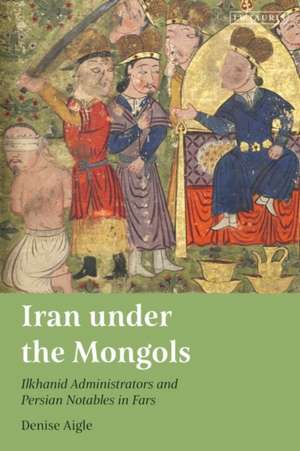
Iran under the Mongols: Ilkhanid Administrators and Persian Notables in Fars
Autor Denise Aigleen Limba Engleză Hardback – 25 iul 2024
Preț: 565.38 lei
Preț vechi: 879.43 lei
-36%
Puncte Express: 848
Carte tipărită la comandă
Livrare economică 07-21 decembrie
Livrare prin curier în România Termenul estimat este afișat lângă disponibilitate.
Transport gratuit pentru acest produs Plată online sau ramburs, în funcție de opțiunile comenzii.
Retur gratuit în 14 zile Comandă securizată și suport în română.
Specificații
ISBN-13: 9780755645732
ISBN-10: 0755645731
Pagini: 192
Ilustrații: 4 bw illus
Dimensiuni: 160 x 238 x 20 mm
Greutate: 0.54 kg
Editura: Bloomsbury Publishing
Colecția I.B.Tauris
Locul publicării:London, United Kingdom
ISBN-10: 0755645731
Pagini: 192
Ilustrații: 4 bw illus
Dimensiuni: 160 x 238 x 20 mm
Greutate: 0.54 kg
Editura: Bloomsbury Publishing
Colecția I.B.Tauris
Locul publicării:London, United Kingdom
Cuprins
List of maps
Preface
Author's Note
List of Abbreviations
Introduction
1. Notes on the sources
Official Historiography
Non-Official Historiography
Local Historiography
Historical Geography and Biographical Dictionaries
Hagiographical Sources
2. Establishing and Governing an Empire
Legal and Administrative Foundations of the Great Mongol State (1220-58)
Administrative Breakdown under the Ilkhans (1258-1336)
Destructive Impact of the Ordu
Land Status and Insecurity of Property Titles
3. Competent Governance under Abu Bakr Salghur
Establishment of the Salghurids in Shiraz
Abu Bakr's Territorial Expansion in the Persian Gulf
Autonomy in Exchange for Allegiance to the Great Qa'an
Establishment of a New Fiscal Policy
Abu Bakr, a Ruler Concerned about his Power
4. Progressive Administrative Control of the Ilkhans over Fars
Ineptitude of Abu Bakr's Successors
Two Capable Turko-Mongol Administrators
Inkianu: A Competent Turkish Administrator and Victim of Ordu Intrigues
Rigorous Administration of the Mongol Sughunchaq Noyan
Consequences in Shiraz of Political Instability at the Ordu
The Mongol Bulughan Resists Ahmad Tegüder
Abish Khatun and the Injüs in Fars
Return to Matters of Sayyid 'Imad al-Din Abu Yu'la
Boldness of the Mongolian Princess
5. Ilkhanid Policy in Fars
Arghun and the Crown Lands
Arghun's New Divan Team: Repercussions in Fars
Persistent Difficulties in Tax Collection in the Gaikhatu Era
Mongols and Trade
Ghazan's Administration in Fars
Setbacks of Malik al-Islam at the Ordu
Division of Fars into Tax Districts
The Divan in Search of Financial Resources
The Return of the Tibi Merchants to the Tax Farm
A Yazdi Sayyid in charge of Tax Collection
Injuids Governors of Shiraz
6. Fars Amidst the Rivalries of Chupanids, Injuids and Muzaffarids
Five Miulitary Campaigns: Alliances and Counter-Alliances
First Campaign: Chupanid-Injuid Alliance
Second Campaign: Chupanid-Muzaffarid Alliance
Thirth Campaign: New Chupanid-Injuid Alliance
Fourth Campaing: New Chupanid-Injuid Alliance
Fifth Campaign: New Chupanid-Muzaffarid Alliance
Uncertain Political Line of Shaykh Abu Ishaq Inju
Capture of Shiraz
Role of Tribal Members in the Injuid and Muzaffarid Armies
Muzaffarids and Pahlavans
Paradox of Muzaffarid Ideology
Amirs' Campaigns in Fars
7. Persian hukkam: 'Games of the Swords' or Corrupt Officials?
Previous Instances of Economic Decline
Reasons for Recurring Administrative Dysfunctions
Venality of Local Officials
Great Traders Caught in Turmoil
Consequences of Corrupt Local Agents
Chaotic Return to Traditional Sharing Zones
8. Epilogue: Other Principalities in Southern Iran
Principalities on the Eve of the Mongol Invasion
Confirmation of Power in Exchange for Submission
Supplying the Ilkhans with Troops in Exchange for Peace
Consequences of Insubordination to the Ilkhans
Bibliography
Index
Preface
Author's Note
List of Abbreviations
Introduction
1. Notes on the sources
Official Historiography
Non-Official Historiography
Local Historiography
Historical Geography and Biographical Dictionaries
Hagiographical Sources
2. Establishing and Governing an Empire
Legal and Administrative Foundations of the Great Mongol State (1220-58)
Administrative Breakdown under the Ilkhans (1258-1336)
Destructive Impact of the Ordu
Land Status and Insecurity of Property Titles
3. Competent Governance under Abu Bakr Salghur
Establishment of the Salghurids in Shiraz
Abu Bakr's Territorial Expansion in the Persian Gulf
Autonomy in Exchange for Allegiance to the Great Qa'an
Establishment of a New Fiscal Policy
Abu Bakr, a Ruler Concerned about his Power
4. Progressive Administrative Control of the Ilkhans over Fars
Ineptitude of Abu Bakr's Successors
Two Capable Turko-Mongol Administrators
Inkianu: A Competent Turkish Administrator and Victim of Ordu Intrigues
Rigorous Administration of the Mongol Sughunchaq Noyan
Consequences in Shiraz of Political Instability at the Ordu
The Mongol Bulughan Resists Ahmad Tegüder
Abish Khatun and the Injüs in Fars
Return to Matters of Sayyid 'Imad al-Din Abu Yu'la
Boldness of the Mongolian Princess
5. Ilkhanid Policy in Fars
Arghun and the Crown Lands
Arghun's New Divan Team: Repercussions in Fars
Persistent Difficulties in Tax Collection in the Gaikhatu Era
Mongols and Trade
Ghazan's Administration in Fars
Setbacks of Malik al-Islam at the Ordu
Division of Fars into Tax Districts
The Divan in Search of Financial Resources
The Return of the Tibi Merchants to the Tax Farm
A Yazdi Sayyid in charge of Tax Collection
Injuids Governors of Shiraz
6. Fars Amidst the Rivalries of Chupanids, Injuids and Muzaffarids
Five Miulitary Campaigns: Alliances and Counter-Alliances
First Campaign: Chupanid-Injuid Alliance
Second Campaign: Chupanid-Muzaffarid Alliance
Thirth Campaign: New Chupanid-Injuid Alliance
Fourth Campaing: New Chupanid-Injuid Alliance
Fifth Campaign: New Chupanid-Muzaffarid Alliance
Uncertain Political Line of Shaykh Abu Ishaq Inju
Capture of Shiraz
Role of Tribal Members in the Injuid and Muzaffarid Armies
Muzaffarids and Pahlavans
Paradox of Muzaffarid Ideology
Amirs' Campaigns in Fars
7. Persian hukkam: 'Games of the Swords' or Corrupt Officials?
Previous Instances of Economic Decline
Reasons for Recurring Administrative Dysfunctions
Venality of Local Officials
Great Traders Caught in Turmoil
Consequences of Corrupt Local Agents
Chaotic Return to Traditional Sharing Zones
8. Epilogue: Other Principalities in Southern Iran
Principalities on the Eve of the Mongol Invasion
Confirmation of Power in Exchange for Submission
Supplying the Ilkhans with Troops in Exchange for Peace
Consequences of Insubordination to the Ilkhans
Bibliography
Index
Recenzii
Two decades ago, Professor Aigle published her innovative study of Mongol rule and interaction with the local notables of the Iranian region of Fars. Her ground-breaking approach launched the study of local and regional history of Mongol Iran. Now updated with 20 years of scholarship and an accessible translation into English, this work is a vital volume for the library of anyone who studies the Mongol Empire or Iranian history.
This book is one of the most important contributions to scholarship on Mongol-ruled Iran in the last half-century. Aigle's rare grasp of Iran's rich literary memory allows her to vividly reconstruct the balance of power between imperial and provincial powerbrokers in a work that anticipated and informed much recent research on the topic. This newly translated and updated edition will be necessary reading for anyone studying Iran in the Middle Ages.
This restructured and substantially updated study of the impact of Mongol rule on the southern provinces of Iran in the 13th-14th century provides us with a detailed and profoundly researched analysis of the political and economic situation in Fars and adjacent provinces. Apart from highlighting the importance of understanding regional variations in how the Mongols interacted with the territories they conquered, Denise Aigle demonstrates convincingly that the Iranian local elites, motivated by their own self-interests, were as much the cause of the political corruption and financial mismanagement of local government as the Ilkhans' officials in the central Ordu. Essential reading for anyone interested in Mongol rule in Iran.
This book is one of the most important contributions to scholarship on Mongol-ruled Iran in the last half-century. Aigle's rare grasp of Iran's rich literary memory allows her to vividly reconstruct the balance of power between imperial and provincial powerbrokers in a work that anticipated and informed much recent research on the topic. This newly translated and updated edition will be necessary reading for anyone studying Iran in the Middle Ages.
This restructured and substantially updated study of the impact of Mongol rule on the southern provinces of Iran in the 13th-14th century provides us with a detailed and profoundly researched analysis of the political and economic situation in Fars and adjacent provinces. Apart from highlighting the importance of understanding regional variations in how the Mongols interacted with the territories they conquered, Denise Aigle demonstrates convincingly that the Iranian local elites, motivated by their own self-interests, were as much the cause of the political corruption and financial mismanagement of local government as the Ilkhans' officials in the central Ordu. Essential reading for anyone interested in Mongol rule in Iran.