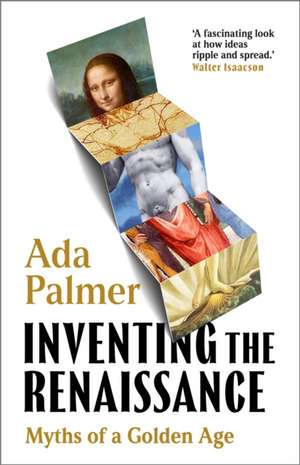
Inventing the Renaissance: Myths of a Golden Age
Autor Ada Palmeren Limba Engleză Hardback – 13 feb 2025
Recomandăm Inventing the Renaissance ca o resursă esențială pentru nivelul de licență și master în istorie, fiind o lucrare ce provoacă fundamentele modului în care predăm și înțelegem tranziția spre modernitate. Descoperim aici o deconstrucție fascinantă a miturilor pe care istoricii le-au țesut în ultimii două sute de ani în jurul acestei epoci. Ada Palmer nu se mulțumește să enumere realizări artistice, ci investighează „de ce” am ales să vedem Renașterea ca pe o perioadă de aur, ignorând adesea contextul disperat, războaiele crude și pragmatismul economic brutal al epocii.
Subliniem modul ingenios în care autoarea integrează analiza economică — menționând, de pildă, că o carte putea costa cât o vilă — pentru a explica dependența gânditorilor de elitele financiare precum familia Medici. Structura cărții este neconvențională: după o primă parte dedicată istoriografiei și modului în care Florența a devenit o sursă de auto-confirmare istorică, Ada Palmer ne oferă portrete vii ale unor figuri precum Machiavelli, privit aici ca patriot, sau familia Borgia.
Comparabil cu Palgrave Advances in Renaissance Historiography de J. Woolfson în rigoarea academică, volumul de față se distinge prin stilul narativ vibrant și personal, fiind actualizat pentru noile direcții care pun la îndoială excepționalismul european. Deși Ada Palmer este cunoscută pentru seria de speculație politică Terra Ignota (începând cu Too Like the Lightning), în această monografie ea își folosește talentul de narator pentru a scoate istoria din arhivele prăfuite și a o plasa în sfera dezbaterii vii. Este o lectură care echilibrează erudiția profundă a unui doctorat la Harvard cu verva unui podcaster modern.
Preț: 174.19 lei
Preț vechi: 231.20 lei
-25%
Carte disponibilă
Livrare economică 07-21 noiembrie
Specificații
ISBN-10: 1035910128
Pagini: 768
Ilustrații: 35 integrated bw illustrations
Dimensiuni: 160 x 236 x 54 mm
Greutate: 0.96 kg
Editura: Bloomsbury Publishing
Colecția Apollo
Locul publicării:London, United Kingdom
De ce să citești această carte
Această carte se adresează studenților la istorie și pasionaților de științe umaniste care doresc să treacă dincolo de clișeele manualelor clasice. Cititorul câștigă o perspectivă critică asupra modului în care se fabrică istoria, înțelegând că Renașterea a fost o epocă a supraviețuirii și a ingeniozității născute din disperare, nu doar un muzeu de artă în aer liber. Este un instrument metodologic rar care face istoriografia accesibilă și antrenantă.
Despre autor
Ada Palmer este profesor de istorie la Universitatea din Chicago, specializată în Renașterea italiană și istoria gândirii radicale, cu un doctorat obținut la Harvard. Dincolo de cariera academică, este o figură polivalentă: compozitoare de muzică a cappella și scriitoare de science-fiction premiată cu premiul Hugo pentru seria Terra Ignota. Această dublă identitate, de cercetător riguros și narator speculativ, îi permite să abordeze istoria modernă timpurie cu o prospețime unică, transformând analiza documentelor de arhivă într-o experiență intelectuală captivantă și accesibilă publicului larg prin blogul său, ExUrbe.com.
Descriere
In Inventing the Renaissance, acclaimed historian Ada Palmer provides a fresh perspective on what makes this epoch so captivating. Her witty and irreverent journey through the fantasies historians have constructed about the period show how its legend derives more from later centuries' mythmaking than from the often grim reality of the period itself. She examines its defining figures and movements: the enduring legacy of Niccolò Machiavelli, the rediscovery of the classics, the rise of the Medici and fall of the Borgias, the astonishing artistic achievements of Michelangelo, Leonardo, and Cellini, the impact of the Inquisition and the expansion of secular Humanism. Palmer also explores the ties between culture and money: books, for example, could cost as much as grand houses, so the period's innovative thinkers could only thrive with the help of the super-rich. She offers fifteen provocative and entertaining character portraits of Renaissance men and women, some famous, some obscure, whose intersecting lives show how the real Renaissance was more unexpected, more international and, above all, more desperate than its golden reputation suggests.
Drawing on her popular blogs and writing with her characteristic energy and wit, Palmer presents the Renaissance as we have never seen it before. Colloquial, funny and brilliant, you would never expect a work of deep scholarship to make you alternately laugh and cry.
Recenzii
Generous, brilliant, and inviting, Ada Palmer's Inventing the Renaissance is a triumph... this is a work of deep erudition worn lightly but excitingly that offers a history of the Renaissance with a unique and personal imprint. If you are a scholar of the period, you will find new insights and interpretations, and if you are coming to the Renaissance for the first time, you will find an engaging and eloquent companion in Ada Palmer.
Inventing the Renaissance does something magical: it manages to take a tightly-held conviction (that there was a thing in European history called 'the Renaissance'), dismantle it with humor and intelligence, then put it back together as something different and more true to the past itself. But maybe more importantly, Palmer's expertise and storytelling helps us better understand how golden ages are imagined, and why rejecting those invented constructions of the past provides us with hope as we confront our own contemporary world. As she says herself: 'we can do better than the Renaissance.'
An urgent corrective to modern myths about an ill-used past. Palmer has written a vital, absorbing and incredibly entertaining history of the so-called Renaissance. Challenging conventional wisdom, Inventing the Renaissance delves deep into the historical circumstances that have given rise to one of the most pervasive and frustrating narratives of the early modern period. It is a must read for all history enthusiasts.
Palmer is one of the most fascinating writers, thinkers, performers, and speakers I know. This is the book for every history nerd in your life, and also a magic artifact with the power to transform normies into history nerds.
This is a work of supreme importance, in that it takes a fascinating period of human history and brings the reader to confront many issues that are often overlooked, including the prejudices of our own views. Profound scholarship and imaginative powers support what is clearly the author's aim: to help the reader exercise critical thinking on the material before them. While this may be primarily intended for younger history students, its lively narration and perceptive analysis bring joy and delight to seasoned scholars too.
An enjoyable, capacious book about an inexhaustible subject
[A] jauntily written corrective
Strewn with learned allusions, humour and demotic wit, Inventing the Renaissance is the work of a remarkable scholar
Notă biografică
Cuprins
Prologue: The Great and Terrible Renaissance
1. Machiavelli the Patriot: SPQF
Part I: Why You Shouldn’t Believe Anyone (Including Me) About the Renaissance
2. Everybody Wants to Claim a Golden Age
3. The Flexible X-Factor of the Renaissance
4. Time for a Tangent About Vikings! (It’s Relevant, I Swear…)
5. The Quest for the Renaissance X-Factor Begins
6. Super Sexy Secular Humanism
7. A New X-Factor: The Baron Thesis and Proto-Democracy
8. Another X-Factor: Enter Economists!
9. Florence: A Self-Fulfilling Source Base
10. What Makes People Start to Study the Renaissance
11. Lorenzo de Medici: Hero or Villain?
12. Or Were We Brought Here by Romance?
13. The Invention of the Middle Ages
14. The Un-Modern Renaissance
15. Why Did Ada Palmer Start Studying the Renaissance?
Part II: Desperate Times and Desperate Measures
16. Desperate Times
17. Cruel Wars for Light Causes
18. A Strange Peace, A Stranger War
19. Rome: The Eternal Problem City
20. Medieval but Ever-So-Much-More-So
21. The Desperate Measure: Reviving Antiquity
Intermission: Are You Remembering Not to Believe Me?
22. Antiquity Was Not New Either
23. The Umanista’s Rival: Scholasticism
24. Studia Humanitatis—The Words That Sting and Bite
25. Italian Renaissance Becomes European Renaissance
26. The Supremacy of Antiquity
27. Is This About Virtue or Power?
Part III: Let’s Meet Some People from This Golden Age
28. Patrons and Clients All the Way Up
29. Our Friends So Far
30. Alessandra Strozzi: Labors of Exile
31. Manetto Amanatini: There Is a World Elsewhere
32. Francesco Filelfo: Between Republics and Monarchies
33. Montesecco: An Assassin Fears for His Soul
34. Ippolita Maria Visconti Sforza: The Princess and the Peace
35. Josquin des Prez: The International Renaissance
36. Angelo Poliziano: Patronage Repays
37. Savonarola: Saint or Demon?
38. Alessandra Scala: The Girl of Our Dreams
39. Raffaello Maffei il Volterrano: A Scholar Fears for His Soul Too
40. Lucrezia Borgia: Princess of Nowhere
41. Camilla Bartolini Rucellai: Spirit of the Last Republic
42. Michelangelo: The Great and Terrible
Interlude: Let’s Ground Ourselves in Time
43. Julia the Sibyl: A Prophetess in an Age of Science
44. Our Friend Machiavelli
Machiavelli Part 2: The Three Branches of Ethics
Machiavelli Part 3: Enter the Prince
Machiavelli Part 4: Julius II the Warrior Pope
Coda: Many Machiavellis
Part IV: What Was Renaissance Humanism?
45. What Was Behind the Curtain? Garin vs. Kristeller
46. Who Gets to Count as a Renaissance Humanist?
47. Back to Our X-Factors
48. Once Upon a Time at Vergil’s House…
49. Follow the Money!
50. It’s Getting Weird in Florence
51. Scraps of Philosophia
52. Was There Renaissance Secular Humanism?
53. How (Not) to Dodge the Renaissance Inquisition
54. Why We Care Whether Machiavelli Was an Atheist
55. Was Machiavelli a Humanist? Part 1
56. Virtue Politics
57. Was Machiavelli a Humanist? Part 2
Part V: The Try Everything Age
58. An Exponential Information Revolution
59. We Can’t Just Abelard Harder Anymore
60. The Presumptive Authority of the Past
61. The New Philosophy
62. A Brief History of Progress
63. Progresses
Part VI: Conclusion – Who Has Power in History?
64. Great Forces History vs. Individual Choice History
65. The Papal Election of 2016
66. Which Horseman of the Apocalypse?
67. What Did the Black Death Really Cause?
Sources and Recommended Reading
Notes
Acknowledgments
Image Credits
Index
About the Author