
Introduction to Peak Oil: Lecture Notes in Energy, cartea 34
Autor R. W. Bentleyen Limba Engleză Paperback – 24 apr 2018
Din seria Lecture Notes in Energy
-
 Preț: 396.17 lei
 -
 Preț: 437.85 lei
 - 18%
 Preț: 971.78 lei
 - 18%
 Preț: 1029.92 lei
 - 24%
 Preț: 888.19 lei
 - 15%
 Preț: 614.61 lei
 - 24%
 Preț: 1369.65 lei
 - 24%
 Preț: 714.02 lei
 - 15%
 Preț: 648.56 lei
 - 15%
 Preț: 623.59 lei
 - 15%
 Preț: 643.43 lei
 - 15%
 Preț: 652.58 lei
 - 15%
 Preț: 621.99 lei
 - 18%
 Preț: 927.03 lei
 - 15%
 Preț: 621.99 lei
 - 18%
 Preț: 922.72 lei
 - 18%
 Preț: 1372.86 lei
 - 15%
 Preț: 612.76 lei
 - 15%
 Preț: 656.85 lei
 - 15%
 Preț: 646.89 lei
 - 18%
 Preț: 962.53 lei
 - 15%
 Preț: 655.53 lei
 - 18%
 Preț: 969.85 lei
 - 61%
 Preț: 321.20 lei
 -
 Preț: 393.78 lei
 - 15%
 Preț: 624.20 lei
 -
 Preț: 396.50 lei
 -
 Preț: 393.02 lei
 - 18%
 Preț: 959.88 lei
Preț: 614.82 lei
Preț vechi: 723.31 lei
-15%
Puncte Express: 922
Carte tipărită la comandă
Livrare economică 19 noiembrie-03 decembrie
Livrare prin curier în România Termenul estimat este afișat lângă disponibilitate.
Transport gratuit pentru acest produs Plată online sau ramburs, în funcție de opțiunile comenzii.
Retur gratuit în 14 zile Comandă securizată și suport în română.
Specificații
ISBN-13: 9783319799438
ISBN-10: 3319799436
Pagini: 208
Ilustrații: IX, 196 p. 34 illus., 8 illus. in color.
Dimensiuni: 155 x 235 x 12 mm
Greutate: 0.32 kg
Ediția:Softcover reprint of the original 1st edition 2016
Editura: Springer
Colecția Lecture Notes in Energy
Seria Lecture Notes in Energy
Locul publicării:Cham, Switzerland
ISBN-10: 3319799436
Pagini: 208
Ilustrații: IX, 196 p. 34 illus., 8 illus. in color.
Dimensiuni: 155 x 235 x 12 mm
Greutate: 0.32 kg
Ediția:Softcover reprint of the original 1st edition 2016
Editura: Springer
Colecția Lecture Notes in Energy
Seria Lecture Notes in Energy
Locul publicării:Cham, Switzerland
V-ar putea interesa
-
 Emissions Reduction: NOx/SOx SuppressionA. Tomita-22%Preț: 343.37 lei440.74 lei
 -
 -27%Preț: 908.09 lei1243.97 lei
 -
 -27%Preț: 974.00 lei1334.25 lei
 -
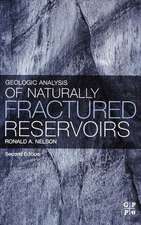 Geologic Analysis of Naturally Fractured ReservoirsRonald Nelson-26%Preț: 912.09 lei1234.48 lei
 -
 Oil Transport ManagementY. H. Venus Lun-15%Preț: 639.66 lei752.55 lei
 -
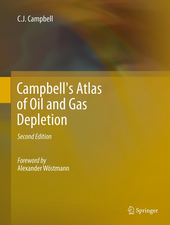 Campbell's Atlas of Oil and Gas DepletionColin J. Campbell-18%Preț: 2038.80 lei2486.34 lei
 -
 The First Half of the Age of OilCharles A. S. HallPreț: 367.19 lei
 -
 -15%Preț: 654.32 lei769.80 lei
 -
 Working Guide to Reservoir EngineeringWilliam Lyons-25%Preț: 463.23 lei617.58 lei
 -
 -30%Preț: 461.43 lei659.70 lei
 -
 -9%Preț: 515.06 lei566.00 lei
 -
 Chemical Additives for Gas HydratesBhajan Lal-15%Preț: 638.83 lei751.56 lei
 -
 Attenuation of Incoherent Seismic NoiseAbdullatif Al-Shuhail-18%Preț: 1007.50 lei1228.66 lei
 -
 Power and Gas Asset Management: Regulation, Planning and Operation of Digital Energy SystemsMiguel Moreira da Silva-18%Preț: 855.38 lei1043.14 lei
 -
 CO2 Storage Coupled with Enhanced Oil RecoveryKun Sang Lee-18%Preț: 890.54 lei1086.02 lei
 -
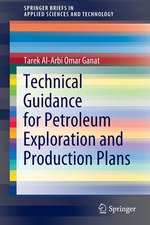 Technical Guidance for Petroleum Exploration and Production PlansTarek Al-Arbi Omar GanatPreț: 397.09 lei
 -
 -18%Preț: 919.67 lei1121.54 lei
 -
 -18%Preț: 702.70 lei856.94 lei
 -
 Ash from Coal and Biomass CombustionAshok K. Singh-18%Preț: 790.79 lei964.38 lei
 -
 Discrete Fracture Network Modeling of Hydraulic StimulationMark W. McClurePreț: 378.80 lei
 -
 The World Market for Natural Gas: Implications for EuropeAndrea Gilardoni-15%Preț: 618.03 lei727.08 lei
 -
 Reservoir Engineering Techniques Using FortranMihir K. SinhaPreț: 372.26 lei
 -
 -18%Preț: 923.14 lei1125.78 lei
 -
 -18%Preț: 2336.33 lei2849.18 lei
Cuprins
Introduction.- Explaining peak oil: What it is, and why it happens.- A brief history of forecasting peak oil.- When should we expect the peak?.- Why has peak oil been so poorly understood?.- Caveats and conclusions.- Definitions.- Oil reserves data: 1P vs. 2P.- Suggestions for use of IHS Energy’s ‘PEPS’ dataset.- Further aspects of oil forecasting.- Detail on specific oil forecasts.- Peak oil and climate change.- Peak demand.- Peak gas.- Reading University ‘Oil group’ and publications.
Textul de pe ultima copertă
This book examines the physical andeconomic characteristics of the global oil resource to explain why peak oil hasbeen so poorly understood. The author draws on information held in oil industrydatasets that are not widely available outside of the specialist literature,and describes a number of methods that have been successfully used to predictoil peaks. In contrast to the widely-held view that ‘all oil forecasts arewrong’, these methods correctly predicted the current peak in globalconventional oil production. Current oil forecasts are then compared toevaluate the expected dates for regional and global oil peaks for conventionaloil, all-oils, and all-liquids. The dates of global peaks in the production ofall-oil and all-liquids appear to be reasonably soon, while the oil price thatis needed to support these global production levels continues to rise. Theworld faces serious constraints in its oil supply, which accounts for aboutone-third of total world energy use, and over 90% of the fuel used fortransportation. Readers of this book will gain a thorough understanding of thecritical, but poorly understood, phenomenon of peak oil that has already hadsignificant impacts on society in terms of high oil prices, and which willplace increasing constraints on mankind’s supply of energy and economicwell-being in the coming years.
Caracteristici
Offers a concise "textbook-like" approach with many graphs and tables to support explanations in the text Covers the topic comprehensively, including the fundamental drivers of peak oil and the often-overlooked counter-arguments Draws heavily on oil industry proved-plus-probable (‘2P’) data Explains why fracking for tight oil is not a game changer Reflects 20 years of close involvement with the topic of peak oil, including many conversations with governments, industry, and key individual players Includes supplementary material: sn.pub/extras