
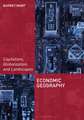
Introduction to Geographic Information Systems: Exploring Geography
Autor Falguni Mukherjeeen Limba Engleză Paperback – 3 ian 2025
Observăm o creștere exponențială a relevanței sistemelor informatice geografice în viața cotidiană, motiv pentru care Introduction to Geographic Information Systems de Falguni Mukherjee se poziționează ca o resursă interdisciplinară esențială. Lucrarea depășește granițele geografiei tradiționale, abordând aplicabilitatea tehnologiei în domenii precum sănătatea publică, gestionarea resurselor, silvicultură și chiar aplicarea legii. Ne-a atras atenția modul în care autoarea reușește să explice concepte sofisticate de gândire spațială printr-un limbaj accesibil, adaptat special pentru nivelul universitar de bază.
Comparabil cu A Primer of GIS, Second Edition de Francis Harvey în ceea ce privește rigurozitatea fundamentelor teoretice, volumul de față este însă actualizat pentru era transformării digitale, punând un accent sporit pe exerciții practice și pe utilizarea software-ului actual. Structura cursului este una progresivă, pornind de la definirea sistemelor și istoria acestora, continuând cu aspecte tehnice vitale precum proiecțiile cartografice și sistemele de coordonate (inclusiv UTM și Military Grid), și culminând cu modele complexe de date și managementul bazelor de date (RDBMS).
Subliniem importanța celor 144 de ilustrații color și a celor 17 tabele care transformă acest manual într-un instrument vizual puternic. Fiecare capitol este deschis de obiective de învățare clare și închis de secțiuni de termeni-cheie și întrebări recapitulative, facilitând o parcurgere logică a materiei. Spre deosebire de alte titluri, Introduction to Geographic Information Systems include și o perspectivă critică asupra eticii în GIS și a impactului social al tehnologiei, reflectând expertiza de cercetare a prof. Falguni Mukherjee în guvernarea urbană și interacțiunea om-tehnologie.


Preț: 358.27 lei
Preț vechi: 427.02 lei
-16%
Carte disponibilă
Livrare economică 17 noiembrie-01 decembrie
Specificații
ISBN-10: 1538152010
Pagini: 268
Ilustrații: 144 Color Illustrations, 4 Color Photos, 17 Tables, 4 Textboxes
Dimensiuni: 178 x 252 x 14 mm
Greutate: 0.61 kg
Editura: Bloomsbury Publishing
Colecția Rowman & Littlefield
Seria Exploring Geography
Locul publicării:New York, United States
V-ar putea interesa
-
 -27%Preț: 649.42 lei889.61 lei
 -
 -9%Preț: 559.55 lei614.90 lei
 -
 GIS For DummiesMN DeMersPreț: 219.60 lei
 -
 Preț: 361.92 lei
 -
 Remote Sensing and Image InterpretationThomas Lillesand-18%Preț: 1378.98 lei1681.68 lei
 -
 ISE Mastering ArcGISMaribeth Price-25%Preț: 400.37 lei532.77 lei
 -
 Mastering ArcGIS Pro ISEMaribeth Price-26%Preț: 370.66 lei503.04 lei
 -
 -15%Preț: 699.08 lei822.44 lei
 -
 GIS For DummiesJami DennisPreț: 168.49 lei
 -
 Springer Handbook of Geographic InformationWolfgang Kresse-18%Preț: 2253.89 lei2748.64 lei
 -
 Open GISJizhe Xia-18%Preț: 934.14 lei1139.19 lei
 -
 Encyclopedia of GISShashi Shekhar-20%Preț: 11017.84 lei13772.30 lei
 -
 Springer Handbook of Geographic InformationWolfgang Kresse-18%Preț: 2006.55 lei2447.01 lei
 -
 Geoinformatics in Theory and PracticeNorbert De Lange-19%Preț: 543.70 lei671.23 lei
 -
 GIS: The Geographic Language of Our AgeKnut Grinderud-17%Preț: 363.96 lei439.70 lei
 -
 Handling of Geospatial Data with QGISKo Ko Lwin-19%Preț: 640.81 lei791.13 lei
De ce să citești această carte
Recomandăm această carte studenților și profesioniștilor aflați la început de drum care doresc să stăpânească fundamentele GIS. Cititorul câștigă nu doar cunoștințe teoretice despre cartografie și baze de date, ci și competențe practice prin exercițiile aplicate. Este o resursă rară care îmbină claritatea didactică a editurii Bloomsbury Publishing cu rigoarea științifică, fiind ideală pentru cursuri introductive de geografie, mediu sau urbanism.
Descriere
This comprehensive, grounded introduction to the basics of geographic information systems and science is written in a clear and accessible style, making the complex and sophisticated field of GIS and spatial thinking comprehensible for beginners. Up-to-date with current GIS trends and incorporating exercises using a number of GIS software, Mukherjee covers a wide array of topics, including the history of GIS, geospatial data models and analysis, projections and coordinate systems, database management systems, cartography, ethics in GIS, GIS project management principles, GIS and society, and digital transformation.
Features of this exciting, brand-new text include:
Chapter opening learning objectives to guide students' course goalsHelpful study aids such as key terms-bolded in the text and compiled both at the end of each chapter and in a comprehensive glossaryEnd-of-chapter questions and activities utilizing GIS software to promote active learning and build useful skillsA stunning full-color art program, with detailed maps, figures, tables, and photos, to engage students as visual learners
Cuprins
Chapter 1: What is GIS?
Learning Objectives
Why GIS?
What is GIS?
Components of a GIS
Location Information
A GIS Integrates Information
Processes Performed by a GIS
History of GIS
Questions and Activities
Key Terms
References
Chapter 2: Projections and Coordinate Systems
Learning Objectives
Location Information
Cartography and Maps
Shape of the Earth
Map Projections
Coordinate Systems
Universal Transverse Mercator Coordinate System
The Military Grid Coordinate System
United States National Grid
State Plane Coordinate System
Other Systems
Questions and Activities
Key Terms
References
Chapter 3: GIS Spatial Data Models
Learning Objectives
Representing Real World Features
Vector Data Model
Vector Data Model Structures
Raster Data Model
Comparing the Two Spatial Data Models
File Formats
Questions and Activities
Key Terms
References
Chapter 4: Attribute Data
Learning Objectives
Representing Aspatial Data and Information
Database Management System
RDBMS and GIS
Types of Data
Functions in an Attribute Table
Questions and Activities
Key Terms
References
Chapter 5: Geospatial Data
Learning Objectives
Geospatial Data
Finding Geospatial Data
Field Methods and Geospatial Data Creation
Global Positioning System (GPS)
Remote Sensing Data Collection
Geocoding
Questions and Activities
Key Terms
References
Chapter 6: GIS and Cartography
Learning Objectives
Why Cartography?
Cartographic Elements of a Map
GIS Maps
Questions and Activities
Key Terms
References
Chapter 7: GIS Softwares
Learning Objectives
GIS Softwares
ArcGIS
QGIS
GRASS GIS
gvSIG Desktop
Software Selection
Questions and Activities
Key Terms
References
Chapter 8: GIS and Society
Learning Objectives
GIS and Society - Why?
GIS and Organization - Principles of GIS Project Management
GIS and Society
Questions and Activities
Key Terms
References
Chapter 9: GIS - Possibilities and the Future
Learning Objectives
The World of GIS
What Can You Do with a GIS Degree?
What Lies Ahead?
Questions and Activities
Key Terms
References
Chapter 10: Geospatial Data Analysis
Learning Objectives
Geospatial Analysis - What and Why?
Retrieving Data
Spatial Analysis Using Vector Data
Spatial Analysis Using Raster Data
Questions and Activities
Key Terms
References
About the Author
Series Page
Glossary
Recenzii
This introductory GIS text offers a comprehensive and timely exploration of geospatial technology, presenting practical examples and relevant real-world applications. The author's matter-of-fact approach distills complex GIS concepts into accessible content for undergraduates and aspiring GIS professionals, while fostering a deeper understanding of spatial analysis. It will indeed serve as a valuable resource that reflects current trends in GIS education and practice.
Introduction to Geographic Information Systems by Dr. Falguni Mukherjee is a credible entry level book that not only covers basic theoretical concepts but also includes numerous practical examples. The illustrations and mapping examples are easy to understand and engaging. The author's method of explaining concepts from a Geographic Information System (GIS) and Geographic Information Science (GIScience) perspective is commendable. In my 25+ years of GIScience career, I have seen very few Introductions to GIS books covering basics of GIS and Society, and GIS Project Management. I am confident that readers would highly benefit from such topics which are hard to find in other GIS books.