
Intercultural Memories: Possibilities, cartea 25
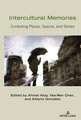
Editat de Ahmet Atay, Alberto González, Yea-Wen Chenen Limba Engleză Hardback – 24 mar 2021

Preț: 695.57 lei
Preț vechi: 903.34 lei
-23%
Puncte Express: 1043
Carte tipărită la comandă
Livrare economică 20 noiembrie-04 decembrie
Livrare prin curier în România Termenul estimat este afișat lângă disponibilitate.
Transport gratuit pentru acest produs Plată online sau ramburs, în funcție de opțiunile comenzii.
Retur gratuit în 14 zile Comandă securizată și suport în română.
Specificații
ISBN-13: 9781433147845
ISBN-10: 143314784X
Pagini: 198
Dimensiuni: 155 x 231 x 15 mm
Greutate: 0.43 kg
Ediția:1. Auflage
Editura: PETER LANG
Colecția Possibilities
Seria Possibilities
ISBN-10: 143314784X
Pagini: 198
Dimensiuni: 155 x 231 x 15 mm
Greutate: 0.43 kg
Ediția:1. Auflage
Editura: PETER LANG
Colecția Possibilities
Seria Possibilities
Notă biografică
Ahmet Atay (Ph.D., Southern Illinois University-Carbondale) is Associate Professor of Communication at the College of Wooster. He is the author of Globalization's Impact on Identity Formation: Queer Diasporic Males in Cyberspace (2015) and the co-editor of 11 books, including Queer Communication Pedagogy. His scholarship has appeared in numerous journals and edited books.
Yea-Wen Chen (Ph.D., University of New Mexico) is Associate Professor in the School of Communication at San Diego State University. Dr. Chen has published over 40 works in Communication Monographs, Journal of International and Intercultural Communication, and Departures in Critical Qualitative Research. Also, she has co-edited Our Voices: Essays in Culture, Ethnicity, and Communication, 6th Edition (2015).
Alberto González (Ph.D., The Ohio State University) is Distinguished University Professor in the School of Media and Communication at Bowling Green State University. He is a co-editor of The Rhetorical Legacy of Wangari Maathai: Planting the Future (2018) and Our Voices: Essays in Culture, Ethnicity, and Communication, 6th Edition (2015).
Yea-Wen Chen (Ph.D., University of New Mexico) is Associate Professor in the School of Communication at San Diego State University. Dr. Chen has published over 40 works in Communication Monographs, Journal of International and Intercultural Communication, and Departures in Critical Qualitative Research. Also, she has co-edited Our Voices: Essays in Culture, Ethnicity, and Communication, 6th Edition (2015).
Alberto González (Ph.D., The Ohio State University) is Distinguished University Professor in the School of Media and Communication at Bowling Green State University. He is a co-editor of The Rhetorical Legacy of Wangari Maathai: Planting the Future (2018) and Our Voices: Essays in Culture, Ethnicity, and Communication, 6th Edition (2015).
Cuprins
Ahmet Atay, Yea- Wen Chen, and Alberto González: Introduction: Intercultural Communication, Memory, and Stories - Peter Ehrenhaus and A. Susan Owen: Communities of Memory, Coalition, and Race Trauma: The Moore's Ford Lynching Reenactment - Eun YoungLee and Alberto González: Be)Coming Home: Transformative Places and Koreamerican Identity in Itaewon, South Korea - Yea- Wen Chen and Chunyu Zhang: When "Chiang Kai- shek Memorial Square" Became "Liberty Square": A Case of Contested Public Memories in Taiwan - NinaGjoci: Remembering Communism: The Site of Witness and Memory and the House of Leaves Museums in Albania - Kathryn Hobson, Bernadette Marie Calafell, and Spencer B. Margulies: Mis)Remembering Stonewall: Narrative Authority and the American Monomyth in Queer Public Memory - Shinsuke Eguchi: Queer Fantasy: A Memory of Michael Sam's Big Gay Kiss - Ahmet Atay: Photographs as Diasporic Memories: Turkish Cypriots, Home, and Memory - Mariko Izumi: Displaced Memorials: Commemorating the "Comfort Women" in the United States - Raquel Moreira: "Funk Isn't a Trend; It's a Necessity": Favela Funk's Vernacular Discourse and the Struggle for Cultural Legitimation - Contributors - Index.
Descriere
The book provides insights into how places and memories intersect with intercultural conflicts, oppressions, and struggles by which communities make sense of, deal with, and reconcile the past.