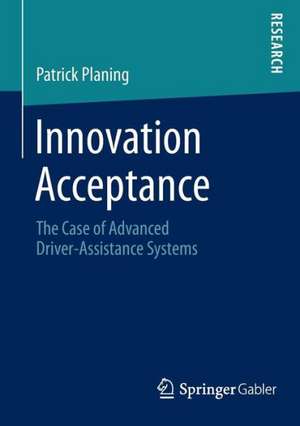
Innovation Acceptance
Autor Patrick Planingen Limba Engleză Paperback – 17 feb 2014
Preț: 390.72 lei
Puncte Express: 586
Carte tipărită la comandă
Livrare economică 05-19 decembrie
Livrare prin curier în România Termenul estimat este afișat lângă disponibilitate.
Transport gratuit de la 400.00 lei Plată online sau ramburs, în funcție de opțiunile comenzii.
Retur gratuit în 14 zile Comandă securizată și suport în română.
Specificații
ISBN-13: 9783658050047
ISBN-10: 3658050047
Pagini: 344
Ilustrații: XVIII, 326 p. 51 illus.
Dimensiuni: 148 x 210 x 19 mm
Greutate: 0.45 kg
Ediția:2014
Editura: SPRINGER VS
Locul publicării:Wiesbaden, Germany
ISBN-10: 3658050047
Pagini: 344
Ilustrații: XVIII, 326 p. 51 illus.
Dimensiuni: 148 x 210 x 19 mm
Greutate: 0.45 kg
Ediția:2014
Editura: SPRINGER VS
Locul publicării:Wiesbaden, Germany
V-ar putea interesa
-
 -15%Preț: 580.11 lei682.48 lei
 -
 The Product Manager's Handbook 4/ELinda Gorchels-9%Preț: 432.01 lei474.74 lei
 -
 Handbook of Lean Manufacturing in the Food IndustryMichael Dudbridge-8%Preț: 602.08 lei654.43 lei
 -
 Security Patch ManagementFelicia Nicastro-20%Preț: 749.13 lei936.41 lei
 -
 Preț: 399.98 lei
 -
 Preț: 255.93 lei
 -
 A Comprehensive Guide to Enterprise MobilityJithesh Sathyan-20%Preț: 1064.95 lei1331.18 lei
 -
 -15%Preț: 437.42 lei514.61 lei
Public țintă
ResearchCuprins
ADAS Technology.- Defining Innovation, Acceptance, Adoption, Resistance, and Diffusion.- Qualitative and Quantitative Research on Innovation Acceptance.- Factors for the Acceptance of Advanced Driver-Assistance Systems.
Textul de pe ultima copertă
Advanced Driver-Assistance Systems (ADAS) provide the opportunity to increase road safety and driving comfort. Reviewing existing empirical work on comparable innovations, Patrick Planing derives potential acceptance constructs, which together with the results of thirty-two semi-structured interviews, have constituted the basis for a survey instrument that was consequently administered to a sample of over 400 participants from the target population. The resulting regression model shows that perceived safety and comfort benefits are most decisive for the acceptance of ADAS, while desire to exert control was found to most strongly support resistance to this technology.
Contents
Patrick Planing is a doctoral graduate from Leeds Metropolitan University, UK, and a visiting lecturer at various German universities. He currently holds a position in the Business Innovation Unit of a leading premium car manufacturer in Germany.
Contents
- ADAS Technology
- Defining Innovation, Acceptance, Adoption, Resistance, and Diffusion
- Qualitative and Quantitative Research on Innovation Acceptance
- Factors for the Acceptance of Advanced Driver-Assistance Systems
- Researchers and students in the fields of economics and psychology
- Practitioners in the field of driver-assistance development and public institutions in the transport sector
Patrick Planing is a doctoral graduate from Leeds Metropolitan University, UK, and a visiting lecturer at various German universities. He currently holds a position in the Business Innovation Unit of a leading premium car manufacturer in Germany.
Caracteristici
Publication in the field of economic sciences Includes supplementary material: sn.pub/extras