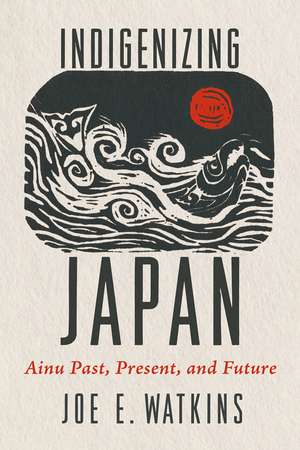
Indigenizing Japan: Ainu Past, Present, and Future
Autor Joe Watkinsen Limba Engleză Paperback – 18 noi 2025
Găsim în Indigenizing Japan o analiză riguroasă a rezilienței culturale, plecând de la studiile de caz fundamentale pentru identitatea modernă Ainu: procesul barajului Nibutani din 1997 și recunoașterea istorică a statutului de popor indigen de către guvernul nipon în 2008. Reținem modul în care Joe Watkins utilizează cele 9 tabele și 28 de ilustrații pentru a documenta o traiectorie istorică ce începe acum 40.000 de ani, oferind o bază factuală solidă pentru înțelegerea divergenței culturale dintre Hokkaido și insulele centrale ale Japoniei. Suntem de părere că această lucrare reușește să deconstruiască mitul omogenității japoneze prin dovezi arheologice ce atestă utilizarea uneltelor de piatră și a ceramicii cu mult înaintea introducerii agriculturii de orez din peninsula coreeană. Cartea servește ca o alternativă necesară la Beyond Ainu Studies pentru cursurile de antropologie și studii etnice, având avantajul unei perspective ancorate în arheologia practică și în colaborarea de lungă durată cu comunitățile studiate. Autorul, cunoscut pentru lucrări precum Indigenous Archaeology și Archaeological Ethics, își continuă aici misiunea de a examina intersecția dintre legislație, etică profesională și drepturile popoarelor native. Față de abordările sale anterioare din Cross-Cultural Collaboration, care vizau spațiul nord-american, Joe Watkins extinde cadrul teoretic către Asia de Est, demonstrând că lupta pentru conservare culturală a poporului Ainu este parte integrantă dintr-un fenomen global de decolonizare. Tonul precis al volumului, publicat de University of Arizona Press, evită generalizările, preferând să detalieze politicile guvernamentale de la mijlocul secolului al XIX-lea și impactul lor asupra structurilor sociale tradiționale.
Preț: 244.07 lei
Carte disponibilă
Livrare economică 05-19 noiembrie
Livrare express 22-28 octombrie pentru 25.47 lei
Specificații
ISBN-10: 0816555974
Pagini: 252
Ilustrații: 28 b&w illustrations, 9 tables
Dimensiuni: 152 x 229 x 18 mm
Greutate: 0.35 kg
Editura: University of Arizona Press
Colecția University of Arizona Press
V-ar putea interesa
-
 A Short History of JapanChristopher HardingPreț: 143.27 lei
 -
 The Japanese MythsJoshua Frydman-17%Preț: 90.86 lei109.76 lei
 -
 After Redress: Japanese Canadian and Indigenous Struggles for JusticeKirsten Emiko McAllister-23%Preț: 560.79 lei728.30 lei
 -
 An Indigenous Peoples' History of the United StatesRoxanne Dunbar-Ortiz-17%Preț: 102.82 lei124.25 lei
 -
 FABRIC OF INDIGENEITYAnn-Elise LewallenPreț: 377.96 lei
 -
 -15%Preț: 908.56 lei1073.60 lei
 -
 Old Japan - The Making and Shaping of the NationMax Von BrandtPreț: 37.10 lei
 -
 Ancestral FutureAilton KrenakPreț: 80.25 lei
 -
 -24%Preț: 83.13 lei109.99 lei
 -
 The ServiceberryRobin Wall KimmererPreț: 108.03 lei
 -
 -19%Preț: 115.03 lei142.39 leiRecomandat
 -
 Our Land: The MaritimesG.P. Gould-10%Preț: 140.07 lei155.04 lei
 -
 Wisdom of Ancient JapanSaori Okada-25%Preț: 71.12 lei94.77 lei
 -
 Revelations in Japanese ArchaeologyBarbara Seyock-8%Preț: 448.21 lei487.18 lei
 -
 -16%Preț: 92.46 lei110.70 lei
 -
 Called by the HillsAnuradha RoyPreț: 92.91 lei
 -
 Preț: 123.99 lei
 -
 Preț: 93.85 lei
 -
 Preț: 424.14 lei
De ce să citești această carte
Această lucrare este esențială pentru cercetătorii și studenții interesați de istoria Japoniei și de drepturile popoarelor indigene. Cititorul câștigă o înțelegere profundă a modului în care arheologia poate servi drept instrument de justiție socială, oferind argumente științifice pentru recunoașterea identității Ainu. Este o recomandare certă pentru cei care doresc să exploreze mecanismele colonizării interne și ale rezistenței culturale dincolo de clișeele despre omogenitatea societății nipone.
Despre autor
Joe Watkins este un arheolog de renume și membru al națiunii Choctaw, ocupând în prezent funcția de director al Departamentului de Studii Native Americane la Universitatea din Oklahoma. Cariera sa este definită de explorarea relației complexe și adesea tensionate dintre popoarele indigene și practica arheologică academică. Prin lucrări de referință precum Indigenous Archaeology, Watkins a redefinit etica profesională în domeniu, militând pentru implicarea activă a comunităților în gestionarea propriului patrimoniu cultural. Expertiza sa transcontinentală îi permite să analizeze istoria poporului Ainu dintr-o perspectivă unică, îmbinând rigoarea științifică cu sensibilitatea culturală.
Descriere scurtă
Relaying the deep history of the islands of Japan, Watkins tells the archaeological story from the earliest arrivals some 40,000 years ago to 16,000 years ago when local cultures began utilizing pottery and stone tools. About 2,300 years ago, another group of people immigrated from the Korean peninsula into the Japanese archipelago, bringing wet rice agriculture with them. They intermarried with the people who were there, forming the basis of the contemporary Japanese majority culture. As the Japanese state developed on the central Islands of Honshu, Ryukyu, and Shikoku, the people of Hokkaido continued developing along a different trajectory with minimal interaction with the mainland until colonization in the mid-nineteenth century, when the people known as the Ainu came under Japanese governmental policy.
Watkins’s insightful analysis highlights the Ainu’s enduring spirit and their resurgence as part of the global Indigenous movement. Key events such as the 1997 Nibutani Dam case and the 2007 recognition of the Ainu as Japan’s Indigenous people are explored in depth, showcasing the Ainu’s ongoing fight for cultural preservation and self-determination. By situating the Ainu’s experiences within broader global colonial histories, Indigenizing Japan underscores the shared struggles and resilience of Indigenous communities worldwide.
Notă biografică
Recenzii
“This work is the first in English to offer a general introduction to the Ainu people and their contemporary issues, including groundbreaking chapters on the genetic origins of the populations of Japan and an overview of the archaeology of northern Japan, which argue convincingly for the identity of the Ainu as an indisputably distinct ethnic group and Indigenous residents of Hokkaido. The book’s fine attention to the complexities of Ainu identity could only be written by someone who is himself Indigenous, as Choctaw author and professional archaeologist Dr. Joe Watkins is. This volume is a must-read for anyone interested in contemporary Ainu issues, the issue of Ainu rights, or, just anyone interested in gaining a brief introduction to the archaeology of Japan.”—Jeff Gayman, Hokkaido University, Japan