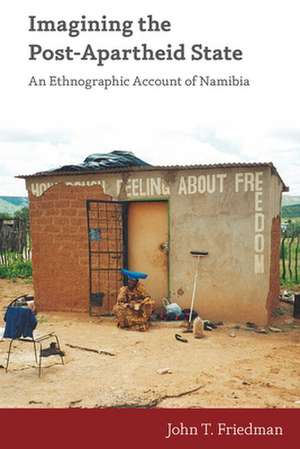
Imagining the Post-Apartheid State
Autor John T. Friedmanen Limba Engleză Paperback – oct 2013
Preț: 268.94 lei
Puncte Express: 403
Carte tipărită la comandă
Livrare economică 05-19 decembrie
Livrare prin curier în România Termenul estimat este afișat lângă disponibilitate.
Transport gratuit de la 400.00 lei Plată online sau ramburs, în funcție de opțiunile comenzii.
Retur gratuit în 14 zile Comandă securizată și suport în română.
Specificații
ISBN-13: 9781782383239
ISBN-10: 1782383239
Pagini: 326
Dimensiuni: 152 x 229 x 18 mm
Greutate: 0.47 kg
Editura: BERGHAHN BOOKS
ISBN-10: 1782383239
Pagini: 326
Dimensiuni: 152 x 229 x 18 mm
Greutate: 0.47 kg
Editura: BERGHAHN BOOKS
V-ar putea interesa
-
 Westmoreland's War: Reassessing American Strategy in VietnamGregory Daddis-27%Preț: 380.19 lei520.46 lei
 -
 Dig: Sound and Music in Hip CulturePhil Ford-20%Preț: 277.80 lei345.86 lei
 -
 Buried Glory: Portraits of Soviet ScientistsIstvan Hargittai-17%Preț: 396.55 lei477.06 lei
 -
 Building a European IdentityAurélie Élisa Gfeller-23%Preț: 760.37 lei987.50 lei
 -
 A State of Peace in EuropePetri Hakkarainen-23%Preț: 762.76 lei990.60 lei
 -
 Small Town and Village in BavariaPeter H. Merkl-23%Preț: 758.73 lei985.37 lei
 -
 The Indian IdeologyPerry AndersonPreț: 152.28 lei
 -
 Modern African Wars (4): The Congo 1960–2002Peter Abbott-32%Preț: 67.80 lei99.58 lei
 -
 F9F Panther Units of the Korean WarWarren Thompson-31%Preț: 90.34 lei131.09 lei
 -
 Screening the EastNick HodginPreț: 156.77 lei
 -
 Visions of the End of the Cold War in Europe, 1945-1990Frédéric BozoPreț: 307.03 lei
 -
 Impotent WarriorsSusie KilshawPreț: 159.65 lei
 -
 The Radical Right in SwitzerlandDamir Skenderovic-23%Preț: 1039.27 lei1349.70 lei
 -
 To Move The WorldJeffrey SachsPreț: 116.75 lei
 -
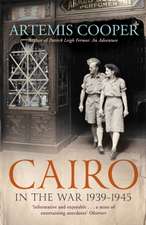 Cairo in the War: 1939-45Artemis Cooper-26%Preț: 80.12 lei107.90 lei
Notă biografică
John T. Friedman is Associate Professor of Socio-cultural Anthropology at the University College Roosevelt of Utrecht University, The Netherlands. Before training as an anthropologist at Cambridge University, he worked in the field of international development. He has been researching and working in Namibia since 1993.